Aa
  • Read, Watch, Listen
  • TJI Series
  • Community Action
  • Events
  • Zedi
Follow us and continue the conversation
  • LinkedIn
  • Instagram
  • FaceBook
  • X
  • YouTube
Test yourself with the TJI Quiz!

Adjust size of text

Aa

Follow us and continue the conversation

  • LinkedIn
  • Instagram
  • FaceBook
  • X
  • YouTube

Your saved articles

You haven't saved any articles

What are you looking for?

Original reporting, insightful analysis and diverse views, delivered straight to your inbox

  • LinkedIn
  • Instagram
  • FaceBook
  • X
  • YouTube
Your support fuels our mission to inform, entertain and inspire.

The Jewish Independent is bound by the Standards of Practice of the Australian Press Council. If you believe the Standards may have been breached, you may approach The Jewish Independent or make a complaint to the Australian Press Council in writing at www.presscouncil.org.au. The Council may also be contacted on 1800 025 712.

  • Our Story
  • Contact us
  • Our Team
  • Support us
  • Guidelines
  • Pitch your idea
  • Republishing us
  • Community Action
  • Our Awards
  • LinkedIn
  • Instagram
  • FaceBook
  • X
  • YouTube
Aboriginal FlagTorres Strait Islanders Flag

The Jewish Independent acknowledges Aboriginal and Torres Strait Islander peoples as the Traditional Owners and Custodians of Country throughout Australia. We pay our respects to Elders past and present, and strive to honour their rich history of storytelling in our work and mission.

© The Jewish Independent 2026All Rights Reserved
Website design and development by Your Creative, MelbourneTerms & ConditionsPrivacy Policy
HomeRead, Watch, ListenIsrael
AnalysisIsrael

Arab party ban won’t hold but reveals a changed Israel

Banning Arab parties and candidates is a political play that is usually overturned by the Supreme Court but this year at least one ban may be upheld.
Ben Lynfield
Print this
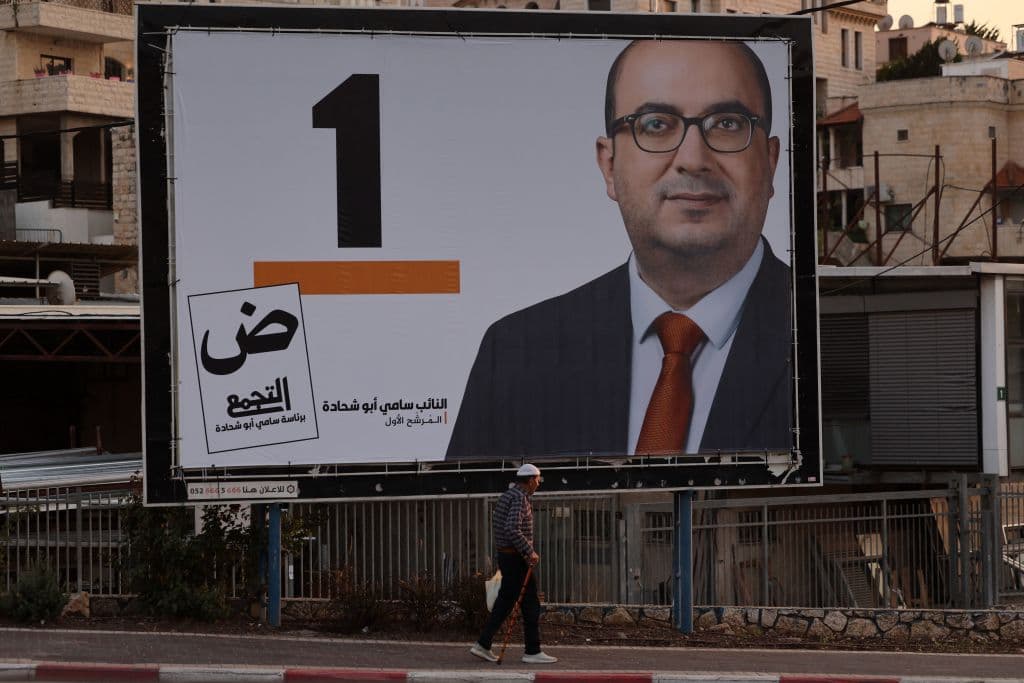
Sami Abu Shehadeh

An electoral billboard of Sami Abu Shehadeh from the 2022 election campaign (AHMAD GHARABLI/AFP via Getty Images)

Published: 1 October 2026

Last updated: 1 October 2026

In recent years a de facto division of roles has prevailed when it comes to Arab parties and candidates running in Knesset elections

The pattern has been that the Central Elections Committee, a political body in which the coalition enjoys a majority, votes to disqualify an Arab candidate or list on the grounds that they reject the Jewish character of the state or support armed struggle against it. Such disqualifications, which reached a record high last week, are popular with a public that is constantly moving to the right and strategically they seek to delegitimize Arab parties so that they cannot be a tiebreaker in elections

But the bans generally get overturned when they come under scrutiny of the Supreme Court. Acting as the good cop in this instance, it lays down the law and overturns the ban, citing democratic prerogatives and stressing that citizens’ ability to elect their representatives must be very broadly ensured.

This time, however, is different. For the first time, the CEC has banned all Arab parties and candidates and, although most will almost certainly be overturned, the ban on Sami Abu Shehadeh, the leader of the anti-Zionist Balad party, could be upheld by the Court.

Grounds for disqualification?

Shehdeh was disqualified on the grounds that he supports terrorism after he published an article on Oct 8 2023 praising Hamas’s attack. He has since disavowed parts of the article.

Balad has contested Israeli elections and had Knesset members since 1999. It is now part of an alliance of three Arab parties known as the Joint List.

Shehadeh stressed that his disqualification was initiated by the ultranationalist Jewish Power party and turned his defence into an attack: “To support genocide and Jewish superiority is okay, what is unacceptable is to lead a project for justice, freedom and equality,” he said.
The court is due to hear the Abu Shehadeh case and those of other disqualifications starting on Thursday and to issue decisions by Monday.

Attorney General Gali Baharav-Miara is recommending the Court uphold Shehadeh's ban while liberals argue one article is far from sufficient grounds under the law's stringent requirements for disqualification.

In the article, Abu Shehadeh termed the Hamas attack “a historic event that is significant militarily, politically and strategically” and stressed that Gaza had set an example showing that Israeli intelligence could be overcome. 

Bahrav-Miara said on Tuesday that the timing of the article “ could not have been more sensitive in security and public terms to give legitimacy to the murderous attack.” There were “extreme circumstances and timing”  that the judges must take into account, she said.

Adam Shinar, a specialist on constitutional law at Reichman University in Herzliya, argues that  the Attorney general’s recommendation “is an embarrassing and incorrect position, which ignores the criteria established in rulings over the past four decades.”   Disqualification, he argued, must meet several tests including in this case showing that support for armed struggle of a terrorist organization against the state of Israel “is a dominant characteristic of the candidate and that he is seeking to be elected to the Knesset to promote this.” Shinar predicts that if Abu Shehadeh’s disqualification is upheld it will pave the way for wider bannings of Arab candidates in future elections.

Broad attack on Arab voices

The Abu Shehadeh case may influence the outcome of what is expected to be a close election on Oct 27 by impacting Arab turnout, though it is hard to predict yet whether upholding the ban would increase it or decrease it.

The CEC also banned Ofer Cassif, a member of Knesset from the Hadash party in the Joint List; the Joint List as a whole and the Ra’am party, meaning that the CEC for the first time ever banned all the representatives of Arab parties.

While that sweeping ban will probably be overturned, its very passage underscores how tenuous the rights of Arab citizens in Israel are now, according to Mohammed Dahle, a prominent lawyer who is a member of the Carmel Forum, a grouping  of Arab and Jewish intellectuals.

“Our voice is being suppressed,” Dahle said. “For the first time in Israeli history, the CEC disqualifies our entire political representation. The Israeli political leadership is saying:your citizenship is worth nothing, we don’t want your voice, you are not part of the political process, not only are you not part of the coalition, you are not part of parliament, your vote is worth nothing.”

Barak Medina, a Hebrew University law professor specializing in the protection of minority rights, told the The Jewish Independent that Abu Shehadeh being prevented from running would be a “turning point” in harming the rights of the Arab minority. “It could create an effect on the entire community’s freedom of expression” which, he says, is already under pressure.

But bannings satisfy the public mood, which might be why even the avowedly liberal Democrats Party supports Abu Shehadeh’s disqualification and former prime ministers Naftali Bennet and Yair Lapid, who were coalition partners with Ra’am, did not oppose its banning.

Opposition candidate for prime minister Gadi Eisenkot has also ruled out Ra’am as a coalition partner. He and other leaders of the anti-Netanyahu camp met to plan strategy last week-without the presence of any Arabs.

Poll numbers are relevant here. An Israel Democracy Institute survey published in Dec 2025 showed that over 71.5 percent of the Jewish public oppose having Arab parties in the coalition, an increase from May 2023 that could be explained by the impact of the Oct 7 attacks. A high proportion of the Jewish public is not interested in living alongside Arabs, the 2025 survey showed.

Dahle says that upholding the ban on Abu Shehadeh could cause Arab voters to stay at home rather than “participate in a process tailored against you.” On the other hand “people could be outraged and this will encourage them to vote to show you can’t disqualify two million people.”

In either case, upholding the ban “will make it even more complicated to argue that Israel is a democratic country,” Dahle said.

You might also like
  • Arab women topple politician accused of sexual harassment in landmark case
    Ben Lynfield
  • Netanyahu’s lightning UN visit reveals his growing isolation
    Shahar Burla
  • The leadership a wounded society needs
    Esther Takac
logomark.67a07ee3
We believe in the free flow of information

Republish our articles for free, online or in print, by using our Creative Commons licence

You might also like

    Protest against settler violence in Jerusalem
    DebateAustralia

    Sanctioning settlements is a defence of Israel, not an attack

    Elisheva Madar 3
    Netanyahu
    Israel Hamas WarFeatureIsrael

    New evidence Netanyahu was warned about October 7

    Shahar Burla 2
    ISRAEL-LGBTQ-PRIDE-PARADE-PALESTINIAN-CONFLICT-HOSTAGES
    NewsIsrael

    LGBT asylum seekers caught between Palestinian violence and Israeli bureaucracy

    Jarod Rhine-Davis

About the author

Ben Lynfield

Ben Lynfield

Ben Lynfield covered Israeli and Palestinian politics for The Independent and served as Middle Eastern affairs correspondent at The Jerusalem Post. He writes for publications in the region and has contributed to the Christian Science Monitor, Foreign Policy and the New Statesman.

More from the author

NewsIsrael

Arab women topple politician accused of sexual harassment in landmark case

FeatureIsrael

Fear of Netanyahu victory may drive big surge in Palestinian voter turnout

NewsIsrael

Abuse by IDF soldiers humiliates Muslim Palestinians

Comments

No comments on this article yet. Be the first to add your thoughts.