Aa
  • Read, Watch, Listen
  • TJI Series
  • Community Action
  • Events
  • Zedi
Follow us and continue the conversation
  • LinkedIn
  • Instagram
  • FaceBook
  • X
  • YouTube
Test yourself with the TJI Quiz!

Adjust size of text

Aa

Follow us and continue the conversation

  • LinkedIn
  • Instagram
  • FaceBook
  • X
  • YouTube

Your saved articles

You haven't saved any articles

What are you looking for?

Original reporting, insightful analysis and diverse views, delivered straight to your inbox

  • LinkedIn
  • Instagram
  • FaceBook
  • X
  • YouTube
Your support fuels our mission to inform, entertain and inspire.

The Jewish Independent is bound by the Standards of Practice of the Australian Press Council. If you believe the Standards may have been breached, you may approach The Jewish Independent or make a complaint to the Australian Press Council in writing at www.presscouncil.org.au. The Council may also be contacted on 1800 025 712.

  • Our Story
  • Contact us
  • Our Team
  • Support us
  • Guidelines
  • Pitch your idea
  • Republishing us
  • Community Action
  • Our Awards
  • LinkedIn
  • Instagram
  • FaceBook
  • X
  • YouTube
Aboriginal FlagTorres Strait Islanders Flag

The Jewish Independent acknowledges Aboriginal and Torres Strait Islander peoples as the Traditional Owners and Custodians of Country throughout Australia. We pay our respects to Elders past and present, and strive to honour their rich history of storytelling in our work and mission.

© The Jewish Independent 2026All Rights Reserved
Website design and development by Your Creative, MelbourneTerms & ConditionsPrivacy Policy
HomeRead, Watch, ListenIsrael
Israel Votes 2026FeatureIsrael

Security fears and incitement drive young voters toward far-right

First-time voters are tipped to play a decisive role in the election, embracing the far-right amid concerns over security and the cost of living
Ben Lynfield
Print this
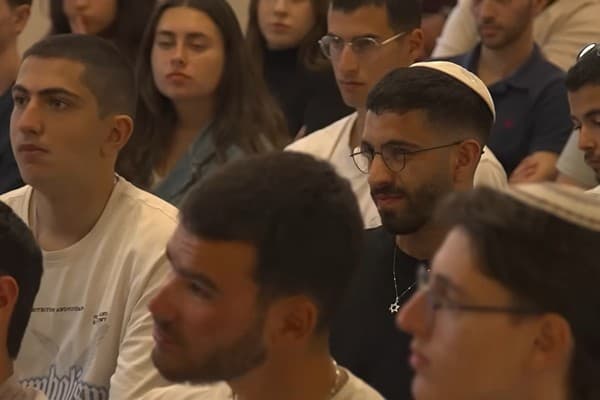
Young Israelis

Young Israelis (Youtube)

Published: 15 October 2026

Last updated: 15 October 2026

First-time voters are tipped to play a decisive role in the election, embracing the far-right amid concerns over security and the cost of living.

If a recent visit by Israeli comedian Lior Schleien to a Tel Aviv high school is anything to judge by, young voters in Israel may be moving even further right in the upcoming elections.

Those on the left fear that first-time voters could end up backing the racist Jewish Power party or other components of the far-right, impelled by fear of and hatred towards Arabs, and influenced by genocidal incitement messages they have absorbed from the country’s leaders such as “there are no innocents in Gaza.”

Schleien, a left-winger with a self-styled mission of causing Israel’s mostly right-wing youths to reevaluate their views, does his best to reason calmly with the 17- and 18-year-olds he meets during his forays, which he posts on social media.

As a stand-up comedian, he is used to all kinds of interactions. But nothing could have prepared him for the casualness with which the idea of killing all Gazans was tossed gleefully into the air during one of his recent appearances.

“Should we carry out genocide?” a 17-year-old woman wondered aloud. “I’m really asking,” she added, smiling. This pronouncement did not come out of nowhere. It was the culmination of her peers building up to it, with another young woman saying to an incredulous Schleien: “You really think there are innocent people in Gaza? They raise their children to be terrorists.”

Schleien replied that acting on such views would turn Israel into Hamas.

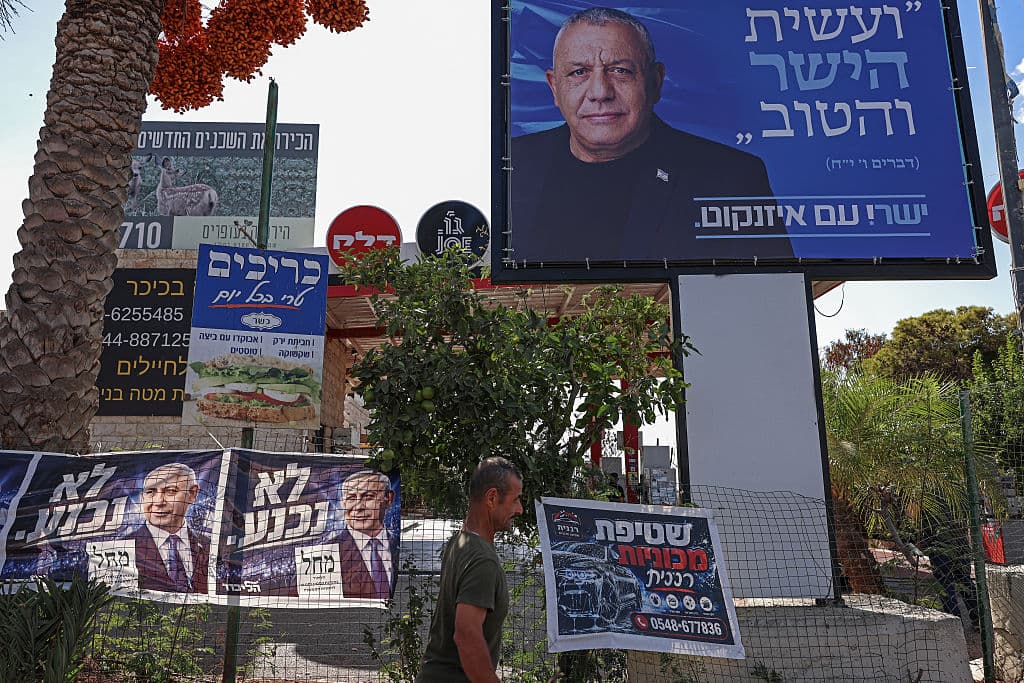
With first-time voters poised to have a large impact on the October 27 election, one possible trajectory is that young voters will provide a big boost to the far-right. Both Jewish Power and Religious Zionism parties support the expulsion of all Gazans, as well as the ongoing ethnic cleansing of the West Bank. Jewish Power leader Itamar Ben-Gvir has made Gaza expulsions a centrepiece of his campaign in one clip, showing a happy Gazan family about to board a ship, while he, now the defence minister, signs their removal orders.
Broad range of extremist parties

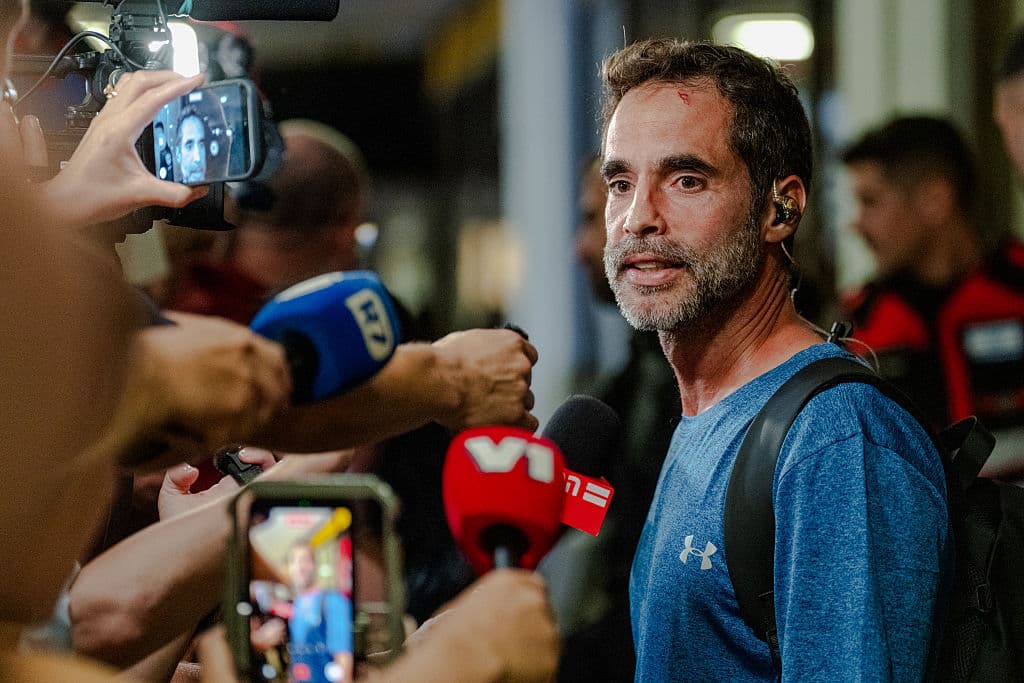
However, Israel’s younger voters will have a broader range of extremists to choose from, some of whom could accurately be defined as neo-Nazis in a European context. Moshe Feiglin, number two on a joint list with Religious Zionism, recently told The Jerusalem Post that it would be “moral” to kill all of Gaza’s babies. But he added that since he is compassionate, he will be content to merely expel them.

By sheer turnout, young voters are expected to exert an outsize power in determining the outcome of what is seen as a fateful referendum on whether Benjamin Netanyahu and his far-right partners should continue at the helm despite the disaster of October 7.

In the eyes of his opponents, Netanyahu has trapped the country in endless wars, moving it towards authoritarianism and perpetrating recurrent alleged war crimes in Gaza and backing settler violence against the civilian population in the West Bank, leaving the country isolated. Much is at stake.

In a May poll by the Israel Democracy Institute (IDI) of 576 Arab and Jewish Israelis due to become first-time voters, 91 per cent stated they think they will vote or are certain they will vote. It is expected that first-time voters will determine 12 out of the 120 seats in the next Knesset.

The poll showed that the top issues for Jewish voters were national security (31 per cent) and cost of living (27 per cent). Most Israelis are getting their input on electoral politics from the digital sphere, the survey showed, giving platforms like Instagram a huge role.

High turnout expected

A poll of 543 people aged 18-22 published last week by the Ynet website also pointed to a high turnout. The winner among young voters was hawkish former prime minister Naftali Bennett’s B’Yachad list with 16 seats. Bennett has ruled out Arab parties as coalition partners despite allying with the Ra’am party during the short-lived “Change” government of 2021-22.

Former chief of staff Gadi Eisenkot’s Yashar, also a right-wing party that rules out any coalition with an Arab party, tied with Ben-Gvir’s Jewish Power at 15 seats.  Religious Zionism’s list, which includes Feiglin’s Zehut faction, tallied 14 seats, the same number that Netanyahu’s Likud received. In the general elections in 2022, Jewish Power and Religious Zionism running on the same list tallied 14 seats, while in the current youth poll, their combined total was 29.

The first-time voters will be casting their ballots “amid a lot of anxiety,” says IDI scholar Tammy Hoffman, a specialist on education for democracy. Impacting their voting is the experience of recent years: in junior high school, COVID-19, and October 7 three years ago, which meant many had to go to war during their military service and were deeply impacted by casualties and the fate of the hostages.

“If you know people who were murdered at Nova [music festival], it’s not surprising that security would be your top concern. The same can be said for young Arab voters about the [spiralling] murders,” Hoffman says.

Simultaneously, there is a great deal of concern among first-time voters about the cost of living and their economic prospects. Hoffman says the cumulative anxiety could result in big gains for the far-right but stresses this is not the only possibility. “First-timers are a big voting power and their crucial years were the last four years, but we don’t understand fully how what they experienced will translate [into votes].”

In many model elections held recently in high schools, pupils supported Eisenkot’s Yashar, Bennett’s B’Yachad or Likud but “there was no wide wave to the ultranationalist right,” Hoffman says.

Meanwhile, parties across the spectrum are trying during the campaign’s final days to prove they are the best bet for young voters. Citing its success in the Ynet survey and in high school mock elections, B’Yachad said in a statement to The Jewish Independent that “young Israelis know Naftali Bennett truly sees and listens to them, shares their values and believes this generation of lions that saved Israel needs to have a real seat at the national decision-making table”.

The party is vowing that Haredim who do not serve in the army will not get “a single shekel” from the state. B’Yachad is also stressing that number 10 on its list is Yonatan Shalev, a 24-year-old poised to be the Knesset’s youngest member.

Democrat party appeals to hope

At the same time, Yair Golan’s Democrats, the most left-wing Zionist party, is appealing to young voters by saying it represents change and liberal values. “We identify young people for whom the values of democracy, equality, equal opportunity and environment are not mere slogans but an inseparable part of the state they want to live in,” party spokesperson Hilla Shinitzky wrote in response to a query.

She contrasts the Democrats with Ben-Gvir’s efforts. “His tactics are based on fear and populism. We choose a different path: not to sow fear but to offer hope, not to deepen divisions but to put forward a vision for a better future. In our view, hope is not just a message, it’s a genuine driving force for change.”

You might also like
  • Israel now faces 138 sanctions across 63 countries
    Shahar Burla
  • A Gazan doctor’s journey of hope
    Deea Okasha
  • One year after the ceasefire, Gaza remains in ruins with no solution in sight
    Shahar Burla
logomark.67a07ee3
We believe in the free flow of information

Republish our articles for free, online or in print, by using our Creative Commons licence

You might also like

    Passengers From Diverted Flydubai Flight To Arrive In Israel
    FeatureIsrael

    How ‘jihadist terror attack’ was averted on Israel-bound flight

    Tomer Almagor 2
    Jafar Farah
    NewsIsrael

    Arab women topple politician accused of sexual harassment in landmark case

    Ben Lynfield
    Israel election posters
    Israel Votes 2026ExplainerIsrael

    Stalemate likely in Israel’s election: latest polls

    Shahar Burla 1

About the author

Ben Lynfield

Ben Lynfield

Ben Lynfield covered Israeli and Palestinian politics for The Independent and served as Middle Eastern affairs correspondent at The Jerusalem Post. He writes for publications in the region and has contributed to the Christian Science Monitor, Foreign Policy and the New Statesman.

More from the author

AnalysisIsrael

Arab party ban won’t hold but reveals a changed Israel

NewsIsrael

Arab women topple politician accused of sexual harassment in landmark case

FeatureIsrael

Fear of Netanyahu victory may drive big surge in Palestinian voter turnout

NewsIsrael

Abuse by IDF soldiers humiliates Muslim Palestinians