Aa
  • Read, Watch, Listen
  • TJI Series
  • Community Action
  • Events
  • Zedi
Follow us and continue the conversation
  • LinkedIn
  • Instagram
  • FaceBook
  • X
  • YouTube
Test yourself with the TJI Quiz!

Adjust size of text

Aa

Follow us and continue the conversation

  • LinkedIn
  • Instagram
  • FaceBook
  • X
  • YouTube

Your saved articles

You haven't saved any articles

What are you looking for?

Original reporting, insightful analysis and diverse views, delivered straight to your inbox

  • LinkedIn
  • Instagram
  • FaceBook
  • X
  • YouTube
Your support fuels our mission to inform, entertain and inspire.

The Jewish Independent is bound by the Standards of Practice of the Australian Press Council. If you believe the Standards may have been breached, you may approach The Jewish Independent or make a complaint to the Australian Press Council in writing at www.presscouncil.org.au. The Council may also be contacted on 1800 025 712.

  • Our Story
  • Contact us
  • Our Team
  • Support us
  • Guidelines
  • Pitch your idea
  • Republishing us
  • Community Action
  • Our Awards
  • LinkedIn
  • Instagram
  • FaceBook
  • X
  • YouTube
Aboriginal FlagTorres Strait Islanders Flag

The Jewish Independent acknowledges Aboriginal and Torres Strait Islander peoples as the Traditional Owners and Custodians of Country throughout Australia. We pay our respects to Elders past and present, and strive to honour their rich history of storytelling in our work and mission.

© The Jewish Independent 2026All Rights Reserved
Website design and development by Your Creative, MelbourneTerms & ConditionsPrivacy Policy
HomeRead, Watch, ListenIsrael
Israel Votes 2026OpinionIsrael

A moment of unity as rare as a minyan in Brisbane

A moment behind the lines of deep division gives hope for an Israel with less chutzpah and more unity
Rapha Manajem
Print this
Eisenkot protester

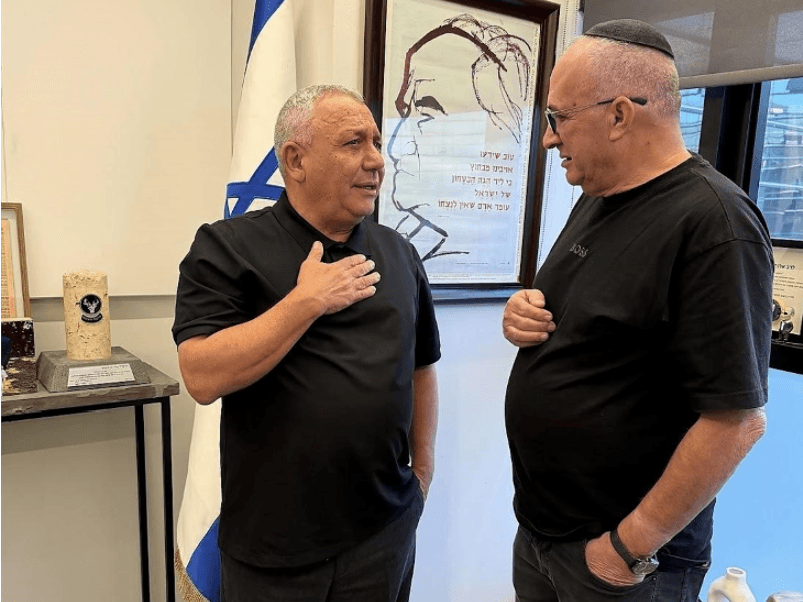
Gadi Eisenkot (L) with pro-Netanyahu demonstrator Yossi Cohen (Instagram)

Published: 10 November 2026

Last updated: 10 November 2026

I grew up in Brisbane, where there are only two synagogues, neither of which can get a minyan. They always seemed to be a few people short. You might ask, why don’t the two synagogues just merge?

Well, because then you might have to go to synagogue. And it’s too nice outside in Brisbane for that.

It’s like that classic Jewish joke about a Jew stranded on an island. When a rescue team arrives, they notice he’s built one living space and two synagogues. The Jew explains, “That’s the shule I go to, that’s the shule I don’t.”

Except in Brisbane, they say, “That’s the shule I don’t go to, and that’s the shule I’d never go to.”

Like many Jews from Brisbane, I eventually moved to Melbourne, where there are many synagogues you can not go to. There are more synagogues in Melbourne than there are political parties in Israel.

In Israel, the synagogues are full, but the Knesset is empty.

The Israeli parliament currently has two blocs, neither of which can form a government. It’s harder to form a government in Israel than it is to get a minyan in Brisbane.

Religiously we may be monotheistic, but politically we are pagan. The Knesset is unicameral, but the country is bipolar.

Elections in a Westminster democracy deliver a government and an opposition. Elections in a Jewish democracy deliver two oppositions and another election.

Now that’s value!

The adage goes, two Jews, three opinions, but a single Israeli can produce three all on their own: the party they would sit with, the party they would not sit with, and the party they will never sit with.
As a result, Israel has had five elections in the last seven years, with a sixth on the horizon, which would almost certainly leave the country with another hung parliament.

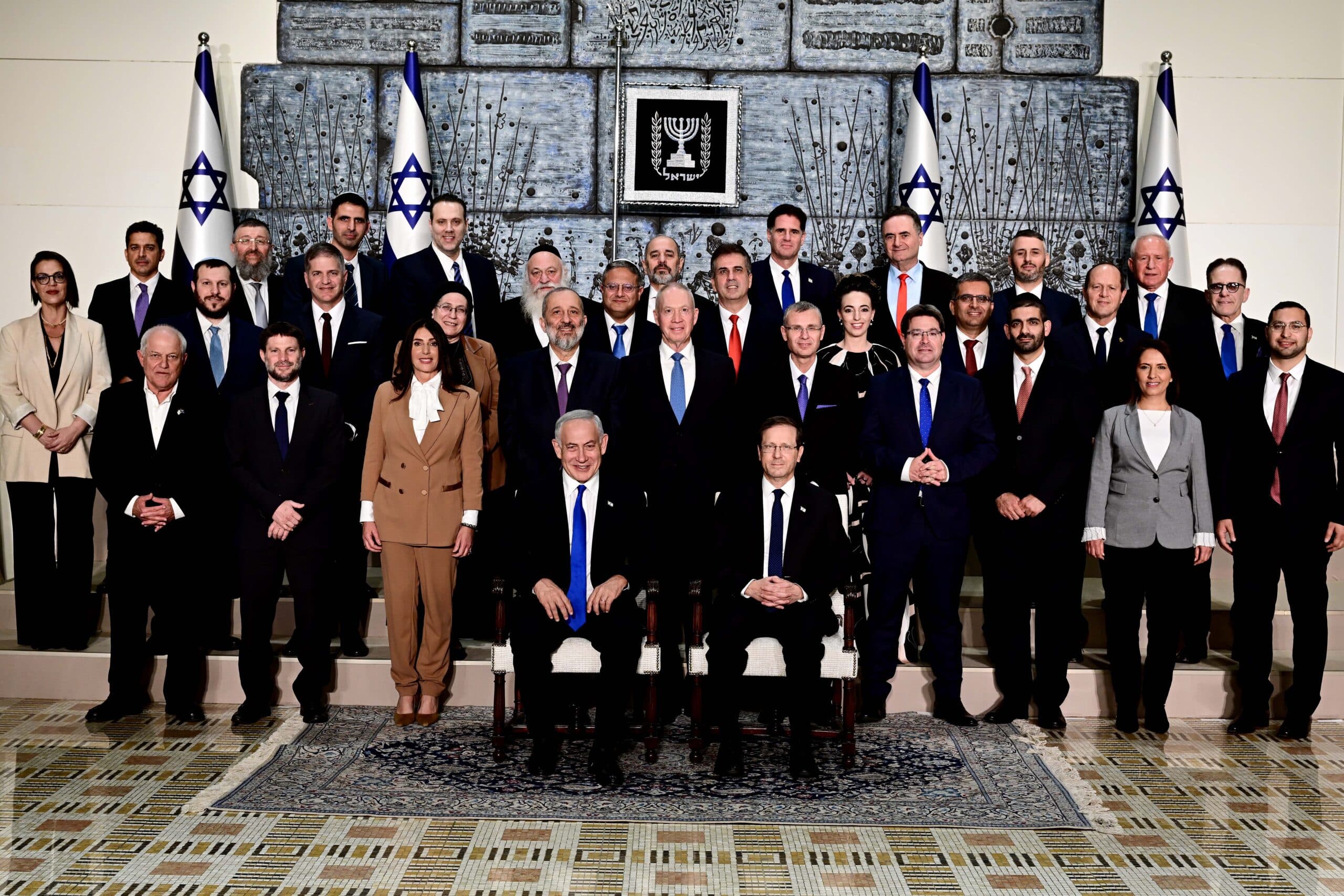
Logically, there are increasing calls for a unity government to break this cycle, with the side that has spent a decade stoking division suddenly calling to sit together, underneath them. A cynic might view this less as a commitment to unity, and more as an expression of chutzpah.

Chutzpah, like Israel’s government, is abstract, and therefore hard to define. The great Yiddish writer Leo Rosten, described it as, “That quality enshrined in a man who, having murdered his parents, pleads for the court's mercy, as recent events have left him an orphan.”

But I recently heard a more concise definition in Hebrew, “ani achrai, zu le ashamti”, which roughly translates as, “I’m in charge, it’s not my fault.”  That could have been Netanyahu’s election slogan.

Eisenkot, on the other hand, is showing signs of being able to pursue actual unity. In the days after the election, a group of Netanyahu supporters made headlines for protesting outside Eisenkot’s home.

The protester, too, was a father bereaved by war. Resisting the urge to contribute to the cycle of pain and division, Eisenkot welcomed the man and his wife into his home. Afterwards, he shared their intimate exchange with a level of vulnerability and empathy which offered an innovation that could remedy the country’s condition. Israelis could have a fourth opinion: that behind all the words sits unimaginable pain, writing on Instagram:

“I met today with Yossi and Orly Cohen, the parents of the late Amit, at Yossi's request to come and apologise for the hard things he said at a demonstration outside my home. I agreed to meet immediately, understanding that both in the eye of the storm and in moments of difficult dispute – we must not stop seeing the person in front of us.

“The hard words entrusted to Hannah and I, especially when they mentioned Gal, hurt and stung deeply. But I knew that behind these words stands a father who carries in his battle an incomprehensible pain. That's why it was important for me to meet Yossi and take this opportunity to remind all of us: we are brothers. Even when you don't agree, we must listen.

“Israeli society is experiencing a difficult and ongoing period of mourning, crisis and internal rift. The road to healing does not pass through blurring disputes or trying to convince each other, but through the ability to listen, respecting the pain of the other, and keeping what connects us as a people. It's the responsibility of all of us. This is first and foremost my responsibility.”

This generosity may be the path to genuine unity, but the path to stable government can only be achieved if it is extended to Israeli Palestinian parties as well.

In doing so, Eisenkot has a chance to prove that Israel is indeed a unique democracy in the region, a place where all citizens, regardless of race, not only get a seat at the table, but can sit together.

You might also like
  • Eisenkot’s conditions for forming Israel’s next government
    Ruth Eglash
  • Pros and cons in Antisemitism Envoy’s new proposals
    Michael Visontay
  • Israel’s election fails to deliver a clear path to a government
    Shahar Burla
logomark.67a07ee3
We believe in the free flow of information

Republish our articles for free, online or in print, by using our Creative Commons licence

You might also like

    August Victoria Hospital
    PeacebuildingOpinionIsrael

    My vision for Palestinian cancer patients

    David Adler
    Arab election joint list
    Israel Votes 2026AnalysisIsrael

    Historic step forward for Arab Israelis

    Ben Lynfield 1
    Israel cabinet knesset
    Israel Votes 2026Israel

    Where are the women in this election campaign?

    Eetta Prince-Gibson

About the author

Rapha Manajem

Rapha Manajem

Rapha Manajem is a comic and writer from Melbourne. In 2025 he was nominated for best newcomer at the Melbourne International Comedy Festival. He has a BA in International Relations from the University of Queensland.

More from the author

ReflectionAustralia

Looking Jewish, false flags and the impossible logic of antisemitism