Aa
  • Read, Watch, Listen
  • TJI Series
  • Community Action
  • Events
  • Zedi
Follow us and continue the conversation
  • LinkedIn
  • Instagram
  • FaceBook
  • X
  • YouTube
Test yourself with the TJI Quiz!

Adjust size of text

Aa

Follow us and continue the conversation

  • LinkedIn
  • Instagram
  • FaceBook
  • X
  • YouTube

Your saved articles

You haven't saved any articles

What are you looking for?

Original reporting, insightful analysis and diverse views, delivered straight to your inbox

  • LinkedIn
  • Instagram
  • FaceBook
  • X
  • YouTube
Your support fuels our mission to inform, entertain and inspire.

The Jewish Independent is bound by the Standards of Practice of the Australian Press Council. If you believe the Standards may have been breached, you may approach The Jewish Independent or make a complaint to the Australian Press Council in writing at www.presscouncil.org.au. The Council may also be contacted on 1800 025 712.

  • Our Story
  • Contact us
  • Our Team
  • Support us
  • Guidelines
  • Pitch your idea
  • Republishing us
  • Community Action
  • Our Awards
  • LinkedIn
  • Instagram
  • FaceBook
  • X
  • YouTube
Aboriginal FlagTorres Strait Islanders Flag

The Jewish Independent acknowledges Aboriginal and Torres Strait Islander peoples as the Traditional Owners and Custodians of Country throughout Australia. We pay our respects to Elders past and present, and strive to honour their rich history of storytelling in our work and mission.

© The Jewish Independent 2026All Rights Reserved
Website design and development by Your Creative, MelbourneTerms & ConditionsPrivacy Policy
HomeRead, Watch, ListenWorld
Israel Iran WarAnalysisWorld

Iran conflict hinges on Trump’s nuclear nerve

The key question is whether the US president regards Iran’s nuclear program as a legacy-defining challenge that he must resolve before the end of his term
Dror Doron
Print this
Iran nuclear

Iranian flag with nuclear missiles (Getty)

Published: 19 November 2026

Last updated: 19 November 2026

The US military presence in the Middle East reached its peak this week, with three aircraft carriers operating under the command of US Central Command (CENTCOM). The last time such a force was deployed in the region was in April 2026, during Operation Epic Fury against Iran. Before that, the region had seen a comparable level of American military presence only in 2003, on the eve of the invasion of Iraq.

At the same time, reports from sources within the Trump administration have highlighted Iranian attempts to target high-ranking US officials on American soil. The threat appears to be taken seriously: last week, the Secret Service reportedly moved Treasury Secretary Scott Bessent into military housing.

The reports followed revelations last month that an Iranian Islamic Revolutionary Guard Corps (IRGC) operation had allegedly targeted US strategic bombers stationed at RAF Fairford in Britain. The threat reportedly prompted the rushed evacuation of the bombers from the base. Meanwhile, in the Strait of Hormuz, Tehran continues to target oil and gas tankers, with an average of six or seven commercial vessels reportedly struck each week over the past two months.

This unstable situation has been further aggravated by President Trump’s instruction to Vice President JD Vance – who had been leading negotiations with Iran – to focus instead on domestic US priorities, as the United States does not “need a deal with Iran.”

Nevertheless, reports that the Iranian issue will be raised during the unusual trilateral meeting Trump is due to attend this week with Russian President Vladimir Putin and Chinese President Xi Jinping suggest that he has not entirely closed the door to a diplomatic solution.

Everything rests on Trump

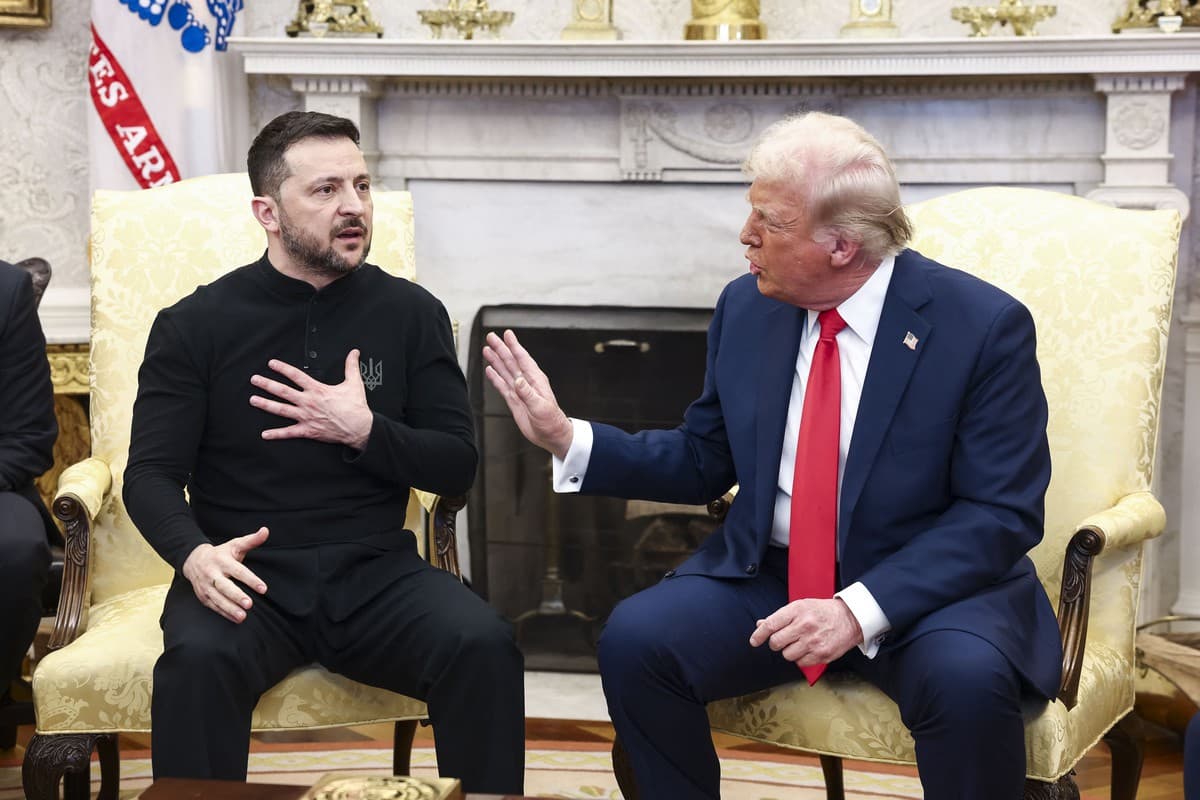
As matters stand, the answer to the question of what happens next appears to rest with one person: President Trump. He has continued to send conflicting messages about his intentions, leaving the relevant actors uncertain about the administration’s next move.
By now, it should be clear to Trump and his closest advisers that toppling the regime in Tehran through a swift military operation – following the model that worked so successfully in Venezuela – has proved to be an unrealistic option.

All indications suggest that Washington believes the ongoing economic pressure imposed by Treasury Secretary Bessent under Operation Economic Fury is inflicting significant damage on Tehran at a relatively low cost to the United States.

Iran, however, shows no sign of yielding to US demands despite the unprecedented economic pressure. The central issue is whether Tehran will abandon its nuclear ambitions and surrender the 460 kg of highly enriched uranium reportedly still under its control.

The question that must be asked is whether President Trump can set this demand aside, or whether he regards Iran’s nuclear program as a legacy-defining challenge that he must resolve before the end of his term. With a new, Democratic-controlled Congress scheduled to be sworn in on January 3, Trump has only a limited window in which to act without facing additional domestic political constraints.

Outside Washington, regional actors are also trying to shape the possible scenarios for the coming weeks. Prime Minister Benjamin Netanyahu is clearly seeking to persuade the Trump administration to resume a full-scale military campaign against Iran. Netanyahu has spoken openly about the need to topple the regime in Tehran and recently sent the newly appointed head of Mossad to Washington as part of an effort to convince the Americans to do so.

Netanyahu urges another strike

Netanyahu’s efforts are facing fierce political opposition in Israel. Critics view them as an attempt to reignite the war with Iran as a last-resort means of extending the country’s state of emergency and prolonging his hold on power.

His moves are so transparent that Gadi Eisenkot, the designated prime minister, published an open letter to Netanyahu and the heads of Israel’s security establishment. In it, he warned that the current caretaker government has no legal mandate to launch military operations except in response to an imminent threat.

Other regional actors – including Qatar, Saudi Arabia and Turkey – are using their influence in Washington to prevent the resumption of a large-scale conflict. Their own vulnerabilities were exposed so clearly during the last war, and the prospect of renewed hostilities and the resulting regional instability runs counter to their national interests.

Iran, for its part, has no interest in once again confronting the full force of the combined Israeli and US militaries. Tehran is focused on rebuilding its severely damaged military capabilities while maintaining an iron grip on the domestic population.

After the Republicans’ losses in the congressional elections, Iran appears likely to play for time, seeking to survive the next two years of Trump’s term and hoping that the next American president will be willing to resume diplomatic negotiations on terms favourable to Tehran.

The bottom line is that the situation surrounding Iran remains highly unpredictable, largely because the main actor setting the tone is the equally unpredictable Donald Trump. The current circumstances contain the elements of several vastly different scenarios: a renewed full-scale war aimed at overthrowing the regime; an isolationist turn by Washington that distances the United States from the region and leaves Iran with its remaining nuclear capabilities; or a multilateral diplomatic agreement involving China and Russia that preserves the stability of the Iranian regime while imposing renewed limits on its nuclear ambitions. A crystal ball is needed to foresee the way forward from the current junction.

You might also like
  • Australia’s latest sanctions raise the stakes, but stay on track
    Deborah Stone
  • Could the West be regained by an Eisenkot coalition?
    Dean Sherr
  • Unlikely bedfellows: How Arab parties could deliver Israel’s next government
    Ben Lynfield
logomark.67a07ee3
We believe in the free flow of information

Republish our articles for free, online or in print, by using our Creative Commons licence

You might also like

    FRANCE-riots
    NewsWorld

    Synagogue and Jewish-owned shops damaged in French riots

    Ilan Bloom
    Volodymyr Zelensky Talks With Donald Trump In Oval Office – Washington
    AnalysisWorld

    Russia’s campaign against Jewish targets in Europe

    Colin Shindler
    Gab
    NewsWorld

    Traditional antisemitic myths dominate online antisemitism: new study

    Deborah Stone

About the author

Dror Doron

Dror Doron

Dror Doron is a senior political analyst specialising in the Middle East, and is a senior adviser at United Against Nuclear Iran (UANI) focusing on Hezbollah and Lebanon.

More from the author

AnalysisIsrael

Turkey emerges as military threat to Israel

AnalysisWorld

New Saudi-Pakistan-Turkey alliance driven by failure of US to subdue Iran

AnalysisIsrael

Trump’s Hamas disarmament deal a mirage that’s quickly faded

AnalysisIsrael

Syria reimagined: From military threat to geostrategic competitor