Published: 27 August 2016
Last updated: 4 March 2024
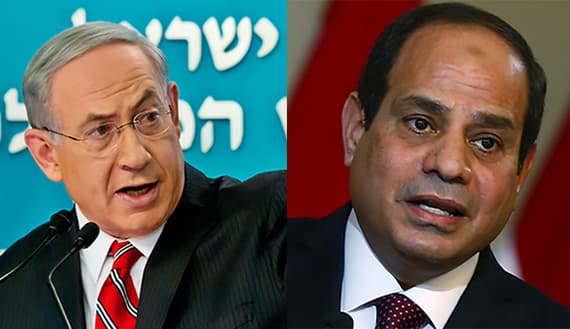
Once confidential relationships between Israel and the moderate Arab states are increasingly coming into public view. Now a Saudi delegation visits Jerusalem. The Egyptian Foreign Minister meets openly with PM Netanyahu. These relationships have emerged through the past few years, as we have seen a growing convergence of interest between Israel and certain Arab states.
The key themes are concerns about Iranian hegemony – not just a nuclear program, but its involvement in various arenas in the Middle East, the rise of fundamentalist Islamist terrorism and of sub-states, like ISIS. In addition, many in Israel and the Arab states are worried about America’s position in the Middle East and its changing commitment and engagement in the area. Another theme is the future of regional economies, not just because of terrorism but also due to structural problems and the perception of the Middle East as a poor place to invest.
Because of these shared concerns, the discourse is no longer only about 1967 borders and the Israeli-Palestinian issue but about the bigger picture of the Middle East and Israel’s future, and its relationship with the Arab states. We have reached the stage where we cannot just look at the Israeli-Palestinian issue as an isolated question. We need to leverage the Arab Peace Initiative, to reach a two-state solution within the context of a regional agreement and to create a regional security alliance to confront common threats. There are, of course, no shortcuts. If we want to reach this regional alliance, it has to include a solution to the Israeli-Palestinian conflict, as well as the Israeli-Arab conflict.
The new regional paradigm can help to make an Israeli-Palestinian deal possible. The involvement of Arab states is crucial for several reasons. First, the Arab states could help the Palestinian leaders agree on concessions they otherwise wouldn’t agree to. When the Palestinian leaders have the backing of the entire Arab world – or the majority of the leading Arab states – their ability to make certain concessions changes. As one Palestinian ex-Minister told us ‘Look, we know that what you’re proposing is the right solution for the Palestinian refugee issue, but we can’t accept it ourselves, it must be seen as if we’re forced to accept it by the entire Arab world. And don’t quote me on that.’
Secondly, the core issues between Israel and the Palestinians require the involvement of the Arab states. It's impossible to solve the issue of Jerusalem without Saudi Arabia, Jordan and Morocco; the issue of the eastern border without Jordan; or border security on the Gaza front without Egypt. The issue of Palestinian refugees cannot be resolved without the involvement of Arab states and their willingness to fund some of the investments required.
The third reason is that Palestinians and Israelis don’t trust each other but have more trust for the Arab states – the Israelis more than ever before. A commitment from Arab states to the future of Palestine and building it as a model state is clearly something that could help.
The fourth reason for Arab state involvement is very simple. A Palestinian de-militarised state has little to offer Israel in terms of strategic regional security. Strategic security will only evolve out of a regional security alliance led by key Arab States and Israel.
With the Israeli Peace Initiative (IPI), we are proposing a very different paradigm whereby concessions to the Palestinians are met by cooperation with the Arab world. It’s no longer just a zero-sum game between Israel and the Palestinians.
Last but not least, if there is an agreement, there will be a huge effort by spoilers to derail it. Opposition is likely to come from Hamas, internal extremists in the Palestinian Authority (PA), regional forces and also from Israeli groups. The only powers who could take care of these threats and secure the Israeli-Palestinian agreement from being derailed – as happened with the Oslo Accords – are the Arab states.
The Arab states and Israel could cooperate on security, build international legitimacy and create large-scale trade and economic cooperation. Security cooperation is the basis and there are plans for opening up borders for tourism and cultural cooperation as well as economic, technology, medical and healthcare opportunities. There’s so much to be achieved between Israel and the Arab states. Eventually we can build an atmosphere and relationship closer to that of different states within Europe.
The IPI Group was formed in 2011 as an apolitical impact group, not a protest group. We saw the need to promote a concrete idea of a different paradigm to address the Israeli-Palestinian conflict.
Our belief was that we should present a response to the Arab Peace Initiative, to enable a different negotiation architecture that will combine Israel, the PA, and certain Arab states, to create an integrated solution.
We work on two parallel fronts. First, we engage with interlocutors and influential people in the Arab world through “track two” or quiet, back-channel diplomatic opportunities. Our objective is to show Israelis and Israeli decision-makers that we have partners and there is credible visibility to drive this model. Over the years, we have met hundreds of people from the Arab world. We meet in conferences, track two meetings, and other platforms organised by third parties. We have met the top influencers in the major Arab countries such as people who have retired from governments but still advise leaders or business people, ex-diplomats, ex-security officials, academics, and media. Our role is to engage with the Arab world to find visibility and partners, and then to present, advocate and try to impact Israeli decisions and strategies through quiet advocacy efforts behind the scenes.
Second, we also create detailed studies about how a regional agreement will impact Israel’s security, its economy, its position in the international community, and how the Israeli public will accept it. Those insights enable us to present a cohesive regional option as a strategic roadmap for the Israeli government and the Israeli political system.
Among other things, we have created a shared model with the Palestinians that was endorsed, supported and encouraged by some of our Arab interlocutors from countries like Egypt, Saudi Arabia and Jordan. We presented the steps that Israel and the Palestinians should execute before entering the negotiations. We have also described what the negotiation architecture would look like. It would include two parallel processes between Israel and the Palestinians and Israel and the Arab states, where concessions in one room would be met with benefits in the other.
The process of impacting policy is a long and gradual one, but today the regional approach is a de facto benchmark. Five years ago there was very little awareness of it. We have to accept the fact that whenever Israeli strategy is transformed or changed dramatically, it is always based on at least a decade of evolution.
Today we are not lacking intellectual or professional depth, nor an understanding of what the possible agreement looks like. We hope to see the emergence of courageous leadership and political safety nets for the Palestinian, Arab and Israeli sides. The opportunity is there; the ideas are clear and it is time to decide and move.
This The Jewish Independent article may be republished if acknowledged thus: ‘This article first appeared on www.thejewishindependent.com.au and is reprinted with permission.’