Published: 1 October 2026
Last updated: 1 October 2026
As the third anniversary of October 7 approaches, followed days later by the one-year anniversary of the ceasefire, Gaza remains devastated. A new recovery proposal offers little reassurance that rebuilding will begin soon, or that the territory can avoid another escalation.
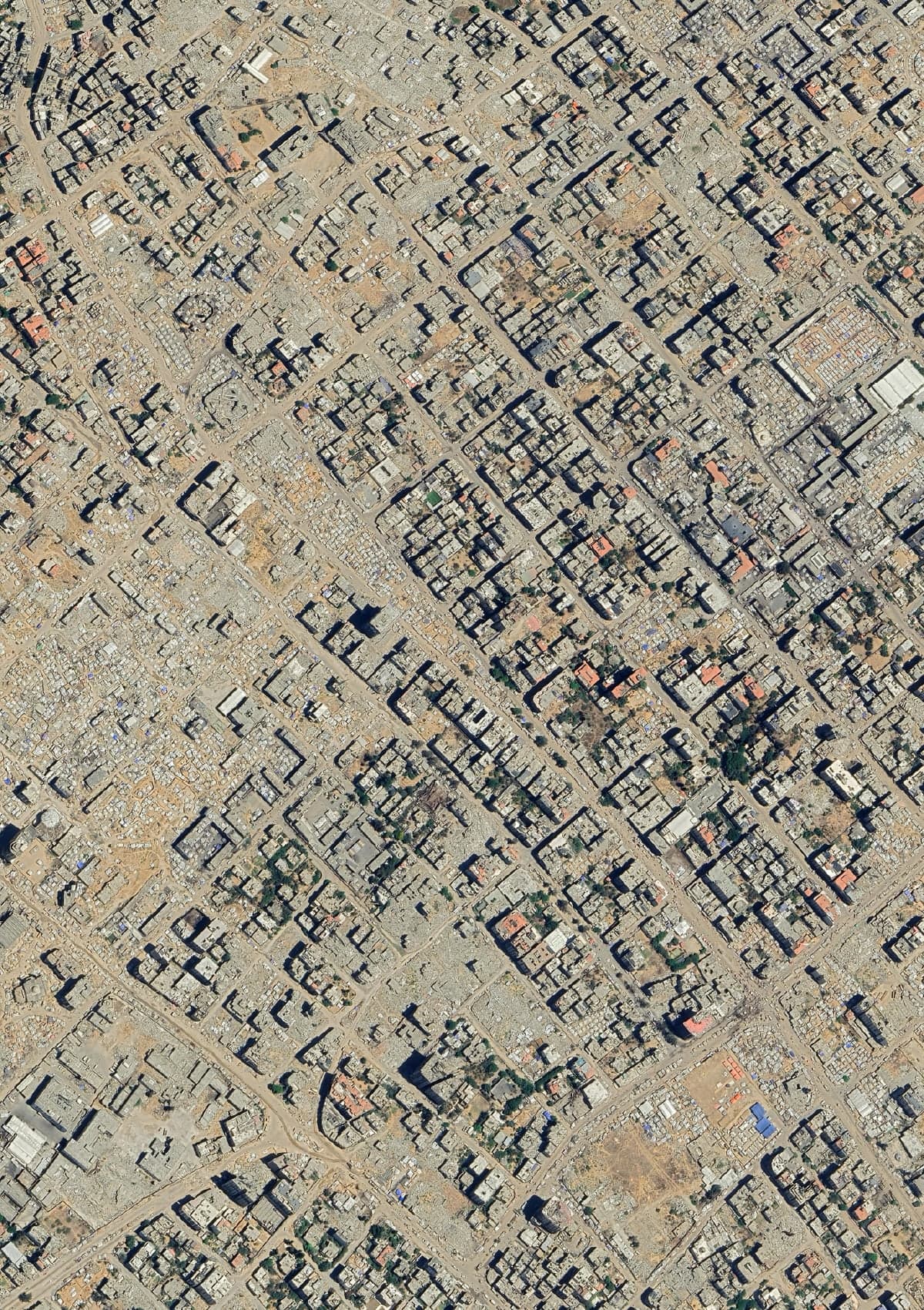
Updated Google Maps satellite imagery from last week (above) makes the destruction visible to anyone with a phone. Across Rafah, residential neighbourhoods have been reduced to rubble. Roads cut through areas once crowded with homes, shops and everyday life. In Tel al-Sultan, the surviving buildings stand isolated amid flattened streets.
Along Gaza City’s coastline, tents surround the remaining structures near the port. The images document a landscape transformed by Israel’s military campaign following the Hamas-led attack of October 7, 2023.
They also expose the distance between diplomatic declarations and Palestinian lives. Nearly three years after the attack, and almost a year after Donald Trump’s ceasefire took effect, Gaza’s population remains trapped between destroyed communities, continuing violence and a political process offering no clear way forward.
The satellite images are snapshots, rather than a live record. But their significance is unmistakable: destruction on this scale cannot be addressed by announcing another plan.
A recovery blueprint without a starting date
Trump’s Board of Peace unveiled its latest proposal on the sidelines of the United Nations General Assembly in New York: a six-month recovery programme costing US$2.45 billion.
The blueprint covers 66 programmes, including temporary housing, electricity generation, water infrastructure and waste removal. It offers a framework for restoring services that Gaza’s residents desperately need. Yet there is still no firm date for reconstruction to begin.