Aa
  • Read, Watch, Listen
  • TJI Series
  • Community Action
  • Events
  • Zedi
Follow us and continue the conversation
  • LinkedIn
  • Instagram
  • FaceBook
  • X
  • YouTube
Test yourself with the TJI Quiz!

Adjust size of text

Aa

Follow us and continue the conversation

  • LinkedIn
  • Instagram
  • FaceBook
  • X
  • YouTube

Your saved articles

You haven't saved any articles

What are you looking for?

Original reporting, insightful analysis and diverse views, delivered straight to your inbox

  • LinkedIn
  • Instagram
  • FaceBook
  • X
  • YouTube
Your support fuels our mission to inform, entertain and inspire.

The Jewish Independent is bound by the Standards of Practice of the Australian Press Council. If you believe the Standards may have been breached, you may approach The Jewish Independent or make a complaint to the Australian Press Council in writing at www.presscouncil.org.au. The Council may also be contacted on 1800 025 712.

  • Our Story
  • Contact us
  • Our Team
  • Support us
  • Guidelines
  • Pitch your idea
  • Republishing us
  • Community Action
  • Our Awards
  • LinkedIn
  • Instagram
  • FaceBook
  • X
  • YouTube
Aboriginal FlagTorres Strait Islanders Flag

The Jewish Independent acknowledges Aboriginal and Torres Strait Islander peoples as the Traditional Owners and Custodians of Country throughout Australia. We pay our respects to Elders past and present, and strive to honour their rich history of storytelling in our work and mission.

© The Jewish Independent 2026All Rights Reserved
Website design and development by Your Creative, MelbourneTerms & ConditionsPrivacy Policy
HomeRead, Watch, ListenWorld
ReflectionWorld

A Gazan doctor’s journey of hope

Deea Okasha’s motivations for becoming a doctor were commonplace but his life and practice have been determined by the forces of war
Deea Okasha
Print this
Picture 1

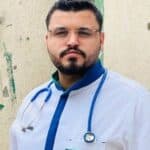
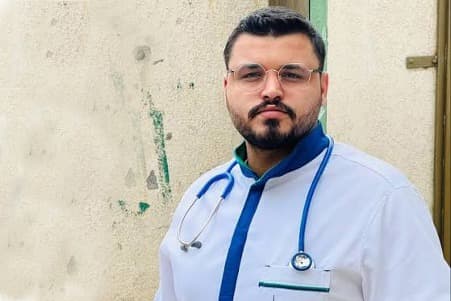
Gaza-born doctor Deea Okasha (Image: supplied)

Published: 12 October 2026

Last updated: 12 October 2026

My story with medicine began long before I entered medical school. In fact, I believe it began when I was only seven years old, when my grandfather became ill.  

He was one of the kindest and most loving people in my life, and I was deeply attached to him. I remember seeing him in pain and feeling completely helpless. I was a child, and I did not understand much about illness, but I understood one thing very clearly: someone I loved was suffering, and I could not do anything to help him.  

I began to wonder what illness was, why people suffered, what happened inside the human body, and whether one day I could become someone capable of helping people when they were in pain.  

I grew up in Gaza and, like thousands of Palestinian children, I was surrounded by circumstances that taught us from a very young age that education was one of the few things we could truly build for ourselves.  

My father often told me: “My son, focus on your education. As a Palestinian, the only way you can build a better life is to become educated.”  

I carried those words with me throughout my childhood. I studied hard, and medicine gradually became more than a childhood dream.  

When the time came to choose where to study medicine, my decision was influenced by the difficult financial circumstances of my family. Studying abroad was not easy for us, and Russia was one of the countries where Palestinian students could relatively and realistically pursue medical education. So, I made the decision to leave home and begin a completely new chapter of my life in Russia.  

After completing my studies, I returned to Gaza with the intention of building my medical career and giving something back to the place where I had grown up.  

I chose ophthalmology as my specialty, fascinated by how such a small organ could allow a person to experience the entire world.  

But my plans were interrupted by war. When the war and the destruction in Gaza escalated, medicine was no longer simply a profession for me. It became a responsibility.  

I worked and volunteered in hospitals during an extremely difficult period, including at Nasser Hospital, where I worked in emergency ophthalmology.  

There is one experience that I have carried with me ever since. During one of the operations, we were preparing to remove an eye that had been severely destroyed by an explosion. In such cases, the eye may be so badly damaged that removing it becomes necessary to prevent severe infection and further complications.  

The patient was a nine-year-old girl. As we were entering the operating room, she held my hand. She looked at me and said: “Uncle, please give me my eye back.”  

There are moments in medicine that cannot be taught in a textbook. I knew what was medically necessary. I understood the damage and the risks. I knew why the operation had to happen.  

But at that moment, I was not thinking like someone reading a medical case. I was looking at a nine-year-old child. A child who did not understand why this was happening to her. A child who only knew that she was losing part of herself and believed that perhaps the doctor could simply give it back.  

That sentence stayed with me long after the operation. I struggled to process what I had experienced. I had seen many painful things during the war, but that little girl’s voice remained in my mind.  

It changed the way I understood medicine.  

Medicine is not only about diagnosing diseases, performing procedures, or knowing the right treatment. It is also about standing in front of another human being at one of the most frightening moments of their life and trying to give them whatever dignity, comfort, and hope you can.  

The war also changed my understanding of responsibility.  

Eventually, I had to leave Gaza. Leaving was not a decision I made lightly. I was leaving my family behind while I was going into an uncertain future.  

I carried a tremendous sense of responsibility toward them. In my mind, they were not simply my family. I felt responsible for them in the same way a parent feels responsible for their children.  

I left carrying fear, guilt, sadness, and uncertainty. I had spent most of my life in Gaza. My memories, my family, my childhood, my education, and the beginning of my medical journey were all connected to that place. Leaving it felt like leaving a part of myself behind.  

I eventually reached Egypt, but arriving somewhere safe did not mean that my struggle was over. I had to begin again, while carrying the emotional weight of everything I had experienced and worrying about the people I had left behind.  

Yet I still believe in the same things I believed in when I was seven years old.  

I believe that medicine can give meaning to suffering.  

I believe that education can change the direction of a person’s life.  

And I believe that the circumstances in which a person is born should not determine the limits of what they can become.  

After everything I have experienced, my greatest dream is simple: I want a stable and peaceful life, a life without war and constant fear of death.  

I want to continue my medical career, develop myself as a doctor, specialise, work in a safe environment, and use the knowledge I have gained to help other people.  

I want to become the kind of doctor that the seven-year-old boy inside me imagined when he first watched his grandfather suffer.  

I also want to continue supporting my family and build a future where the people I love can live without constantly wondering whether they will survive the next day.  

I did not choose the circumstances that shaped my life. However, I can choose what I do with them. I want to continue moving forward, continue learning, continue practising medicine.  

And above all, I want to build a peaceful life in which my past is not forgotten but becomes the reason I work harder to help others. That is the future I am searching for. 

TJI covers the stories that matter to our community in Australia, Israel and beyond, and reader support is what makes this work possible. Until 21 October, we’re aiming to raise $50,000 to keep the conversation going.

The Jewish Independent
You might also like
  • Planned non-Zionist Jewish school part of a growing US trend
    Shira Li Bartov
  • One year after the ceasefire, Gaza remains in ruins with no solution in sight
    Shahar Burla
  • Three years after Oct 7: an anniversary of reckoning
    The Jewish Independent
logomark.67a07ee3
We believe in the free flow of information

Republish our articles for free, online or in print, by using our Creative Commons licence

You might also like

    Penny Wong
    DebateAustralia

    Sanctions must influence, not just perform disapproval

    Adam Slonim 3
    RAF Fairford arrests
    AnalysisWorld

    New evidence points to Iranian responsibility for Diaspora antisemitic attacks

    Colin Shindler
    Pro-Palestine Rally Outside Foreign Commonwealth Development Office
    AnalysisWorld

    UK’s dramatic policy change on Israel-Palestine

    Colin Shindler 3

About the author

Deea Okasha

Deea Okasha

Dr Deea Okasha is a Gazan-born Palestinian now living in Egypt.