Published: 25 March 2026
Last updated: 27 March 2026
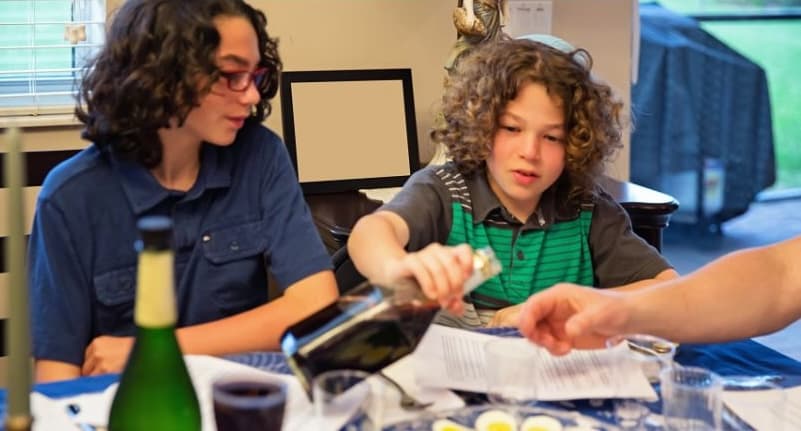
For centuries, Jewish families have gathered around the Seder table to retell the story of the Exodus from Egypt. The Haggadah guides us through a ritual that is both memory and responsibility. As the Torah teaches, “You shall tell your child on that day, saying: It is because of what God did for me when I came out of Egypt.”
Each generation inherits the obligation not only to remember the story, but to tell it in ways that speak to the people sitting around the table today.
For that reason, many families include additional readings, reflections, and small rituals in their Seders. These additions do not replace the traditional text. Rather, they help the ancient story land in ways that feel meaningful and accessible in the present moment. The Seder has always been a living conversation between past and present, between the words of the Haggadah and the experiences we bring with us into the room.
The three short supplements that follow are some of the readings and rituals that I have crafted for my own family Seder this year. They will also form the basis of my teaching this Shabbat Morning, Shabbat HaGadol, alongside other ways the Seder can help us connect the story of our past with the realities of our present and the hopes we carry for the future.
Each of these moments reflects a different dimension of that journey. One acknowledges the narrowness that many of us feel in the world around us, reminding us that the story of Pesach begins in Mitzrayim, a narrow place. One looks outward in hope, inviting Elijah into our homes as a symbol that the world as it is today is not the world as it must always be. And one turns our attention inward, drawing on the tradition of Miriam’s well to remind us that the strength of Jewish life must continually be replenished by the care, courage, and commitment we bring to one another and to our tradition.