Aa
  • Read, Watch, Listen
  • TJI Series
  • Community Action
  • Events
  • Zedi
Follow us and continue the conversation
  • LinkedIn
  • Instagram
  • FaceBook
  • X
  • YouTube
Test yourself with the TJI Quiz!

Adjust size of text

Aa

Follow us and continue the conversation

  • LinkedIn
  • Instagram
  • FaceBook
  • X
  • YouTube

Your saved articles

You haven't saved any articles

What are you looking for?

Original reporting, insightful analysis and diverse views, delivered straight to your inbox

  • LinkedIn
  • Instagram
  • FaceBook
  • X
  • YouTube
Your support fuels our mission to inform, entertain and inspire.

The Jewish Independent is bound by the Standards of Practice of the Australian Press Council. If you believe the Standards may have been breached, you may approach The Jewish Independent or make a complaint to the Australian Press Council in writing at www.presscouncil.org.au. The Council may also be contacted on 1800 025 712.

  • Our Story
  • Contact us
  • Our Team
  • Support us
  • Guidelines
  • Pitch your idea
  • Republishing us
  • Community Action
  • Our Awards
  • LinkedIn
  • Instagram
  • FaceBook
  • X
  • YouTube
Aboriginal FlagTorres Strait Islanders Flag

The Jewish Independent acknowledges Aboriginal and Torres Strait Islander peoples as the Traditional Owners and Custodians of Country throughout Australia. We pay our respects to Elders past and present, and strive to honour their rich history of storytelling in our work and mission.

© The Jewish Independent 2026All Rights Reserved
Website design and development by Your Creative, MelbourneTerms & ConditionsPrivacy Policy
HomeRead, Watch, ListenWorld
AnalysisWorld

Argentina finally reveals truth about giving sanctuary to Josef Mengele

President Perón’s decision to provide the ‘Angel of Death’ with safe haven was driven by a perverted pragmatism that continues to inspire leaders about the benefits of political amorality.
Colin Shindler
Print this
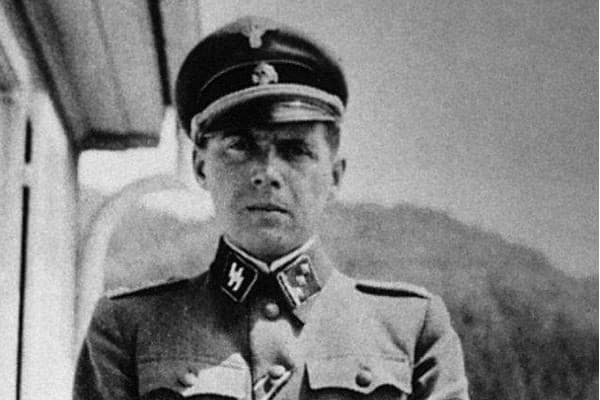
Mengele

Josef Mengele, the ‘Angel of Death’

Published: 5 January 2026

Last updated: 5 January 2026

Last month, the Argentinian government declassified an official file relating to the Nazi war criminal Josef Mengele. He was known as “the Angel of Death” for his sadistic experiments on prisoners in Auschwitz. The release of documentation came about after pressure from Republicans in the US Senate and indicates that the Argentinian authorities knew exactly who Mengele was when he lived in the country during the 1950s – and turned a blind eye to his past and his perverted experiments, carried out in the name of medical science.

Documents in Spanish and Portuguese indirectly note his departure from Argentina to Paraguay in 1959-60 and then on to Brazil where he was given sanctuary by Nazi sympathisers and German families who provided accommodation for him.  Mengele had a stroke and died while swimming near the coastal town of Bertioga, south of Sao Paulo, in 1979 and was buried under an assumed name. DNA testing in 1985 on the exhumed body provided the evidence that it was indeed Mengele.

The recently released file shows that Mengele was listed as a member of a local SS fraternity in Argentina under his real name – and not under the name of Helmut Gregor on his Italian passport, which he used to enter the country in 1949. By 1956, he felt safe enough to obtain a copy of his birth certificate from the West German Embassy in Buenos Aires.

In 1945, Argentina was the country of choice for many Nazis. Thousands escaped to a new life in Latin America and prepared for it by depositing funds in banks in Buenos Aires during the last six months of World War II. Some 800 SS functionaries were able to reach Argentina on Red Cross travel documents.

Catholic Church aided Nazi 'rat line'

Members of the Catholic clergy aided and abetted their escape from Italy. The “rat line” ran through Franco’s Spain, which received flights by the “Fuhrerstaffel” squadron which flew over northern Italy to avoid the advance of the Allies through France. The flights carried both Nazi personnel and funds. Franco’s Spain, along with Salazar’s Portugal and De Valera’s Ireland, were the only European countries to send condolences to Berlin on hearing of the death of Hitler. All Catholic countries.

When the Mossad kidnapped “the architect of the Holocaust”, Adolf Eichmann, from Buenos Aires in 1960 and flew him to stand trial in Jerusalem, the Primate of Argentina, Cardinal Caggiano, commented that he came “to our country in search of forgiveness…and it does not matter what his name is, Ricardo Clement or Adolf Eichmann; our obligation as Christians is to forgive what he has done”. (La Razon, December 23, 1960).

Many Nazis sought refuge in the numerous military regimes in Latin America. The Paraguayan dictator, General Alfredo Stroessner, whose family hailed from the same Bavarian town as Mengele, protected him when he fled from Argentina.

The Argentinian military learnt its trade in colleges which were staffed by instructors of German origin who promoted Prussian military doctrine. Argentina had prevaricated throughout the course of World War II in declaring war on Nazi Germany and only did so under US pressure on March 27, 1945. A few weeks later, Hitler shot himself.

Many of the Nazi fugitives settled in small tourist locations in the mountains of Cordoba and the Patagonian Andean lakes. Towns such as Bariloche were said to replicate Berchtesgaden.

Josef Mengele (left rear) dining with his wife and guests in Brazil, circa 1960 (Wikipedia)

Nazi inspired junta torture

In 1976, a military junta took power and killed over 30,000 people over a period of seven years – including a disproportionate number of Jews. The junta was neither averse to using Nazi symbols in their torture chambers nor reticent in speaking in the sacred name of Christendom. Their operatives were the logical inheritors of the post-war legacy of fleeing Nazis.

The noted Argentinian writer, Tomás Eloy Martínez, who was then in exile in the United States as a fugitive from the junta, wrote a paper about the Nazi war criminals in his country for the Wilson Center in Washington in 1984. It began:

“In May 1965, while on a holiday in the mountains of Cordoba, Argentina, the actress Norma Aleandro met and befriended an old German couple who loved books and flowers. In the afternoons, the three took long strolls through a vine-shaded park where they spoke of politics and world affairs. In the evenings, they dined together on borscht, after which the husband would enthusiastically recite poems by Schiller or his wife would play Schubert pieces on the violin.

“One day, the couple showed Norma Aleandro one of their most prized possessions: A rare edition of Goethe’s Faust, published in Munich around 1850 – and bound in a soft shiny leather which the actress was unable to identify. Curious, she asked the couple what type of binding it was. The old woman lowered her soft gaze and murmured: ‘It’s Jewish skin. My husband was once an official at a concentration camp in Poland.’”

This chilling quote says it all in a few shocking sentences.

In particular, Tomás Eloy Martínez’s report focussed on the figure of Juan Domingo Perón, first Minister of War and then President of Argentina after 1946. A military man, Perón permitted entry both to Nazis after the fall of Hitler, and to Jews after the Holocaust. The Jews would boost commerce and trade while Nazi expertise would contribute to the industrialisation of Argentina.

Perón believed that this would put an end to the economic subservience of Argentina to the British. He even had officials, stationed in Sweden and Switzerland on the look-out for “useful Germans” who might be persuaded to come to Argentina.

In his biography, Perón was clear about the Nuremberg trials: “I personally considered them a disgrace and an unfortunate lesson for the future of humanity. I became certain that the Argentine people also considered the Nuremberg process a disgrace, unworthy of the victors, who behaved as if they hadn't been victorious. Now we realise that [the Allies] deserved to lose the war. (Yo, Juan Domingo Perón (relato autobiografico) Barcelona 1976).”

Among the thousands of assorted Nazis and Fascists that Perón allowed into Argentina, were:

Erich Priebke, SS Commander, responsible for the Ardeatine massacre in Rome in March 1944. He was extradited to Italy in 1996, sentenced to life imprisonment and died in October 2013 aged 100.

Ante Pavelić, head of fascist Croatia (1941-1945) and the Ustaše militia who established concentration camps at Jasenovc and Danica, killed up to 500,000 Serbs, 30,000 Jews and 29,000 Roma. He died in Franco’s Spain in 1959.

Perón feared Stalinists

Perón was a convinced anti-Communist. He found willing Cold War allies who regarded triumphant Stalinists as a more immediate threat than defeated Nazis. This approach led to the early release of convicted Nazis during the 1950s. Hitler’s friend, Francisco Franco, was effectively rehabilitated.

Perón was not apologetic in recruiting Nazis to Argentina. He ridiculed external criticism regarding his policy and pointed to the fact that 1,600 German missile scientists – many of whom had been involved in using slave labour at the Peenemunde and Mittelwerk labour camps – were taken to the US in Operation Paperclip shortly after VE Day 1945. By September 1, 1945, they were living comfortably in Long Island.

Realpolitik, national interests and transactional deals guided Perón in his deliberations rather than antisemitism per se. Eighty years later, Perón’s legacy has not been extinguished. It continues unabated and has blossomed to become a guiding light for many governments today as to how to act without values in the international arena.

Colin Shindler's forthcoming book, A Forever War: Israel, Palestine and the struggles for statehood, will be published on February 26 by Swift Press.

You might also like
  • Rediscovered in Melbourne: the 75-year odyssey of Nazi-looted Jewish books
    Jason Schulman
  • Argentina’s president wraps himself in Jewish symbols while taking a chainsaw to the country
    Florencia Tuchin
  • Holocaust revenge story is far from pure fiction
    Peter Kohn
logomark.67a07ee3
We believe in the free flow of information

Republish our articles for free, online or in print, by using our Creative Commons licence

You might also like

    Protest
    AnalysisIsrael

    Western ‘Palestinianism’ colonises everything – and hurts Palestinians

    Andres Spokoiny 5
    Pro-Palestine Rally Outside Foreign Commonwealth Development Office
    AnalysisWorld

    UK’s dramatic policy change on Israel-Palestine

    Colin Shindler 3
    Erdogan Turkey
    AnalysisIsrael

    Turkey emerges as military threat to Israel

    Dror Doron

About the author

Colin Shindler

Colin Shindler

Colin Shindler is an emeritus professor of Israel Studies at SOAS, University of London. He is the author of several books about Israel: the latest "A Forever War: Israel, Palestine and the Struggles for Statehood" was published in 2026.

More from the author

AnalysisWorld

UK’s dramatic policy change on Israel-Palestine

AnalysisWorld

Diaspora leadership must be candid about its disillusion with Netanyahu

AnalysisWorld

Burnham and Miliband will have trust issues with future Israeli government

AnalysisWorld

If Andy Burnham becomes UK PM, what will that mean for Middle East policy?

Comments

No comments on this article yet. Be the first to add your thoughts.