Aa
  • Read, Watch, Listen
  • TJI Series
  • Community Action
  • Events
  • Zedi
Follow us and continue the conversation
  • LinkedIn
  • Instagram
  • FaceBook
  • X
  • YouTube
Test yourself with the TJI Quiz!

Adjust size of text

Aa

Follow us and continue the conversation

  • LinkedIn
  • Instagram
  • FaceBook
  • X
  • YouTube

Your saved articles

You haven't saved any articles

What are you looking for?

Original reporting, insightful analysis and diverse views, delivered straight to your inbox

  • LinkedIn
  • Instagram
  • FaceBook
  • X
  • YouTube
Your support fuels our mission to inform, entertain and inspire.

The Jewish Independent is bound by the Standards of Practice of the Australian Press Council. If you believe the Standards may have been breached, you may approach The Jewish Independent or make a complaint to the Australian Press Council in writing at www.presscouncil.org.au. The Council may also be contacted on 1800 025 712.

  • Our Story
  • Contact us
  • Our Team
  • Support us
  • Guidelines
  • Pitch your idea
  • Republishing us
  • Community Action
  • Our Awards
  • LinkedIn
  • Instagram
  • FaceBook
  • X
  • YouTube
Aboriginal FlagTorres Strait Islanders Flag

The Jewish Independent acknowledges Aboriginal and Torres Strait Islander peoples as the Traditional Owners and Custodians of Country throughout Australia. We pay our respects to Elders past and present, and strive to honour their rich history of storytelling in our work and mission.

© The Jewish Independent 2026All Rights Reserved
Website design and development by Your Creative, MelbourneTerms & ConditionsPrivacy Policy
HomeRead, Watch, Listen
Feature

Left, right, climate, Israel: the Jewish vote in Australian politics is anything but homogenous

Philip Dalidakis
Print this

Published: 12 April 2022

Last updated: 4 March 2024

PHILIP DALIDAKIS casts an eye over the swirling issues that matter to Jewish voters, and the candidates and seats that will hold spotlight in the 2022 campaign

WITH PRIME MINISTER Scott Morrison finally announcing the election for May 21, the campaign can now officially begin, although of course the parties have been unofficially campaigning for many months. So it’s time for Jewish voters, along with the rest of the country, to decide whether they want another three years of Scott Morrison, or whether they want a switch to Anthony Albanese.

The first point to make is that Jews are a very small minority in Australia, and that overall their votes don’t count for very much. On the most optimistic assessment, there are perhaps 100,000 voters who identify as Jewish, in a national electorate of 17 million. By contrast (and the contrast is relevant in terms of party politics), there are more than 500,000 voters who identify as Muslim, not to mention about 300,000 Indian-Australians and 250,000 Chinese-Australians.

Historically Australian Jews, like Jews everywhere, have tended to live in geographically concentrated areas, so that they are close to Jewish places of worship, Jewish schools and shops which supply Jewish dietary requirements.

But as Australian Jews, like other Australians, have become increasingly secular, as well as more prosperous, our community has become more dispersed. This means that there are very few electorates with a sufficient concentration of Jewish voters to make a difference at election time.

In Victoria, according to the most recent census, those electorates are Macnamara (formerly Melbourne Ports), with 11.8% Jewish voters, Goldstein (7.8%) and Higgins (4.7%). Macnamara covers Caulfield and East St Kilda, Melbourne’s most heavily Jewish suburbs. Goldstein takes in Brighton, Higgins covers Malvern and Toorak. I would add Kooyong to that list, in terms of Jewish interest if not numbers, as it has Australia’s most senior Jewish MP, Liberal party Deputy Leader and Treasurer, Josh Frydenberg.

Frydenberg is the first Victorian Jewish federal MP on the non-Labor side since 1906. This has reassured some Jewish voters that the Liberals are now an acceptable choice.

Most observers believe these percentages are under-estimates, because the census question asks about religion, not identity, and many Jews do not practise any religion, while still identifying as Jews. There is also some lingering reluctance to be identified as Jewish in a government survey – history still hangs heavily over our community. But even allowing for undercounting, there is no electorate in which the sheer number of Jewish voters have a decisive say in who wins the seat.

This fact was obscured for a long time by the polarising figure of Michael Danby, who was MP for Melbourne Ports from 1998 to 2019. Danby was sometimes called “the Member for Tel Aviv,” which was intended as an insult but which he wore as a badge of honour. He was hated by antisemites of both the far Right and the far Left. As a result, many Jewish voters felt obliged to support him, even though they would not have voted Labor otherwise.

But the truth is that even in Melbourne Ports, the Jewish vote was not decisive. Most of the time Labor’s support in the western half of the electorate was enough to outvote those in Caulfield, whichever way Jewish voters chose to vote. Of the other seats I mentioned, Goldstein, Higgins and Kooyong are traditional Liberal strongholds, although that is now changing, with the rise of independents.

Michael Danby retired in 2019 and was succeeded by Josh Burns, who is also Jewish but is a far more engaging and much less confrontational personality. At the 2019 election, Burns got big swings to Labor in the western half of the seat, which Danby had neglected, but his support in Caulfield remained largely stable.

An additional factor in Victoria is the rise to prominence of Josh Frydenberg. The Liberal Party has historically been dominated by Anglo-Saxon Protestants; Frydenberg is the first Victorian Jewish federal MP on the non-Labor side since 1906. This has reassured some Jewish voters that the Liberals are now an acceptable choice.
Then there is the Israel question. Both sides of Australian politics have historically been strong supporters of Israel, and so have almost all Australian Jews. Over the past 40 years, with the rise of Begin, Sharon and Netanyahu, the Left has become increasingly hostile to Israel, in Australia as everywhere else.

Supporters of Israel in the Labor Party have had to fight to hold the policy line, while the Liberals have become increasingly uncritical barrackers for Israel.

Supporters of Israel in the Labor Party have had to successfully fight to hold the policy line, while the Liberals have become increasingly uncritical barrackers for Israel.

During the 2018 Wentworth by-election, Scott Morrison went so far as to promise to move the Australian Embassy from Tel Aviv to Jerusalem, hoping to swing Jewish voters in Sydney’s eastern suburbs. The Liberals lost the by-election, and the embassy is still in Tel Aviv.

This kind of obvious opportunism has probably done the Liberals more harm than good because Australian Jews don’t vote according to a single-issue foreign policy alone and making such an overt statement offends more than it attracts.

At this election, Jewish voters are already finding themselves being courted in unexpected places, as has been demonstrated by the battle between Dave Sharma and Allegra Spender in Wentworth.

Jewish voters are already finding themselves being courted, as has been demonstrated by the battle between Dave Sharma and Allegra Spender in Wentworth.

In Victoria, Josh Burns, with a margin of over 6% and the Liberal party having to preselect a new candidate in the last month, doesn’t appear to be troubled in Macnamara. But both Frydenberg in Kooyong and another sitting Liberal, Tim Wilson, in Goldstein are facing strong and well-funded challenges from independents, who are campaigning for stronger action on climate change and more integrity in politics.

Jewish voters who care about these issues may well feel tempted to support these campaigns, even if it means voting against Australia’s most prominent Jewish politician in Frydenberg or politicians like Wilson and Dr Katie Allen (Higgins, who have demonstrated strong support for the local Jewish community, fighting antisemitism and a strong, safe and secure Israel.

Of all those seats, the key seat to watch is Higgins, where Katie Allen is fighting for her political life against the ALP candidate, and where every vote will count.

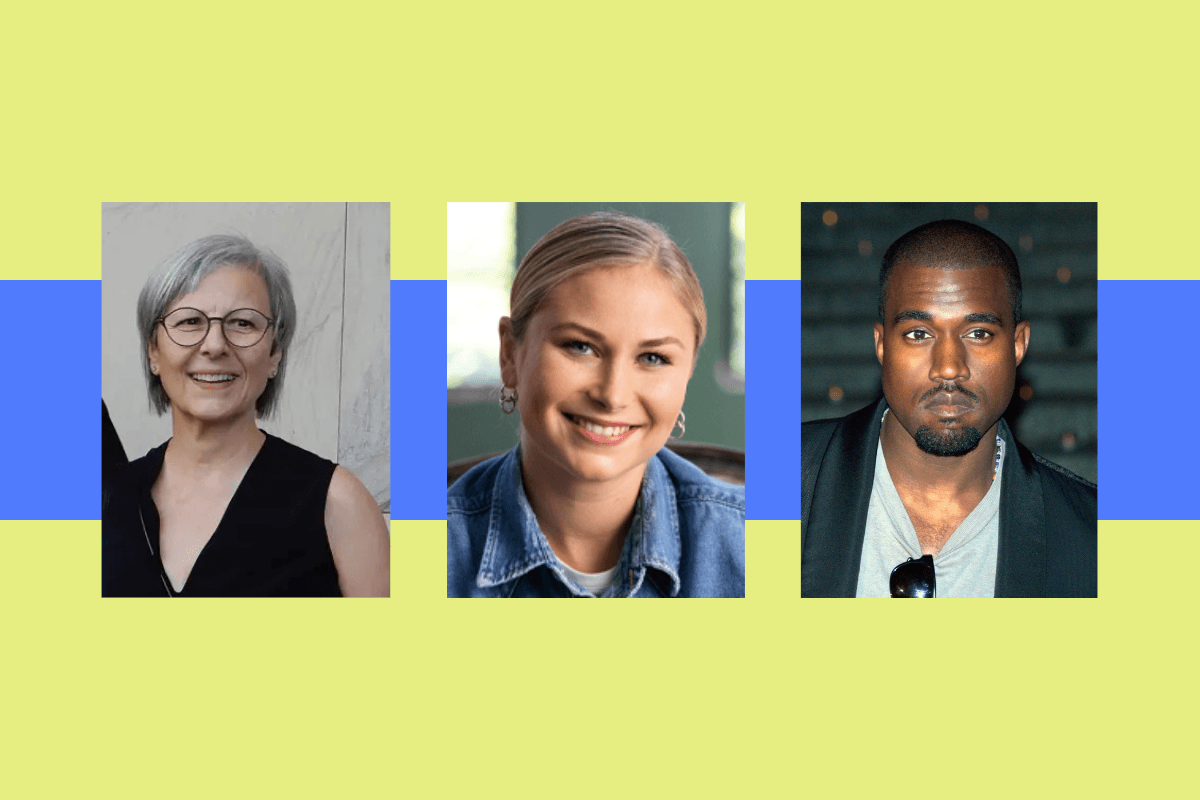
Photo-montage: From left, Josh Frydenburg (Liberal, Kooyong); Dr Katie Allen (Liberal, Higgins); Josh Burns (ALP, Macnamara)

You might also like
  • NDIS changes threaten disabled participation in community life
    Jarod Rhine-Davis
  • Arab party ban won’t hold but reveals a changed Israel
    Ben Lynfield
  • Antisemitism, homophobia and a radical response to both
    Dennis Altman
logomark.67a07ee3
We believe in the free flow of information

Republish our articles for free, online or in print, by using our Creative Commons licence

You might also like

    Copy of Politica Podcast Social Tiles (600 x 400 px)
    Israel Iran WarPodcastIsrael

    Politica – Israeli Politics Explained

    The Jewish Independent 1
    tame kostakidis west
    AnalysisAustralia

    How not to apologise

    Zac Klugman
    Israel Hamas WarFeature

    Inside Hamas’s sophisticated spider web of tunnels

    TJI Wrap

About the author

Philip Dalidakis

Philip Dalidakis

Philip Dalidakis was a Minister in the Andrews ALP government in Victoria and MP representing the Southern Metropolitan region (2014-19).

More from the author

OpinionAustralia

A Greek-Jewish perspective on combatting hatred in Australia

Feature

Turmoil elsewhere should make us grateful for uneventful campaigns

Feature

The most prized voter is ‘the 20-year-old who spends all day staring at their phone ‘

Opinion

Does media bias really influence election outcomes?