Published: 25 April 2018
Last updated: 4 March 2024
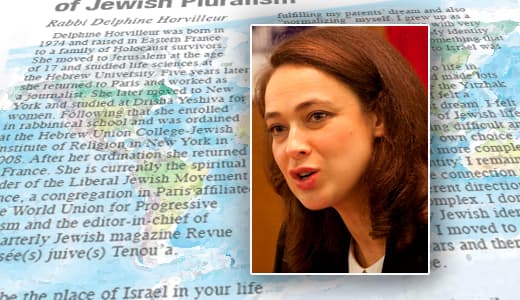
Describe the place of Israel in your life during your childhood
I grew up in a very active Jewish family in a small community. My father was the head of the community and my grandfather was trained as an Orthodox rabbi. Israel and Zionism were strongly present in my parents’ lives, but it was also always an existential option that wasn’t actualised. My grandparents and my parents considered Aliya– but it didn’t happen. It was a dream they could not fulfil. This mindset left me thinking a lot. I had an urge to change that pattern.
So, at age 17, I decided to move to Israel. By doing so, I felt I was fulfilling my parents’ dream and also “normalizing” myself. I grew up as a very “lonely” Jew in an area with very small Jewish communities. My identity felt broken or incomplete, something that needed correction. Moving to Israel was supposed to fix it.
I adjusted very quickly to life in Israel, learned Hebrew and made lots of friends. And then came the Yitzhak Rabin assassination and I felt a shockwave in my Zionist dream. I felt that the “normalisation” of Jewish life actually breeds something difficult and poses a question on my own choice. I needed to go back to a more complex and multidimensional identity. I remained a Zionist, but now the connection to Israel took on a different direction, more mature, and more complex. I don’t expect Israel to “solve” my Jewish identity issue. From France I moved to the United States for a few years and there I pursued my rabbinic degree.
How would you describe the French Diaspora?
I grew up only with one model of Diaspora, the French model. I knew nothing about other Diasporas, particularly the American Diaspora, as if it didn’t exist. For me, American Judaism meant Philip Roth and Woody Allen ... I didn’t know about the principle of religious pluralism, about Reform Judaism and about the creativity of American Judaism. When I moved to America to study Jewish texts, it was a shock. I encountered a developed Jewish world, with a creativity and joie-de-vivre.
It felt very different from the French model I experienced which is based strongly on the memory of the Holocaust, battling anti-Semitism, and the connection to Israel. In America I discovered a Judaism that operates outside those three elements. This is what compelled me to pursue my rabbinate over there. From my perspective, American Judaism was an important source of inspiration, something that paradoxically enriched my perception of Jewish life in France.
I regret the fact that French Jewish institutions often lack an independent voice and position themselves around Israel, and if I may say so, around the right-wing voices that are coming from Israel. I try to develop a different voice in the French Jewish discourse and that occasionally gets me into trouble.
How would characterise your position within French Jewry?
I see myself as a different voice in the French Jewish landscape. Sometimes my opinion here, that would probably be very main-stream in America or even for an Israeli audience, is perceived here as very progressive or far from the community’s consensus. For example, recently I argued that the city of Jerusalem is instrumentalised by political leaders and communal agenda, and I was heavily criticised. Just one sentence caused a huge uproar.
I was suddenly considered a traitor by some Jewish right-wing activists and received hate mail and threats. Many Jews supported me quietly, but for others, they believe in the concept that ‘dirty laundry must stay within’. The culture of controversy among French Jewry is gone. Anti-Semitism pushed Jews to uniformity. Controversy is perceived as luxury. This is a prescription for an anti-pluralistic culture. Whoever is critical is considered a heretic.
What is Israel’s contribution to the climate among French Jews?
The Israeli government sends us a message that pluralism is not desirable. The Israeli rabbinate’s definition of who is a Jew places many outside the Jewish community. We are moving into a lose-lose situation. There is a paradox in Europe: while liberal Judaism faces hostility in the community, our synagogues are full. We represent a Judaism that is present in the general culture. We get legitimacy from being out there, and less from our own community. Liberal Judaism in Israel is a key for our strength. If liberal Judaism will thrive in Israel it will give us the legitimacy we seem to lack in the eyes of some French Jews.
What do you expect of Israel?
We really need Israel’s endorsement of Jewish pluralism. Israel should not reinforce the monolithic centralised system. Jewish identity was always multi-voiced, both within and in its ability to negotiate with the outside world. Diaspora was a platform for diversity. Israel has pushed the Jewish world in a monolithic direction. Israel should serve as a laboratory for diversity. I expect Israel and Israelis to respect our diversity and to see it as a source of inspiration, not a weakness. At the same time we need to strengthen our ties with American Jewry and other communities around the world to work on what could be a powerful Jewish identity in tomorrow’s Diaspora.


