Aa
  • Read, Watch, Listen
  • TJI Series
  • Community Action
  • Events
  • Zedi
Follow us and continue the conversation
  • LinkedIn
  • Instagram
  • FaceBook
  • X
  • YouTube
Test yourself with the TJI Quiz!

Adjust size of text

Aa

Follow us and continue the conversation

  • LinkedIn
  • Instagram
  • FaceBook
  • X
  • YouTube

Your saved articles

You haven't saved any articles

What are you looking for?

Original reporting, insightful analysis and diverse views, delivered straight to your inbox

  • LinkedIn
  • Instagram
  • FaceBook
  • X
  • YouTube
Your support fuels our mission to inform, entertain and inspire.

The Jewish Independent is bound by the Standards of Practice of the Australian Press Council. If you believe the Standards may have been breached, you may approach The Jewish Independent or make a complaint to the Australian Press Council in writing at www.presscouncil.org.au. The Council may also be contacted on 1800 025 712.

  • Our Story
  • Contact us
  • Our Team
  • Support us
  • Guidelines
  • Pitch your idea
  • Republishing us
  • Community Action
  • Our Awards
  • LinkedIn
  • Instagram
  • FaceBook
  • X
  • YouTube
Aboriginal FlagTorres Strait Islanders Flag

The Jewish Independent acknowledges Aboriginal and Torres Strait Islander peoples as the Traditional Owners and Custodians of Country throughout Australia. We pay our respects to Elders past and present, and strive to honour their rich history of storytelling in our work and mission.

© The Jewish Independent 2026All Rights Reserved
Website design and development by Your Creative, MelbourneTerms & ConditionsPrivacy Policy
HomeRead, Watch, ListenIsrael
InterviewIsrael

Fighting for a better Israel 

Peter Kohn
Print this
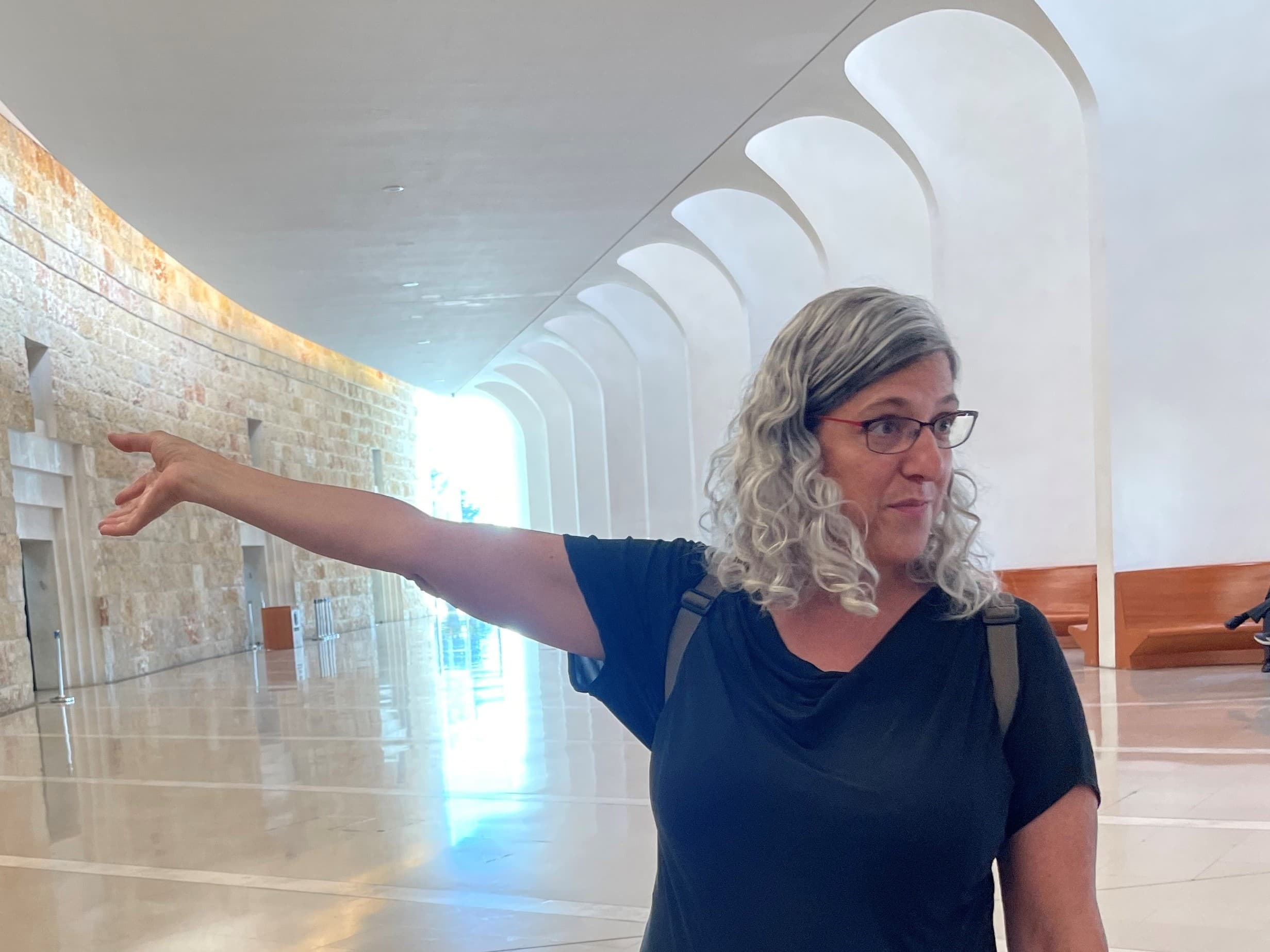
Orly Erez-Likhovski at High Court

Orly Erez-Likhovski at Israel’s High Court, where she fights for religious equality (supplied)

Published: 23 October 2026

Last updated: 23 October 2026

By the time Orly Erez-Likhovski visits Australia next month, the election will be over. She hopes Israel will have taken its first steps towards a dramatic change.  

As Executive Director of the Israel Religious Action Center (IRAC), Erez-Likhovski is deeply aware of the many ways in which Israeli society could improve.  

She has watched the dramatic decline of social cohesion and accountability under Netanyahu with deep concern. 

“The tragedy of this government – the most terrible thing they did – was to promote hatred and division within Israeli society, incitement against different sectors, and the legitimisation and normalisation of hate, especially against Palestinians, but really against anybody who disagrees with the government,” she tells The Jewish Independent. 

Erez-Likhovski will be in Australia next month – her second trip Down Under – as the keynote speaker at the Union for Progressive Judaism (UPJ) biennial conference in Melbourne (November 19-22), where she will provide insights into IRAC and dissect the results of the Israeli election for delegates from the UPJ’s region in Australia and New Zealand. 

So many failures 

Her list of grievances against Prime Minister Benjamin Netanyahu’s government is long. “The Gaza war, which started as a justified war after October 7, has been going on forever with unbelievable loss of life on all sides. So many Israeli soldiers have been killed and wounded, and so many innocent Palestinians have lost their lives. We’ve had a ceasefire for a year now, but unfortunately the situation is not much better. 

“People are saying a multi-front war is now the new normal. But driving on the highway and suddenly having to find a place to hide is not normal,” she says. “We need a government that has some kind of longer plan to end this.” 
Erez-Likhovski condemns Netanyahu’s refusal to hold an independent inquiry into October 7, noting that the farther the events recede, the more difficult it will be to conduct an effective probe. “It’s infuriating that the government is not accountable. Historically, Israeli governments have been held accountable for much smaller issues than October 7.” 

IRAC is also fiercely critical of the ongoing exemption of Haredim from military service. But Erez-Likhovski foresees danger in rapidly drawing in some 60,000 ultra-Orthodox into the IDF. She sees a need for an incremental transition that ensures Haredi soldiers see their commanders, not their rabbis, as the ultimate authority for their actions while on duty. 

Already, attempts to attract Haredim into military service have led to gender segregation to ease their pathway, a practice she adamantly rejects. 

Erez-Likhovski charges that the Netanyahu government has been “incompetent” – its political appointments in the education sector have lowered students’ examination scores, and calls by IRAC for a national core curriculum, which would impart basic national civic values to all Israelis, have been ignored. 

In transport, there have been lapses such as the one that enabled the flydubai incident, and in policing, where extremist National Security Minister Itamar Ben-Gvir holds the portfolio, there is widespread sanctioning of West Bank settler violence, a lawless culture she predicts will eventually seep into Israeli life behind the green line. 

Public funding has been diverted to settlers and to ultra-Orthodox communities which support the present government, while money to rehabilitate former hostages and their families, evacuees still homeless after the 2023 Hamas attacks, and communities within Israel’s Reform movement is scarce, she says. 

Discrimination against the Reform/Progressive movement runs rampant. Since 2017, when Netanyahu’s cabinet froze a milestone agreement to give Progressive Jews, including Jewish women, an egalitarian prayer space at the Kotel, there has been no safe access.  

Women are prohibited from reading from a Torah scroll in the women’s section of the Kotel. “The violence against women at the wall is continuing every Rosh Chodesh – the situation is unbelievable. We are going to demand a change.” 

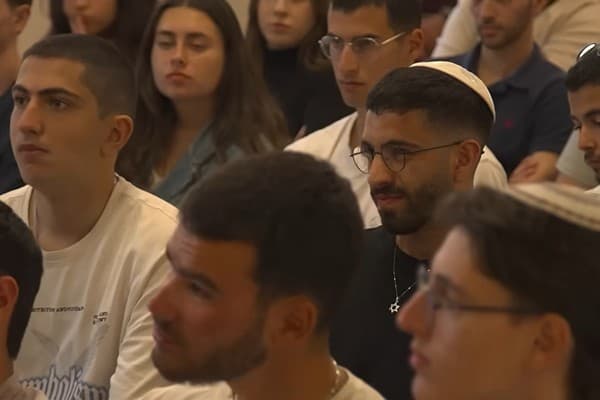
There have also been physical attacks on Reform/Progressive synagogues, which she attributes to “ignorance and incitement against the Reform movement”. The Reform Kol HaNeshama synagogue was attacked five times over the recent Rosh Hashanah-Yom Kippur period by kippah-wearing youths hurling glass plates and eggs at worshippers. 

Things can change 

Erez-Likhovski is comforted by the knowledge that more than a year ago, on October 13, the last living Gaza hostage was returned to Israel.  

“I keep reminding myself that things can change for the better and that we have the power to change them. The Reform movement was very involved in bringing the hostages back, holding Havdalah ceremonies at hostage squares in Tel Aviv and Jerusalem for over 100 Shabbatot. We were really at every protest calling for the return of the hostages.  

“The fact that they came back home was not only due to the pressure by [US President Donald] Trump and Netanyahu, but also because of the public pressure.” 

One of the greatest hopes the IRAC chief holds for this election is that it will produce a government that will revisit relations between Israel and the Diaspora. She is deeply conscious that her visit will come some three weeks before Jewish Australians mark one year since the Bondi Beach terrorist attack that claimed 15 innocent lives at a Chanukah celebration. 

“I’m coming to show support because I know how difficult it is and my heart goes out to you. It goes both ways, and after October 7, more and more Israelis understand the need for a strong connection to Diaspora Jews. We do understand what Jews are going through, whereas before October 7, people really had no idea.” 

Erez-Likhovski encourages Diaspora Jews to speak frankly about Israel’s policies. “I know how difficult it is to criticise Israel under these circumstances, but part of loving Israel is telling it when it is making mistakes.  

“It obviously depends on the forums and when you do it, but it’s really important to differentiate between the Israeli government and the people – sometimes it’s a very nuanced message that is hard to get across, particularly to people who are not familiar with the details.” 

Looking ahead, she reflects, “We’re not naïve, we’re living in a very dangerous environment, and we have to understand how we’re protecting ourselves while trying to change things for the good in the long run.” 

For more information on IRAC and to subscribe to its newsletter, The Pluralist, and related podcasts, visit https://www.irac.org/the-pluralist. At the UPJ biennial conference, Orly Erez-Likhovski will take part in a podium conversation with TJI Editor Deborah Stone. 

You might also like
  • Where are the women in this election campaign?
    Eetta Prince-Gibson
  • Record spike in settler violence ahead of election
    Ben Lynfield
  • Your Israel election cheat sheet
    Deborah Stone
logomark.67a07ee3
We believe in the free flow of information

Republish our articles for free, online or in print, by using our Creative Commons licence

You might also like

    Young Israelis
    Israel Votes 2026FeatureIsrael

    Security fears and incitement drive young voters toward far-right

    Ben Lynfield 1
    election maze copy 3
    Israel Votes 2026ExplainerIsrael

    There are three likely outcomes in Israel’s election. None is simple

    Sharon Offenberger 1
    shahar nevo east jerusalem
    AnalysisIsrael

    Terror plot to kill hundreds of Arab Israelis thwarted

    Ben Lynfield

About the author

Peter Kohn

Peter Kohn

Peter Kohn is an Australian journalist who began his career at the Herald & Weekly Times. For 43 years, he was associated with The Australian Jewish News. For the past decade, he held the title of Senior Journalist at the newspaper. He is the author of two novels. Rachel’s Chance is the story of his family’s experiences as Jewish refugees in Shanghai during World War II, and View From A Sandcastle is based on his own story, growing up in Melbourne suburbia during the 1960s and 1970s.

More from the author

FeatureAustralia

Learning from the Jewish refugee story

FeatureWorld

‘Your help is extremely needed’: Jewish aid group on the ground after Nepal flood

NewsAustralia

Strategies for cohesion final focus of Royal Commission hearings

NewsAustralia

Evidence of declining social cohesion and the efforts to turn it around