Published: 13 October 2026
Last updated: 13 October 2026
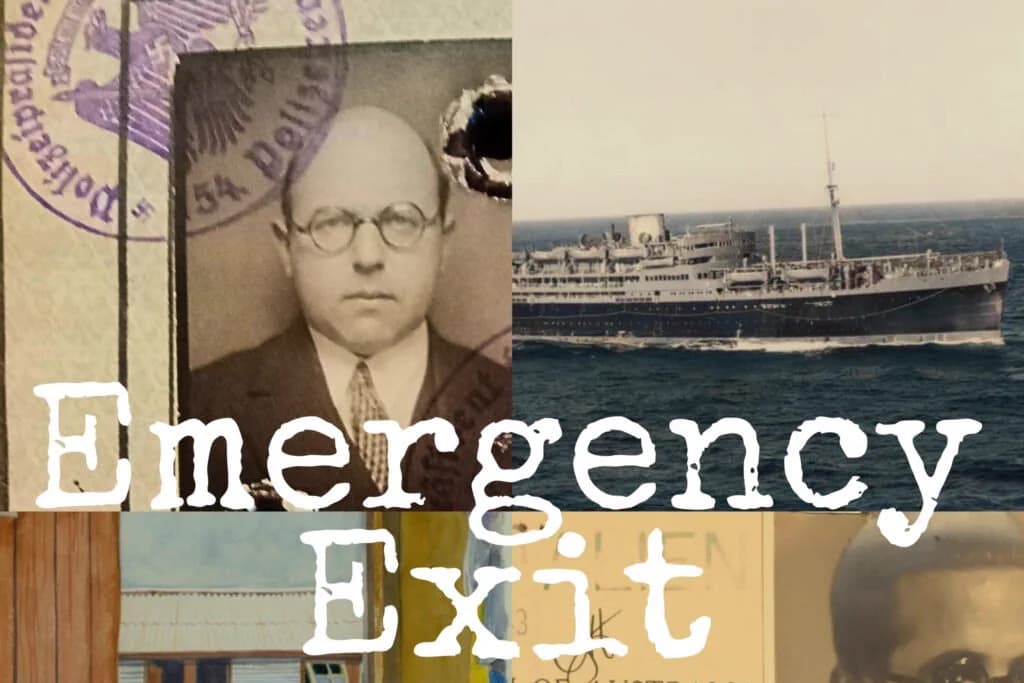
When Australian human-rights lawyer Josh Bornstein was invited to narrate the podcast Emergency Exit: seeking refuge in the shadow of fascism he accepted the offer in memory of his Polish-born paternal grandparents.
For Zelman and Jean (Janta) Bornstein, their odyssey to Australia was perilous. Shortly into their voyage, Janta suffered a miscarriage and was taken off the ship in Germany, where she received treatment from a Nazi doctor, and Zelman was interrogated.
But after a week, they were permitted to board another vessel for the trip to Australia. They docked at Port Melbourne in September 1938. It was a stroke of luck not shared by Zelman’s family. His parents and all eight siblings died in the Holocaust.
The maze of restrictive rules determining who could exit Europe and who could not, who would be admitted to Australia and who would not, struck a chord in Josh Bornstein, who tells TJI that his family heritage “imprinted in me that the first obligation you have is for the underdog”.
These barriers were an obstacle course he sees impacting today’s Australia, as politicians spout immigration statistics and circulate slogans designed to harness the support of the fearful and the hateful.
Bornstein’s sense of compassion underpinned his 29 years at industrial relations law firm Maurice Blackburn. And it inspired his headline-making defence of eight-year-old Iranian asylum seeker Shayan Badraie, a 2003 boat arrival who was placed into Australian mandatory detention. The boy eventually reached an out-of-court settlement, the first time the federal government conceded that a child suffered psychological harm in mandatory custody.