Published: 12 March 2019
Last updated: 4 March 2024
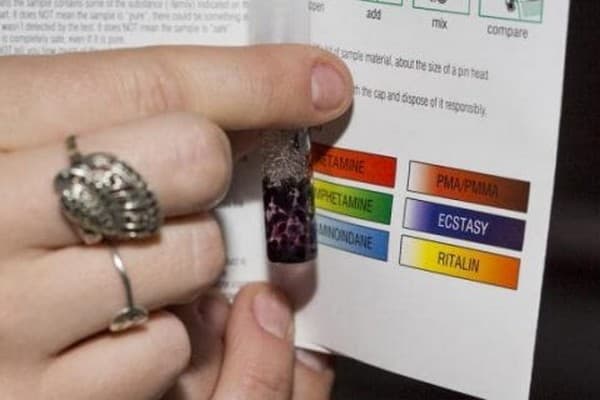
Many voices from within the medical community have suggested implementing the “successful” European model of pill testing, which can expose what a tablet contains and how pure it is. The hope is to both prevent accidental overdoses, as well as provide drug counselling to those individuals who agree to the testing.
Opponents to this proposal, including NSW Premier Gladys Berejiklian, have expressed concerns that pill testing would create "a false sense of security" for drug users as well as sending a powerful message condoning, or at least accepting, drug usage.
What does Jewish law say about this situation?
The dilemma here is: when a person engages in risky behaviour with a purely recreational purpose, should we, the society, be seeking to mitigate that risk?
On the one hand there is a Talmudic discussion regarding demarcating of trees that are Netah Revay to ensure that no-one accidentally eats the prohibited fruit. (Netah Revay is the term used for a newly planted tree whose fruits are prohibited for consumption during the first three years of growth.)
The Talmud clarifies that the obligation for signage is only during the “Sabbatical” year, which dates from the Book of Exodus: every seventh year, debts are to be forgiven, agricultural lands to lie fallow, private land holdings to become open to the commons, and food staples are to be freely redistributed and accessible to all.
But during the other six years, where taking fruit without permission would be theft, no signage is necessary. Since the person partaking from the tree would be doing so without permission, i.e. theft, the Talmud says, “Let the wicked person die in his wickedness”.
From this Talmudic passage it would appear that when someone acts contrary to ethical norms, we are not expected to protect them from the unintended consequences of that action.
But can we draw a parallel between a case of theft, where the victim and the criminal are different people, and our case where the victim and the criminal are one and the same. Just because we are callous toward the thief’s spiritual consequences of indulging in prohibited fruit, should we be similarly indifferent to potential fatal consequences for a young soul?
On the other hand, there is an explicit verse in the Torah that states: “Do not stand idly by while someone’s life is endangered”.
The Talmud (Sanhedrin 73a) elaborates on this verse by asking,
“From where do we know that if a person is drowning in a river, or if a wild animal is dragging someone away, or if bandits are accosting him that we are obligated to save them? The verse states, “Do not stand idly by …”
The Torah is clear that we have a mandate to actively prevent injury or loss of life. But does this halacha (Jewish law) apply if the person willingly throws themselves into the river? When a person voluntarily enters a dangerous situation perhaps it exempts me from the responsibility of saving them.
However, to the best of my knowledge no-one has suggested that paramedics not treat people who have overdosed, using the logic of “let the wicked die in his wickedness”. So couldn’t we argue that prevention is better than cure?
The above arguments focus on the micro issue, the saving of lives, albeit many lives. The macro question, however, is what kind of message does delivering these sort of services send to society as a whole, and the youth in particular.
While providing condoms in schools may prevent unwanted pregnancies and STDs, what is the cost borne by society when barely pubescent children are sexually active? Is there a deleterious effect on relationships in general and the future family unit in particular?
All of the above considerations need to be considered when rendering a halachic decision.
If we only view dilemma from one perspective, we risk ignoring the depth of compassion, pain and suffering that others are experiencing. Whichever side of the fence we find ourselves on.
Jewish law provides concrete answers to modern questions, but answers are not solutions. Every dilemma negotiated only seems to confirm one deeply-held value at the cost of another.
In the case of pill testing it would appear that saving lives in the here and now, would most likely outweigh the concerns of potential long-term societal degradation. Nevertheless, pill testing is a case of treating the symptom rather than the problem. Addressing drug usage is a battle that should never be surrendered.