Aa
  • Read, Watch, Listen
  • TJI Series
  • Community Action
  • Events
  • Zedi
Follow us and continue the conversation
  • LinkedIn
  • Instagram
  • FaceBook
  • X
  • YouTube
Test yourself with the TJI Quiz!

Adjust size of text

Aa

Follow us and continue the conversation

  • LinkedIn
  • Instagram
  • FaceBook
  • X
  • YouTube

Your saved articles

You haven't saved any articles

What are you looking for?

Original reporting, insightful analysis and diverse views, delivered straight to your inbox

  • LinkedIn
  • Instagram
  • FaceBook
  • X
  • YouTube
Your support fuels our mission to inform, entertain and inspire.

The Jewish Independent is bound by the Standards of Practice of the Australian Press Council. If you believe the Standards may have been breached, you may approach The Jewish Independent or make a complaint to the Australian Press Council in writing at www.presscouncil.org.au. The Council may also be contacted on 1800 025 712.

  • Our Story
  • Contact us
  • Our Team
  • Support us
  • Guidelines
  • Pitch your idea
  • Republishing us
  • Community Action
  • Our Awards
  • LinkedIn
  • Instagram
  • FaceBook
  • X
  • YouTube
Aboriginal FlagTorres Strait Islanders Flag

The Jewish Independent acknowledges Aboriginal and Torres Strait Islander peoples as the Traditional Owners and Custodians of Country throughout Australia. We pay our respects to Elders past and present, and strive to honour their rich history of storytelling in our work and mission.

© The Jewish Independent 2026All Rights Reserved
Website design and development by Your Creative, MelbourneTerms & ConditionsPrivacy Policy
HomeRead, Watch, ListenArts & Culture
InterviewArts & Culture

Why the Jewish way of reading is perfect for getting children to read

Ilana Kurshan structured her new book in five parts to correspond to the five books of Moses, entwining Bible stories with the story of reading to her offspring.
Elana Benjamin
Print this
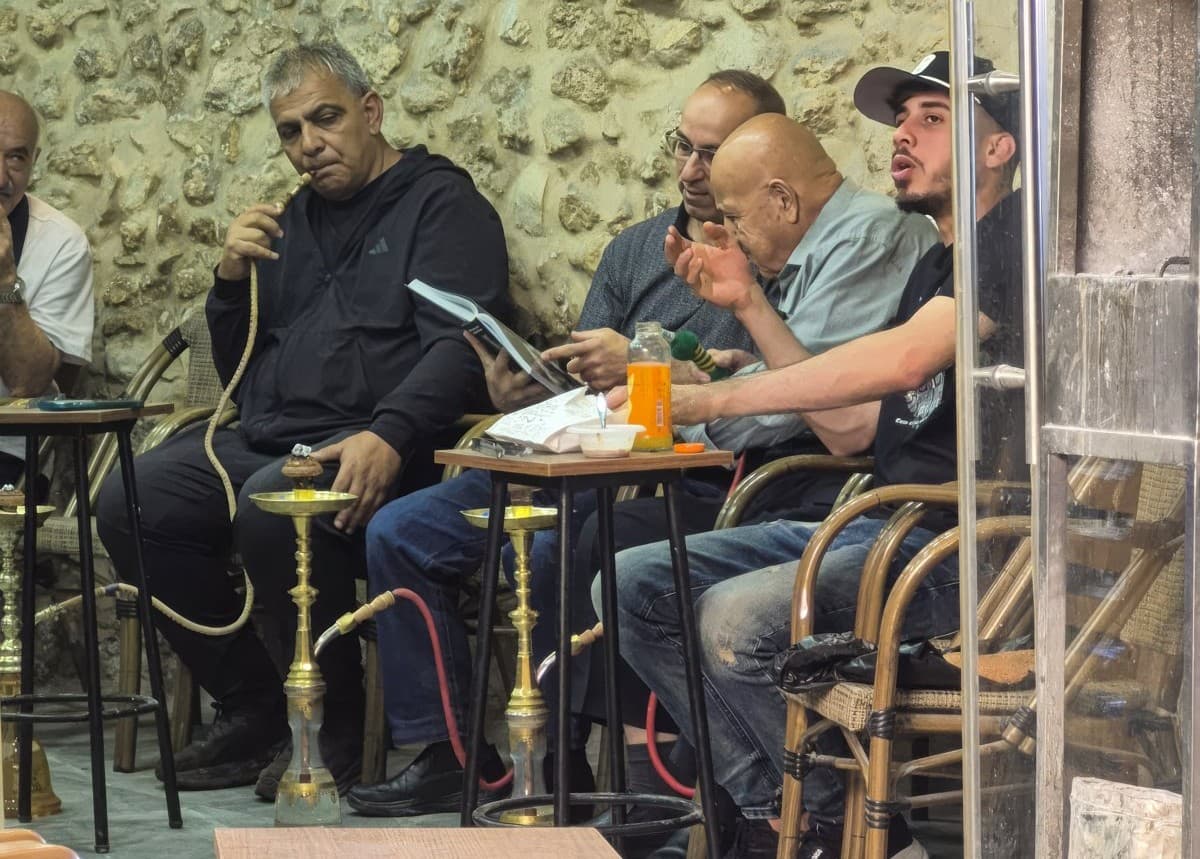
Ilana Kurshan and her book

Ilana Kurshan and her book (Sharon Gabay)

Published: 19 November 2025

Last updated: 19 November 2025

Research from HarperCollins UK published earlier this year found that the number of parents reading to their children is at an all-time low; Australian data similarly shows that fewer mums and dads are reading aloud to their children. But Jerusalem-based author Ilana Kurshan is not one of those parents.

Kurshan, the winner of the 2018 Sami Rohr Prize for Jewish Literature for her memoir, If All the Seas were Ink, has written a new book about the stories, both secular and sacred, that she reads to her five kids. Titled Children of the Book: A Memoir of Reading Together, it’s about how Kurshan – who is also an editor, translator, book reviewer and teacher of Torah – reads to her children as a way of reconciling her passion for books with her responsibilities as a mother.

Children of the Book is structured in five parts to correspond to the five books of the Torah, and Kurshan deftly entwines Bible stories with the story of reading to her offspring. The idea for the memoir came to her some years ago, when her youngest child kept insisting that she read Eric Carle’s The Very Hungry Caterpillar to him. She thought to herself: why does he want to hear this book again?

In a moment which I suspect every parent today can relate to, Kurshan is filled with rage and imagines herself, like Moses, smashing the tablet

Kurshan realised that just like parents read the same books over and over to their young children, we Jews are always re-reading the same books – not just the Siddur but also the Torah that we read in a yearly cycle. “I began to see that there was a more profound parallel between the experience of reading with children and that uniquely Jewish way of reading. And I wanted to unpack and explore that,” she says.

Kurshan grew up on Long Island, New York, in a house full of books, where her parents read to her every night. Her father, now retired, was a Conservative rabbi; he regularly read Jewish picture books and Torah stories to children in the community – but only after reading them to his own four children first. And her maternal grandmother was a professional book reviewer.

Against this backdrop, Kurshan developed her own love of literature. “I had read to myself more or less continuously since I was a child, with a few breaks here and there for dinner, or math class, or college graduation,” she writes. She had an after-school job at her local public library; she worked at the main library at Harvard when she was in college.

Reading any time, any place

And she carried a book with her everywhere she went, often reading while walking. She even read between contractions during the birth of her first child! “I’ve always been more at home in a book than inside the real world,” she tells The Jewish Independent.

But as those of us with children can attest, motherhood changed everything. “Even today, when my oldest son is ten, my twin daughters are eight, my next daughter is five and my youngest son is turning three,” she writes, “I can rarely read to myself when they are around. And so I read to my children instead.” And read to her children she does: at mealtimes, before they go to bed, in moments of distress and on special occasions.

I hope readers get a sense of the richness that's possible when the life of your family unfolds against the backdrop of shared texts

While I was unfamiliar with many of the books Kurshan reads with her children, others brought back memories of beloved fictional characters from my childhood such as Amelia Bedelia, as well as stories I’d read to my own kids, like Sandra Boynton’s The Going to Bed Book (which I can still recite verbatim and cannot bring myself to give away, even though my children are now 20 and 17).

But Kurshan’s book offers readers much more than nostalgia for their favourite children’s literature, as she grapples with the challenges of parenthood while drawing insightful parallels to stories from the Torah.

For example, her chapter titled Left to Their Own Devices centres around the biblical story of the two tablets – the Ten Commandments – and Kurshan’s rules about her children’s use of a different tablet: an iPad. To recap the Bible story, Moses ascends Mount Sinai to receive the Ten Commandments but when he doesn’t return as expected, the Jewish people build an idol in the form of a golden calf. When Moses comes down from the mountain and sees the people dancing around the idol, he smashes the tablets in anger.

Kurshan weaves in her own story: she’s not always home when her older kids return from school, though she’s usually home soon after. “They know the rules, both the positive and negative commandments: Do homework. Practice instruments. No junk food. And above all – the rule that is most frequently violated – no screens.” She comes home from work and, you guessed it, she finds her twin daughters on the iPad.

“I know this is one of those parenting moments when I ought to stop for a moment and take a deep breath,” she writes. “After all, there are many valuable ways to use screens… But I know how my twins use devices, and I have no doubt what they are doing.” In a moment which I suspect every parent today can relate to, Kurshan is filled with rage and imagines herself, like Moses, smashing the tablet.

Beyond the technology trap

As Kurshan notes, technology creates both challenges and opportunities. With research showing that fewer parents are reading to their kids, and YouTube full of children’s books being read aloud, what does she think of time-poor parents outsourcing bedtime stories to YouTube? Unsurprisingly, Kurshan isn’t fond of this approach.

“It's so different when your child hears a story told in your voice,” she says. When you read with your child, Kurshan explains, they can stop you and ask questions, allowing you to learn what’s on their mind. You can share something, add in a word or two, or make changes so that it’s appropriate for your child. “There’s just so much possibility for interaction, which doesn't happen when it's a flattened text on a screen.”

So, what suggestions does she have for busy parents? “If it's hard to carve out time at home to read with your child, then just take a lightweight book, put it in your bag, and carry it with you wherever you go. And the next time you're with your child and tempted to take out your [mobile] phone, take out the book instead.”

Kurshan believes that a large part of the reason parents aren’t reading with their children anymore is because they're not reading to themselves anymore. “I think our first impulse is very often to reach for a screen. So the best answer is to start with yourself and be aware of how much time in your day you spend on digital technology.”

In an age where our phones are almost an extension of our bodies, choosing to read a physical book instead of defaulting to screens during downtime seems almost subversive. But Kurshan is passionate about the benefits of reading to children. “One thing I hope parents take away from my book is that reading with your children is not only really fun and a way of connecting with your kids, but it can also be a very helpful parenting strategy,” she says.

Reading stops arguing

Indeed, Kurshan writes that the primary reason she reads with her children at mealtimes is to stop them from arguing. (“I know from the book of Genesis how dangerous sibling rivalry can be,” she continues.)

Reading also has myriad benefits for children, she says, including exercising their muscles of imagination and learning to tolerate discomfort. “When you read, you often have to deal with uncertainty. Many books start in the middle [of a story]. You don't know what's happened before. You don't know exactly what's going on, but with time, you figure it out. This is especially true of grown-up books,” she says.

“I think it's so important that kids learn to sit with what they don't know, especially in an age where every answer seems like it’s just a ChatGPT question away.” And, as she points out, AI is useless when it comes to life’s most difficult questions, like What do I want to be when I grow up? and Can I make the world a better place?

And so, although her memoir has now been published, Kurshan continues to read to her children – including her son, now 14, and daughters, now 12. But it’s a different kind of reading than when they were little: often, she reads just the first chapter of a book to her older kids, as way of sharing the experience of entering that world for the first time. Having her children grow into independent readers, however, has been bittersweet.

“I have had to learn how to let go as my children venture into stories and settings without me, leaving me to look on from afar,” she writes, drawing a parallel to Moses who had to part from the Israelites before they entered the Promised Land.

Ultimately, Children of the Book is about how shared stories can become a common language which binds a family together. “I hope readers get a sense of the richness that's possible when the life of your family unfolds against the backdrop of shared texts,” Kurshan says, explaining that these texts can become a source of connection and inside jokes.

With this in mind – especially in our age of AI and decreased human interaction – reading with our children is surely worth unplugging for.

Children of the Book: A Memoir of Reading Together by Ilana Kurshan is published by St Martin’s Press.

You might also like
  • A celebration of chutzpah, from Moses to modern times
    Ralph Genende
  • Torah scribe writes herself into Australian herstory
    Peter Kohn
  • Between tribalism and compassion 
    Andrew Wirth
logomark.67a07ee3
We believe in the free flow of information

Republish our articles for free, online or in print, by using our Creative Commons licence

You might also like

    Eden Bahar
    InterviewArts & Culture

    ‘L’chaim for the next 1,500’: Israeli drummer celebrates Cirque Du Soleil milestone

    Gideon Cohen
    Copy of Website books template (2)
    FeatureArts & Culture

    The winning Jewish books by Australians in the past year

    Gideon Cohen
    Wake main 2nd
    FeatureArts & Culture

    New ‘spoken word’ festival in Sydney offers stories directly from creators

    Miriam Hechtman

About the author

Elana Benjamin

Elana Benjamin

Elana Benjamin is a Sydney-based writer whose articles have been published widely, including in Good Weekend, Sunday Life and the Sydney Morning Herald. Elana is also the author of ‘Indian-Jewish Food: Recipes and Stories from the Backstreets of Bondi’, which is out now.

More from the author

ReflectionArts & Culture

At last, a writers festival invites Ruptured authors to speak

FeatureAustralia

In western Sydney, a thriving Jewish community looks to the future

ReflectionLifestyle

How do introverts fit into Jewish life?

Comments

No comments on this article yet. Be the first to add your thoughts.