Aa
  • Read, Watch, Listen
  • TJI Series
  • Community Action
  • Events
  • Zedi
Follow us and continue the conversation
  • LinkedIn
  • Instagram
  • FaceBook
  • X
  • YouTube
Test yourself with the TJI Quiz!

Adjust size of text

Aa

Follow us and continue the conversation

  • LinkedIn
  • Instagram
  • FaceBook
  • X
  • YouTube

Your saved articles

You haven't saved any articles

What are you looking for?

Original reporting, insightful analysis and diverse views, delivered straight to your inbox

  • LinkedIn
  • Instagram
  • FaceBook
  • X
  • YouTube
Your support fuels our mission to inform, entertain and inspire.

The Jewish Independent is bound by the Standards of Practice of the Australian Press Council. If you believe the Standards may have been breached, you may approach The Jewish Independent or make a complaint to the Australian Press Council in writing at www.presscouncil.org.au. The Council may also be contacted on 1800 025 712.

  • Our Story
  • Contact us
  • Our Team
  • Support us
  • Guidelines
  • Pitch your idea
  • Republishing us
  • Community Action
  • Our Awards
  • LinkedIn
  • Instagram
  • FaceBook
  • X
  • YouTube
Aboriginal FlagTorres Strait Islanders Flag

The Jewish Independent acknowledges Aboriginal and Torres Strait Islander peoples as the Traditional Owners and Custodians of Country throughout Australia. We pay our respects to Elders past and present, and strive to honour their rich history of storytelling in our work and mission.

© The Jewish Independent 2026All Rights Reserved
Website design and development by Your Creative, MelbourneTerms & ConditionsPrivacy Policy
HomeRead, Watch, ListenAustralia
InterviewAustralia

From antisemite to ally: the power of friendship

When a Jew and a tattooed skinhead became training partners in a Sydney gym, it was the start of journey of transformation.
Elana Benjamin
Print this
kadoury main V2

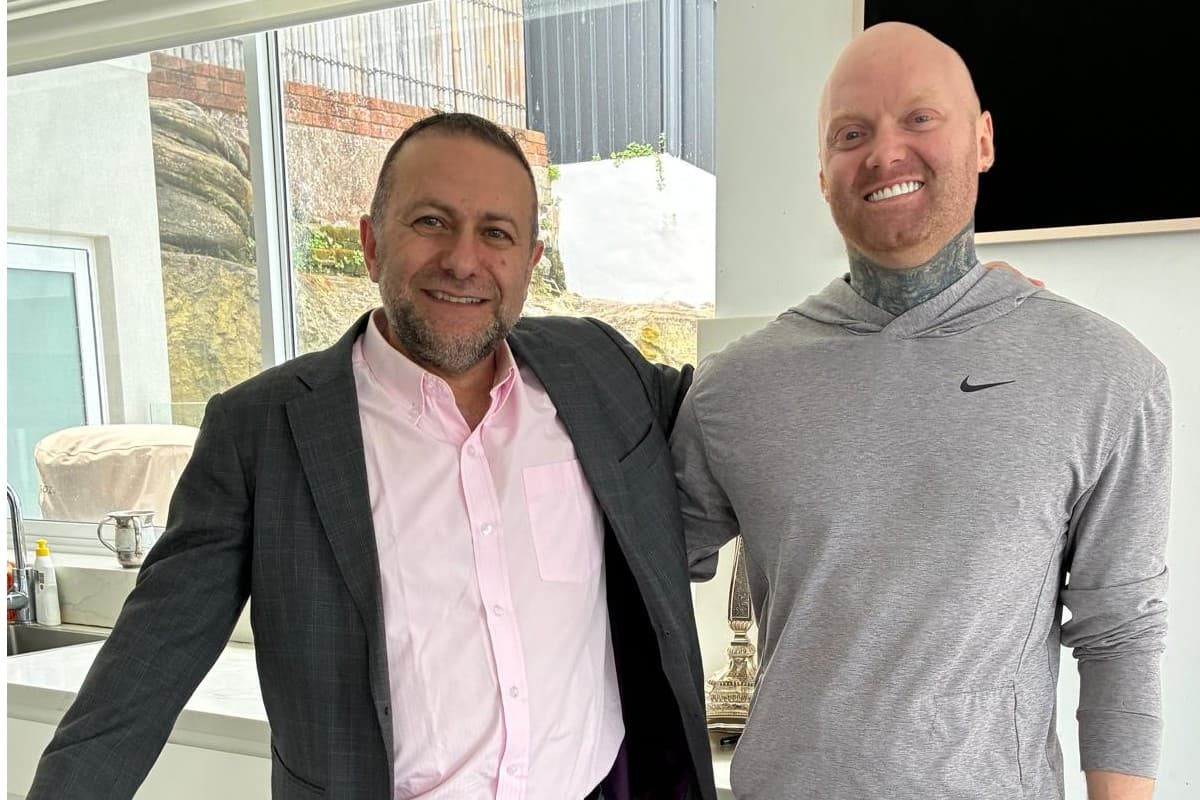
Michael Kadoury (left) and Kajetan Biernacki

Published: 4 November 2026

Last updated: 4 November 2026

Michael Kadoury and Kajetan (Kay) Biernacki seem unlikely mates. There’s kippah-clad Kadoury, a lawyer in his early 50s, decked out in shirt and suit. And Biernacki in athleisurewear, his 35-year-old body inked with tattoos of spiderwebs, demons and a fierce-looking bear. I’m sitting with the two men at Kadoury’s home, listening to Biernacki’s story of transformation from antisemite to Jewish ally, sparked by his friendship with Kadoury.

The pair met in 2022 at a gym in Sydney’s east. Biernacki had left Poland for Australia eight years earlier. Kadoury was getting back into exercise and looking for a training partner.

Biernacki was “the meanest, ugliest, baddest looking dude at the gym,” says Kadoury, explaining that Biernacki was then about three times bigger than he is now. (Biernacki is currently in poor health, which we’ll come to later.) Someone else might have felt intimidated by this scary-looking skinhead with neck tattoos. Not Kadoury – although it did help that the two had a friend in common. He decided he wanted to train with Biernacki.

“I do legal work and visas,” Kadoury told him, “I’ll help you with that if you ever need it, if you help me with the gym.” Biernacki agreed. They trained together almost every day for two years. And as they worked out, they started talking.

Kadoury was the first Jewish person that Biernacki, then 31, had ever met. At first, Biernacki was shocked. (My god, he is Jewish!) But similar to self-described “recovered antisemite” and activist Rawan Osman, interacting with a Jewish person in the flesh challenged Biernacki’s beliefs about Jews.
Antisemitic views formed in Poland

Biernacki’s views were formed in his homeland of Poland. His birthplace, Krynki, “used to be a Jewish city. In 1914, it was 80 percent Jewish,” he says. Almost all Krynki’s Jews were killed during the Holocaust. Yet remnants of Jewish life remain, including a synagogue, Jewish cemetery, and homes that were once owned by Jews.

“I lived in a Jew house,” Biernacki told Kadoury, as they got to know each other.

“What does that mean?” asked Kadoury.

"It was a house that we [Poles] knew we took from Jews.”

At 16, Biernacki left home and moved to the bigger city of Bialystok, where he joined the far-right football hooligan group, Prawicowa Jagiellonia. Prawicowa Jagiellonia supported the Jagiellonia Bialystok football club and had two groups: patriots and skinheads. Biernacki was part of the patriots, who were right-wing. The skinheads were far right-wing.

Although the patriots and skinheads operated as separate groups, there were friends with each other and often met up; they’d go to Jagiellonia Bialystock football matches together, and they fought together against other football hooligan groups. “They literally go and fight for the sake of fighting,” Biernacki explains.

That fighting was Biernacki’s passion. His eyes light up as he tells me about the adrenaline rush. How the fighting made him feel strong and powerful, and gave him a sense of belonging – the other men in Prawicowa Jagiellonia “were like brothers.” And if they won, there was the thrill of victory.

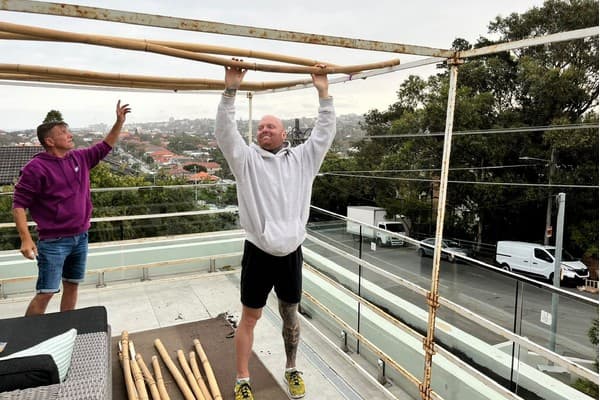
Biernacki helps Kadoury erect his sukkah

(Biernacki suggests I watch the Polish film Furioza, available on Netflix, which captures the lifestyle of these men. I’m not one for violent films so I stick to the trailer, but one line tells me everything I need to know about what drew Biernacki to fighting: “I haven’t felt this alive in a long time.”)

Although the skinheads were Biernacki’s friends, he knew they were very dangerous. They also hated Jews, blaming them for all the world’s woes, from the Black Plague to Hitler’s invasion of Poland. They destroyed Jewish monuments and a Jewish cemetery. And although Biernacki never joined the skinheads or vandalised property, he imbibed their antisemitic ideology, which, he says, was echoed on Polish social media.

I ask Biernacki what he was told about the Holocaust. “Good that all the Jews were killed. But sad because Polish people also died.” He adds that in Poland, “everyone thinks Jews have special rules, that they need to treat Jews better because of the Holocaust.” And this creates resentment. Poles are sick of Holocaust guilt; they say “it wasn’t us, it was the Germans”.

Biernacki explains that some the men he fought alongside were much older than him – sometimes up to 15 years older – and he treated them like uncles or fathers. Without a father in his life (Biernacki’s dad left when he was one), Biernacki accepted their antisemitic views as true. So he, too, believed that Jews were evil, that Jews control the world, and that non-Jewish women – especially Catholics – were sexually exploited by Jews.

Fatherhood changed him

Life changed for Biernacki when he became a father. His family became his priority and although he still organised fights, he stopped participating in them. He moved to Sydney in 2014 for a better life, settling in Strathfield with his then-wife and son. But the marriage didn’t last and his ex-wife and son returned to Poland, prompting Biernacki to relocate to Sydney’s eastern suburbs, away from all the memories of them.

It was there that he met Kadoury. And over time, they became part of each other’s lives.

Biernacki admits that until he met Kadoury, he’d thought all Jews wore black hats and were very religious, and that Jews couldn’t be friends with people from other religions. So he was very surprised when he met Kadoury’s wife and children. “I didn’t expect that Jewish people could be like that,” he tells me. Like what? “Like normal people. They treated me like part of their family.”

Kadoury invited Biernacki for Shabbat dinner. Biernacki was the security guard for one of Kadoury’s kid’s house parties. Visiting from Poland, Biernacki’s son ate challah at Kadoury’s home “and loved it.” Kadoury went to a Christmas party with Biernacki and his son.

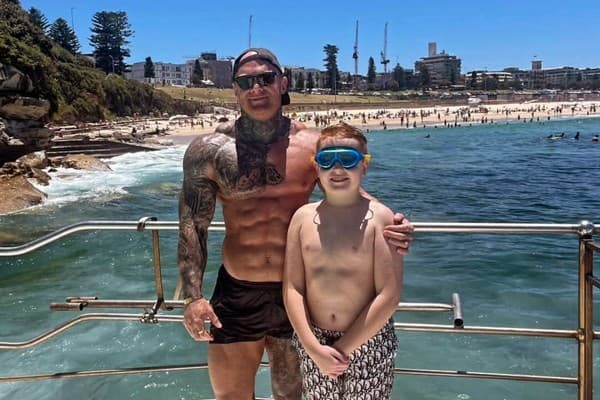
Biernacki and his son in 2024

When Biernacki remarried, Kadoury was at the wedding; he was also the only non-Pole at the buck’s night. Biernacki helps Kadoury put up his sukkah every year, and has done work for Sydney’s Kadimah synagogue and for members of the Kadimah community.

Although the pair no longer train together, they continue to see each other and speak regularly. Biernacki asks Kadoury about Polish news reports and social media posts he sees about, for example, October 7 and the Israel-Gaza conflict. Biernacki says their discussions have helped him see things from the Jewish and Israeli side.

Biernacki’s story, however, is bittersweet. He started using steroids at 18, to help him win those fights he was so passionate about. The steroid use and high-protein diets have damaged his body to the point where he needs a kidney transplant. He’d have a much better chance of getting a kidney to match his blood type if he flew to Europe, but he’s not well enough to travel.

And although he’s now happily remarried and has embraced his stepdaughter as his own child, he’s devastated to be apart from his 14-year-old son in Poland. “I started to live like a normal person too late,” Biernacki laments, and my heart breaks for him.

Kadoury speculates that if Biernacki had stayed in Poland, he’d have become a neo-Nazi. (Biernacki tells me that almost all the skinheads he used to fight with in Poland are now in jail.) Biernacki isn’t as certain, but says that if he hadn’t moved to Australia, it’s unlikely he’d have changed his antisemitic views. “How could I change my perspective if I didn’t know any Jewish people?”

Biernacki is embarrassed of who he used to be. “I was young and stupid,” he says. Kadoury, he tells me, has opened his mind about Jews. But Kadoury believes the onus is on us as Jews, too.

To help combat antisemitism, Kadoury says, we’ve “got to open ourselves up as well, to meet other people [outside the Jewish community] so they see we’re not abnormal.”

You might also like
  • When the state faltered, civil society and Diaspora Jewry stepped up
    Shahar Burla
  • The case for leaving graffiti up for a while
    Adam Slonim
  • New ‘spoken word’ festival in Sydney offers stories directly from creators
    Miriam Hechtman
logomark.67a07ee3
We believe in the free flow of information

Republish our articles for free, online or in print, by using our Creative Commons licence

You might also like

    Who Are We JIFF
    FeatureAustralia

    From the footy field to the film festival: the AJAX story onscreen

    Gideon Cohen
    EDITH BRUTMAN FUNERAL
    ExplainerAustralia

    Why the Bondi victims’ bodies were not ritually cleansed before burial

    Nomi Kaltmann
    Portrait Of Woman Seen Through Chain Link Fence, Ionnina, Greece
    FeatureAustralia

    New Victorian law could help with Gett refusal

    Jarod Rhine-Davis

About the author

Elana Benjamin

Elana Benjamin

Elana Benjamin is a Sydney-based writer whose articles have been published widely, including in Good Weekend, Sunday Life and the Sydney Morning Herald. Elana is also the author of ‘Indian-Jewish Food: Recipes and Stories from the Backstreets of Bondi’, which is out now.

More from the author

ReflectionArts & Culture

At last, a writers festival invites Ruptured authors to speak

FeatureAustralia

In western Sydney, a thriving Jewish community looks to the future

ReflectionLifestyle

How do introverts fit into Jewish life?

InterviewArts & Culture

Why the Jewish way of reading is perfect for getting children to read