Published: 5 August 2026
Last updated: 6 August 2026
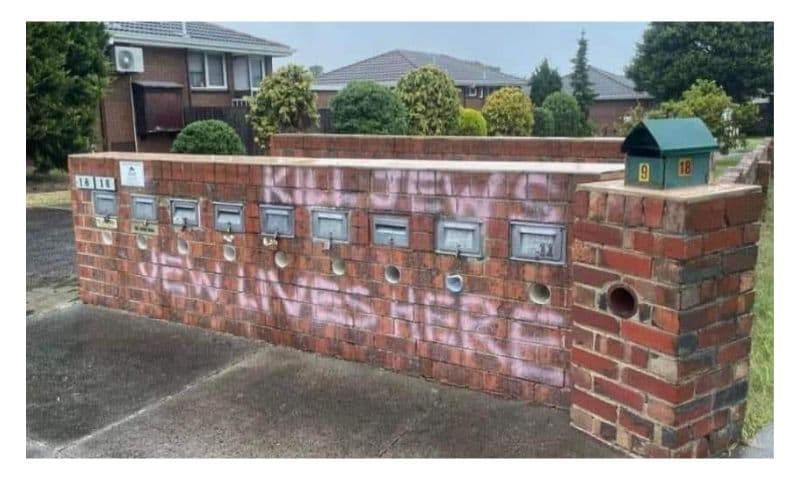
There is a familiar ritual now in Australian cities. A swastika appears on the wall of a synagogue. “Jews Out” is sprayed across a suburban shopping strip. A Star of David is defaced. By first light, volunteers are on the scene with paint rollers, solvent and determination. The police photograph the evidence. Community leaders issue statements. The wall is returned to its original colour. The wound is covered. Life moves on.
It is an instinctive response. Civilised societies clean up ugliness. We remove broken glass from footpaths, repair vandalised playgrounds and wash away symbols of hate. We refuse to allow those who traffic in intimidation the satisfaction of leaving their mark. There is wisdom in that instinct.
But there is another question, one that has become increasingly difficult to dismiss. What if, in erasing every trace of antisemitic vandalism almost as quickly as it appears, we are also erasing the evidence?
Australians have been told repeatedly that antisemitism has reached unprecedented levels. Reports are published. Statistics are released. Political leaders express concern. Yet for many Australians, the phenomenon remains strangely abstract. It exists as numbers in a report or another fleeting television story. They hear of an epidemic but rarely see it. I am uncertain of the broader communal response to the Royal Commission hearings, but feel certain the average Aussie would not watch it, let alone know of its work.
The walls, however, tell a different story. Imagine if every piece of antisemitic graffiti remained visible – not forever, but for a specific period. Imagine commuters passing swastikas on railway bridges, shoppers encountering hateful slogans on suburban walls, parents explaining to children why someone had written “Jews die” outside a school. The cumulative effect would be impossible to ignore. It would cease to be “a Jewish issue.” It would become unmistakably an Australian one.