Aa
  • Read, Watch, Listen
  • TJI Series
  • Community Action
  • Events
  • Zedi
Follow us and continue the conversation
  • LinkedIn
  • Instagram
  • FaceBook
  • X
  • YouTube
Test yourself with the TJI Quiz!

Adjust size of text

Aa

Follow us and continue the conversation

  • LinkedIn
  • Instagram
  • FaceBook
  • X
  • YouTube

Your saved articles

You haven't saved any articles

What are you looking for?

Original reporting, insightful analysis and diverse views, delivered straight to your inbox

  • LinkedIn
  • Instagram
  • FaceBook
  • X
  • YouTube
Your support fuels our mission to inform, entertain and inspire.

The Jewish Independent is bound by the Standards of Practice of the Australian Press Council. If you believe the Standards may have been breached, you may approach The Jewish Independent or make a complaint to the Australian Press Council in writing at www.presscouncil.org.au. The Council may also be contacted on 1800 025 712.

  • Our Story
  • Contact us
  • Our Team
  • Support us
  • Guidelines
  • Pitch your idea
  • Republishing us
  • Community Action
  • Our Awards
  • LinkedIn
  • Instagram
  • FaceBook
  • X
  • YouTube
Aboriginal FlagTorres Strait Islanders Flag

The Jewish Independent acknowledges Aboriginal and Torres Strait Islander peoples as the Traditional Owners and Custodians of Country throughout Australia. We pay our respects to Elders past and present, and strive to honour their rich history of storytelling in our work and mission.

© The Jewish Independent 2026All Rights Reserved
Website design and development by Your Creative, MelbourneTerms & ConditionsPrivacy Policy
HomeRead, Watch, ListenAustralia
DebateAustralia

The one minority whose self-definition of prejudice is rejected

ABC and SBS have rejected the IHRA definition accepted by the Federal Government and Antisemitism Envoy
Adam Slonim
Print this
Copy of Website article template

Image: The Jewish Independent

Published: 21 May 2026

Last updated: 27 May 2026

This article is part of a debate. Read Distinguishing prejudice from political disagreement by Larry Stillman.

There is something deeply strange happening in Australia’s public discourse around antisemitism. Strange enough that many Jews feel it instinctively, even if they struggle to articulate it precisely.

When other minorities describe the forms prejudice against them takes, modern institutions generally listen.

When Indigenous Australians speak about racism, language and representation, we are correctly told that lived experience matters.

When Muslim Australians describe Islamophobia, we are urged to understand how prejudice mutates in contemporary society.

When LGBTQ Australians describe coded hostility, dog whistles or exclusionary rhetoric, institutions increasingly accept that discrimination evolves and cannot always be reduced to explicit slurs.

Yet when Jews say that antisemitism in the twenty-first century often manifests through obsessive anti-Zionism, delegitimisation of Jewish nationhood, or standards uniquely applied to the Jewish state, many institutions suddenly become sceptical.

Not cautious. Not probing. Sceptical.

Nowhere is this more visible than in the debate over whether the ABC and SBS should adopt the IHRA Working Definition of Antisemitism.

The broadcasters argue they do not require a formal definition because journalism must remain independent and free to criticise governments, including Israel. Critics of IHRA insist it risks silencing legitimate political debate.
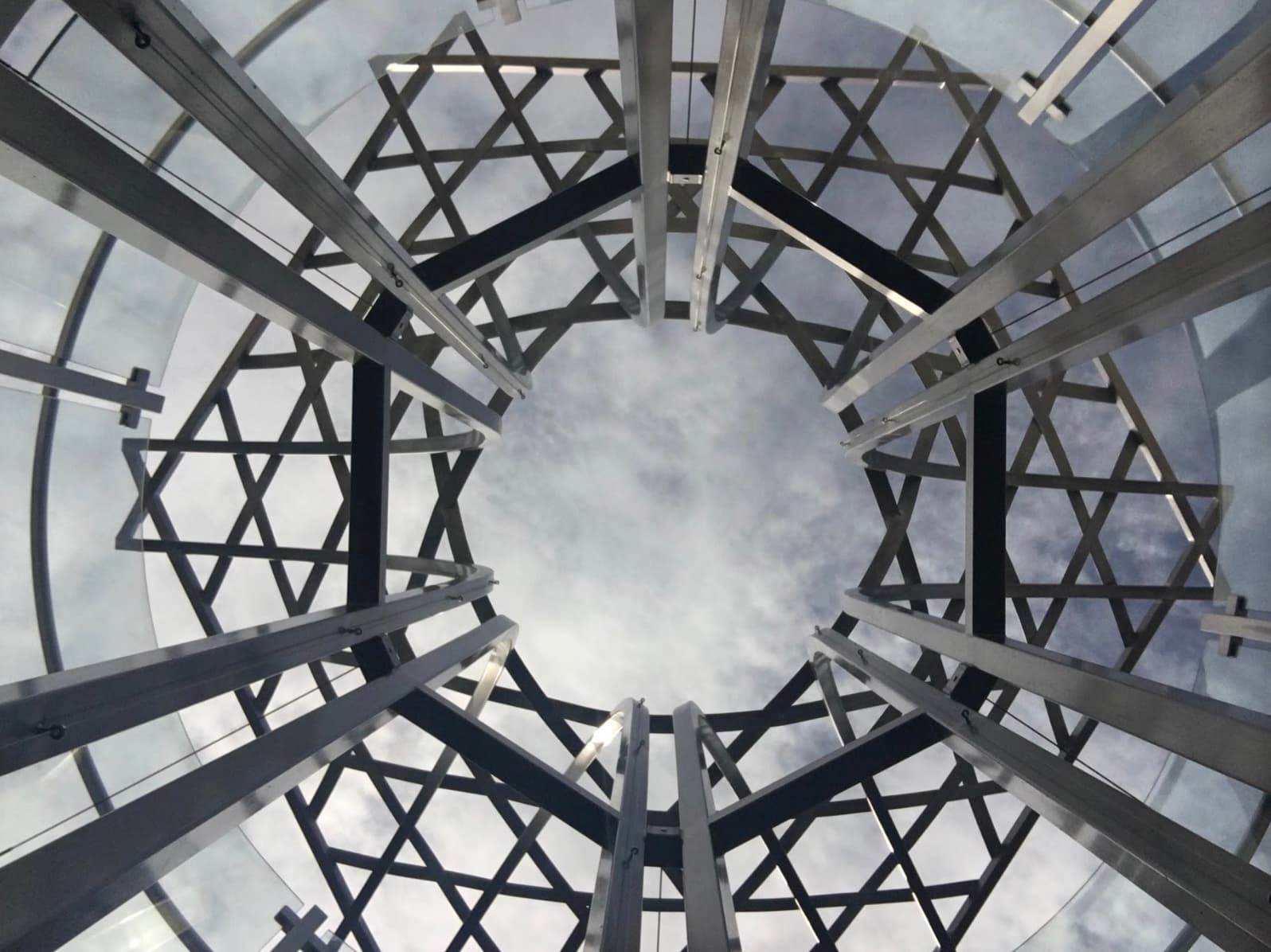
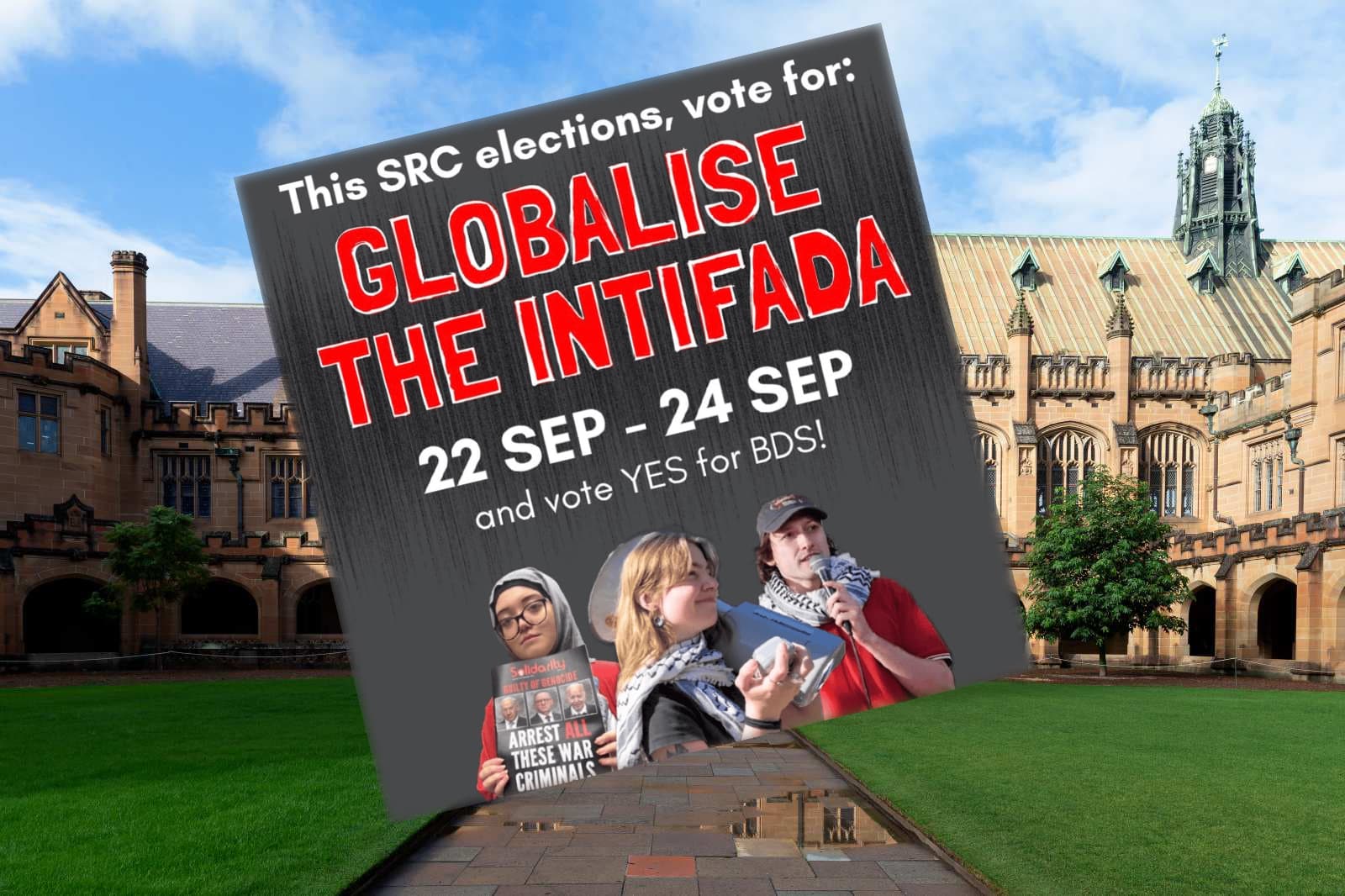
Modern antisemitism often relocates the same obsessions onto the collective Jew – Israel

At first glance, this sounds principled.

Until one asks a simple question: why is antisemitism treated as the one form of hatred where the affected minority’s own understanding of its contemporary manifestations is regarded as inherently suspect?

That question matters because the IHRA definition did not emerge from nowhere. It was developed precisely because classical antisemitism did not disappear after the Shoah, it evolved.

The old antisemitism accused Jews of poisoning wells, controlling banks or betraying nations. Modern antisemitism often relocates those same obsessions onto the collective Jew – Israel.

This does not mean criticism of Israel is antisemitic. IHRA explicitly states that criticism of Israel comparable to criticism of any other country is not antisemitic.

That point is constantly omitted by critics. The real issue is not criticism because democracies require such debate.

The issue is something else: the obsessive moral exceptionalism applied to the Jewish state. There is a difference between opposing settlements and denying Jewish self-determination altogether.

There is a difference between criticising Netanyahu and treating Zionism itself as uniquely illegitimate among all national movements.

There is a difference between condemning civilian casualties and turning Israel into the symbolic embodiment of evil in global politics.

IHRA attempts to describe that grey zone where anti-Jewish prejudice increasingly mutates into anti-Jewish collective delegitimisation.

That is why more than 40 countries and hundreds of institutions adopted it. Not because they oppose free speech, but because they recognised that antisemitism no longer arrives only wearing jackboots.

And this is where the ABC and SBS debate becomes revealing.

The broadcasters’ core argument is that adopting IHRA could compromise editorial independence. Yet modern media institutions already operate through countless editorial and ethical frameworks.

They maintain protocols around Indigenous terminology, suicide reporting, racial vilification, gender identity, disability representation and hate speech. Journalists are constantly guided by standards designed to avoid prejudice and harm. So the idea that journalism exists in some pristine definition-free vacuum is simply untrue.

The real question is why antisemitism alone becomes uniquely resistant to institutional definition. Critics reply that IHRA is “contested.” While that is true, it is equally true that every major social framework in modern public life is contested.

Concepts such as systemic racism, Islamophobia, whiteness, coloniality and gender identity are all deeply debated intellectually and politically. Yet institutions still adopt working definitions because societies cannot function without practical frameworks.

So “contested” cannot really be the issue. The deeper issue can only be political discomfort.

Because accepting IHRA requires confronting something many progressive institutions find profoundly unsettling: antisemitism today does not emerge solely from neo-Nazis and white supremacists. It also emerges from activist cultures, academic movements and ideological spaces that otherwise define themselves as anti-racist.

That creates cognitive dissonance.

Much contemporary progressive politics divides the world into binaries: oppressed and oppressor, colonised and coloniser, powerful and powerless. Within that framework, Jews increasingly cease to be viewed as a vulnerable minority and instead become associated with whiteness, privilege and power through the prism of Israel.

Once that happens, Jewish fears are no longer interpreted through the normal moral framework applied to minorities. They are interpreted politically and that is the crucial rupture.

Because for most Jews globally, Zionism is not merely an abstract political doctrine. It is bound up with peoplehood, historical continuity, civilisational memory and collective survival after centuries of persecution culminating in the Shoah.

One may disagree with Israeli governments. Many Jews do. One may oppose settlements. Many Jews do. One may advocate passionately for Palestinian statehood. Many Jews do.

When societies insist on recognising every mutation of prejudice except the ones Jews describe, something dangerous begins to happen

But when institutions refuse to acknowledge that Jewish identity and Jewish self-determination are deeply intertwined for the overwhelming majority of Jews, they create the perception – and increasingly the reality – that Jewish experiences are uniquely discounted.

That is why this debate matters far beyond semantics. It is not fundamentally about whether every journalist must mechanically apply the IHRA definition.

It is about whether Jewish Australians are afforded the same moral seriousness granted to other minorities when describing how hatred against them evolves.

Because hatred always evolves and when societies insist on recognising every mutation of prejudice except the ones Jews describe, something dangerous begins to happen. Jews cease being treated as participants in the anti-racism conversation and instead become exceptions to it.

That is the contradiction at the heart of this debate. And unless Australia confronts it honestly, the country risks sending an unintended but devastating message: that every minority has the right to define its lived experience of hatred – except the Jews.

You might also like
  • Antisemitism, homophobia and a radical response to both
    Dennis Altman
  • Confronting Richard Flanagan and the myth of the Israel lobby
    Mary Garden
  • Facing a new year with the knowledge life can be better
    The Jewish Independent
logomark.67a07ee3
We believe in the free flow of information

Republish our articles for free, online or in print, by using our Creative Commons licence

You might also like

    vandalism car woollahra fuk israel farhat
    Australia

    Court decision fails to understand when ‘Fuk Israel’ becomes antisemitic

    Jeremie Bracka 6
    Commissioner Virginia Bell
    Royal CommissionAnalysisAustralia

    Now is the time for the Royal Commission to deliver, not be politicised

    Dean Sherr 2
    Woman with land and houses behind her
    NewsAustralia

    Australia to increase sanctions against West Bank settlements

    Deborah Stone 2

About the author

Adam Slonim

Adam Slonim

(He/Him)

Adam is Director of the Middle East Policy Forum, a founder of Labor Friends of Israel, and is writing a book on the Gaza War, “The Gaslighting of Israel”.

More from the author

OpinionAustralia

The case for leaving graffiti up for a while

OpinionIsrael

The story isn’t the smashed statue, it’s the response

AnalysisWorld

The law wasn’t written for this war

Comments3

  • Avatar of David Donovan

    David Donovan22 May at 08:40 am

    This publication appears to not be able to see that the real issue is quite clear. Genocide and other war crimes by an out-of-control, far-right, colonial, imperialist, deludedly exceptionalist, undemocratic, apartheid ethnostate state that falsely and recklessly claims all Jewish people as their own.

    That is what I would be worried about, if I was a person of your faith, because the world is watching and no amount of delusion or Hasbara can cover up the evidence people all around can see and be shocked and repelled by, all around the world.

    Bibi, Ben Gvir and all the other thugs are selling you down the river. Australia is not the problem. Israel is your real enemy. It is sad you have been put into this position. All you can do is distance yourself from Israel and Jews all around the world are doing.

  • Avatar of Hans Eisen

    Hans Eisen21 May at 11:22 pm

    Thanks for forwarding this commentary. My view is that in Australia there is widespread and entrenched anti -semitism. And government action to moderate this sentiment has been inadequate. So what to do? Combat it personally whenever confronted by it. That is what I do! Best wishes Hans Eisen

  • Avatar of Winston Smith

    Winston Smith21 May at 02:22 pm

    If the Israeli state regards itself as the ‘Light unto the nations’ then it will be critiqued to those standards.