Aa
  • Read, Watch, Listen
  • TJI Series
  • Community Action
  • Events
  • Zedi
Follow us and continue the conversation
  • LinkedIn
  • Instagram
  • FaceBook
  • X
  • YouTube
Test yourself with the TJI Quiz!

Adjust size of text

Aa

Follow us and continue the conversation

  • LinkedIn
  • Instagram
  • FaceBook
  • X
  • YouTube

Your saved articles

You haven't saved any articles

What are you looking for?

Original reporting, insightful analysis and diverse views, delivered straight to your inbox

  • LinkedIn
  • Instagram
  • FaceBook
  • X
  • YouTube
Your support fuels our mission to inform, entertain and inspire.

The Jewish Independent is bound by the Standards of Practice of the Australian Press Council. If you believe the Standards may have been breached, you may approach The Jewish Independent or make a complaint to the Australian Press Council in writing at www.presscouncil.org.au. The Council may also be contacted on 1800 025 712.

  • Our Story
  • Contact us
  • Our Team
  • Support us
  • Guidelines
  • Pitch your idea
  • Republishing us
  • Community Action
  • Our Awards
  • LinkedIn
  • Instagram
  • FaceBook
  • X
  • YouTube
Aboriginal FlagTorres Strait Islanders Flag

The Jewish Independent acknowledges Aboriginal and Torres Strait Islander peoples as the Traditional Owners and Custodians of Country throughout Australia. We pay our respects to Elders past and present, and strive to honour their rich history of storytelling in our work and mission.

© The Jewish Independent 2026All Rights Reserved
Website design and development by Your Creative, MelbourneTerms & ConditionsPrivacy Policy
HomeRead, Watch, ListenArts & Culture
FeatureArts & Culture

New ‘spoken word’ festival in Sydney offers stories directly from creators

In a nod to the power of the oral tradition, the month-long Festival of the Spoken Word promises to deliver Jewish stories raw and unfiltered.
Miriam Hechtman
Print this
Wake main 2nd

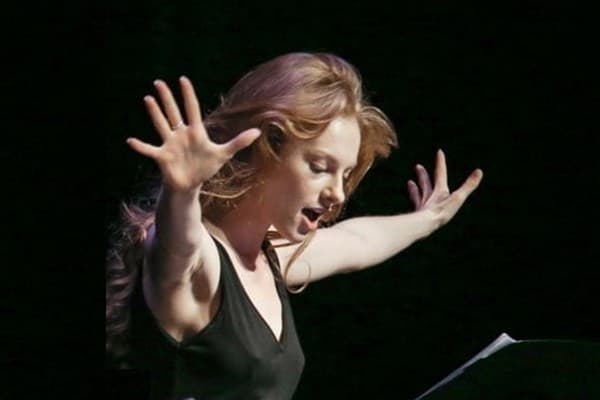
Sarah Jane Starr in a recital of Wake

Published: 28 July 2026

Last updated: 28 July 2026

In Judaism, there is much to be said about spoken words. Let’s start at the beginning, the notion that the world itself was spoken into existence by God. Then there are the bad spoken words, “lashon hara”, “the evil tongue”, and the perils of gossip. Historically, especially in times of persecution, the Torah and its teachings were passed down by word of mouth, an oral history.

In more recent times, Holocaust survivors have recorded their testimonies through spoken interviews, their voices and words recorded for preservation. Words carry gravitas. An energy of their own making once uttered. They create a conversation even if the receiver holds their answers quietly within. Words spoken are a prayer, a poem, a calling into being.

This year, instead of the traditional festival celebrating the written word, Shalom Collective’s Sydney Jewish Writers Festival has created the Festival of the Spoken Word as its principal offering to the community. A call out for works centred on Jewish identity, history and experience across theatre, music, poetry, comedy, conversation and performance, generated 45 applications.

Some 16 of these works were approved for the month-long festival starting on August 2 on the north shore with the musical theatre performance One of a Kind. The performance is about a wealthy Egyptian Jewish family that is forced to leave behind the world it built over generations and begin again in Sydney. It will be followed on August 3 by the Australian Jewish Writers Awards, with the ceremony held in Sydney’s eastern suburbs.

Scene from One of a Kind (Vicky Israel)

Artists needed new opportunities

Festival Director and Head of Program and Engagement, Hannah Saunders, says the idea for the spoken word festival transpired after Shalom received feedback that Jewish artists did not have sufficient opportunities to present new works.
“This festival was an opportunity to put it out to the community, rather than curating a specific festival like has been done in the past. To go to the market and ask ‘what do you want to do?’ We're hearing that you haven't got an opportunity to put on what you want to do. Let's give you that platform.”

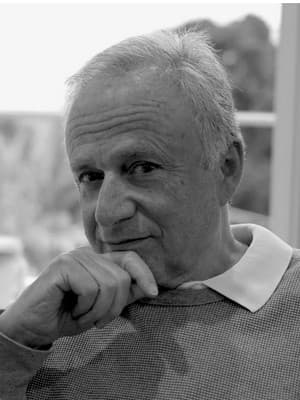
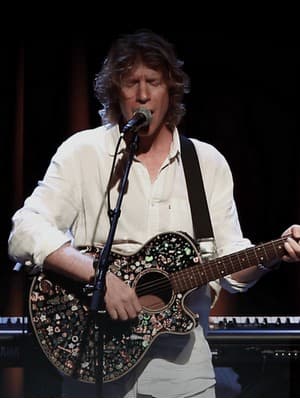
Highlights of the festival include Voices of the Tribe, an intimate evening of poetry, spoken word, live music and Jewish storytelling on August 13. Then on August 22, acclaimed playwright Ron Elisha interrogates the aphorism that behind every great man stands a great woman, through the voices of four women – Mileva Marić, Martha Freud, Alma Mahler and Katia Mann, in his staged reading of Wake. In the final week of the festival, on August 27, Nadav Kahn presents Hineinu: Songs for This Time, performing his original works as part concert, part vigil, part prayer responding to the aftermath of the Bondi attack and the long shadow of October 7.

Ron Elisha
Ron Elisha
Nadav Kahn
Nadav Kahn

Saunders says the program reflects a diverse take on what writing is, and that this new format is also an attempt to encourage a younger audience to the Festival. “Let's experiment with the format. Let's see if that can actually then widen the breadth of who turns up. We'll wait to see. There are more opportunities to engage in different ways about what writing is.”

As a Jewish writer myself, this format appealed to me and my co-writer Jessica Chapnik Kahn for our work, Dear Jessy, Dear Miriam, a series of letters between two 13-year-old girls in the 1990s. We had been developing a new writing project based on our childhoods, aimed at tweens and teens about growing up, navigating a Jewish Australian identity and the power of friendship.

We saw the festival as an opportunity to explore our project in spoken word, as opposed to only on the page, for an audience that would understand and hopefully empathise with our story, and therefore be part of the larger conversation through the performance. Audiences can have that moment of “I was there when it all started,” which is often an artist’s dream for their work’s genesis.

Saunders agrees. “I think that's the theme in a sense. It's like the beginning of things. That's what we've heard from people: that they haven't had an opportunity to do this. So this is the first step.”

Voices directly from humans, not the written page

In an age of AI, Saunders contends that the written word has been compromised and that people may be feeling that it has become less personal and less meaningful. “The spoken word becomes that form where we just get it directly from humans, and there's no doubting who's in front of you and who's saying it.”

She adds that “with everything happening in the Jewish community, it's just a nice person-to-person way to explore the community’s stories and bring them to life.”

A month-long festival, compared to a weekend one, also has its benefits, says Saunders, as it allows performances to happen all over Sydney at several venues. “We want people to be able to revisit and come to multiple things,” she says. From a security perspective, this has its challenges too. “We need to learn each venue and we need to make sure that everyone is safe. That's a big priority for us.”

Although running a large program with very different works can also pose challenges, Saunders is confident that people will still turn up and try to experience something new. “It's obviously a risk moving away from the format of the traditional writers' festival that people love and have always come to. It doesn't mean that the format is gone forever. But at this time, this felt more fitting.”

Audiences can expect some works to be staged readings rather than full productions, and many works are debut performances. “Some works will be quite rough and very personal,” says Saunders, “and that's the real human part of this – that it's not going to be polished theatre. But that's part of its beauty.

“I would love the audience to see something new and unexpected, to think about writing in a different way, and to support the community, and show up for people who feel like they're not having that from other places in their life.”


Click Here For Program Details And Tickets

You might also like
  • When the state faltered, civil society and Diaspora Jewry stepped up
    Shahar Burla
  • The case for leaving graffiti up for a while
    Adam Slonim
  • Security challenges on the road back to safety
    Peter Kohn
logomark.67a07ee3
We believe in the free flow of information

Republish our articles for free, online or in print, by using our Creative Commons licence

You might also like

    haredi street guitar
    Photo EssayArts & Culture

    Jerusalemites through the lens

    Sharon Gabay
    Pearly Spurtle
    FeatureArts & Culture

    Israeli ingredients a recipe for ‘Pearly Spurtle’

    Gideon Cohen
    Eden Bahar
    InterviewArts & Culture

    ‘L’chaim for the next 1,500’: Israeli drummer celebrates Cirque Du Soleil milestone

    Gideon Cohen

About the author

Miriam Hechtman

Miriam Hechtman

Sydney-based Miriam Hechtman is an Australian writer, creative producer and poet. She is the founder and creative director of Poetica, a live poetry and music initiative and co-presenter and producer of WORDSMITH – the poetry podcast.

More from the author

FeatureArts & Culture

A circle of communal healing on stage, with a dash of humour

FeatureArts & Culture

Not so secret mother’s business

ReflectionAustralia

‘We are now all walking around with an invisible tear in our clothes’

Comments

No comments on this article yet. Be the first to add your thoughts.