Aa
  • Read, Watch, Listen
  • TJI Series
  • Community Action
  • Events
  • Zedi
Follow us and continue the conversation
  • LinkedIn
  • Instagram
  • FaceBook
  • X
  • YouTube
Test yourself with the TJI Quiz!

Adjust size of text

Aa

Follow us and continue the conversation

  • LinkedIn
  • Instagram
  • FaceBook
  • X
  • YouTube

Your saved articles

You haven't saved any articles

What are you looking for?

Original reporting, insightful analysis and diverse views, delivered straight to your inbox

  • LinkedIn
  • Instagram
  • FaceBook
  • X
  • YouTube
Your support fuels our mission to inform, entertain and inspire.

The Jewish Independent is bound by the Standards of Practice of the Australian Press Council. If you believe the Standards may have been breached, you may approach The Jewish Independent or make a complaint to the Australian Press Council in writing at www.presscouncil.org.au. The Council may also be contacted on 1800 025 712.

  • Our Story
  • Contact us
  • Our Team
  • Support us
  • Guidelines
  • Pitch your idea
  • Republishing us
  • Community Action
  • Our Awards
  • LinkedIn
  • Instagram
  • FaceBook
  • X
  • YouTube
Aboriginal FlagTorres Strait Islanders Flag

The Jewish Independent acknowledges Aboriginal and Torres Strait Islander peoples as the Traditional Owners and Custodians of Country throughout Australia. We pay our respects to Elders past and present, and strive to honour their rich history of storytelling in our work and mission.

© The Jewish Independent 2026All Rights Reserved
Website design and development by Your Creative, MelbourneTerms & ConditionsPrivacy Policy
HomeRead, Watch, ListenArts & Culture
FeatureArts & CultureAustralia

From Bondi to the Tree of Life

Joel Adler’s Sunukkiah became an unexpected symbol of the Bondi attack, forcing him to consider his impact as a Jewish artist.
Gideon Cohen
Print this
JA06

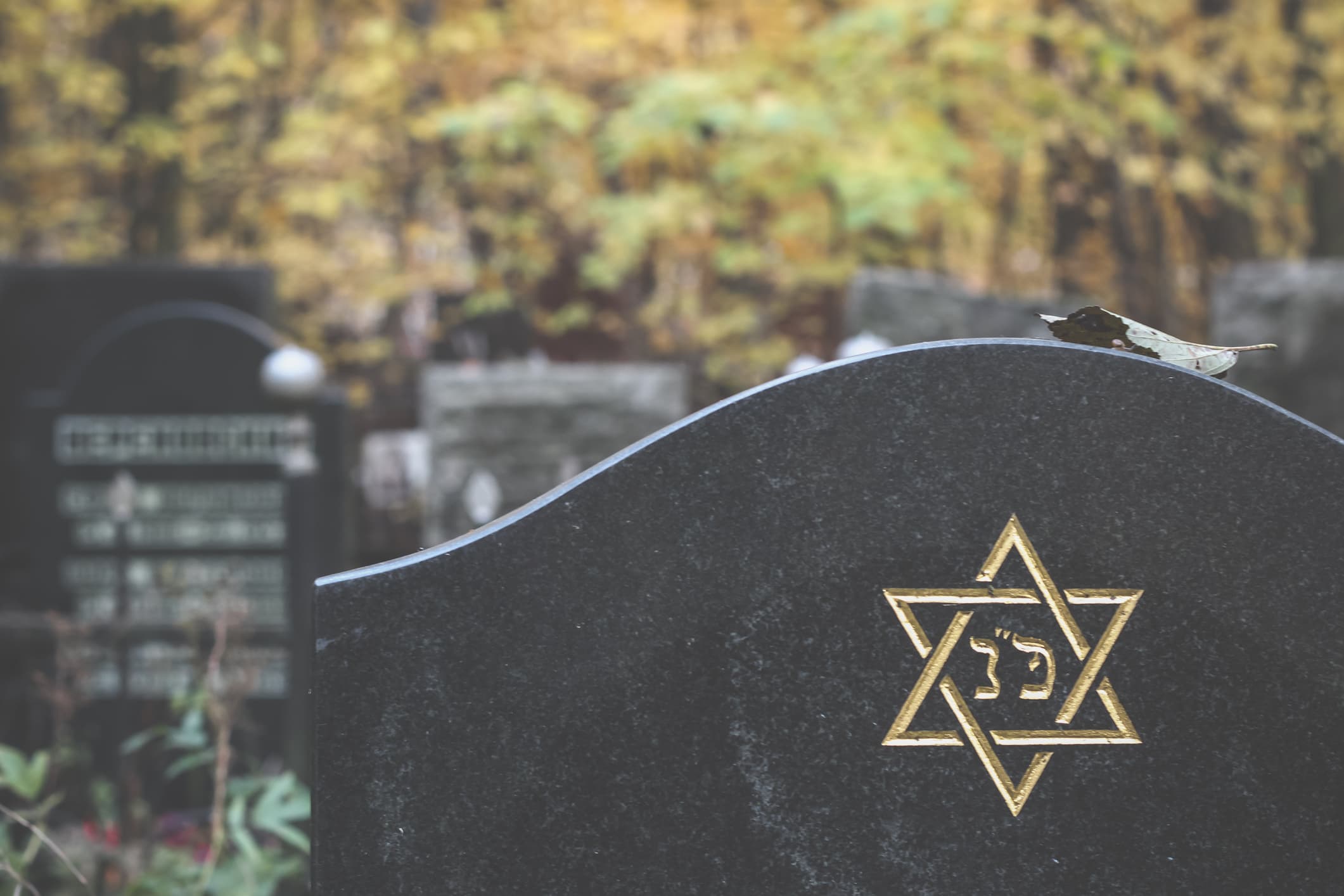
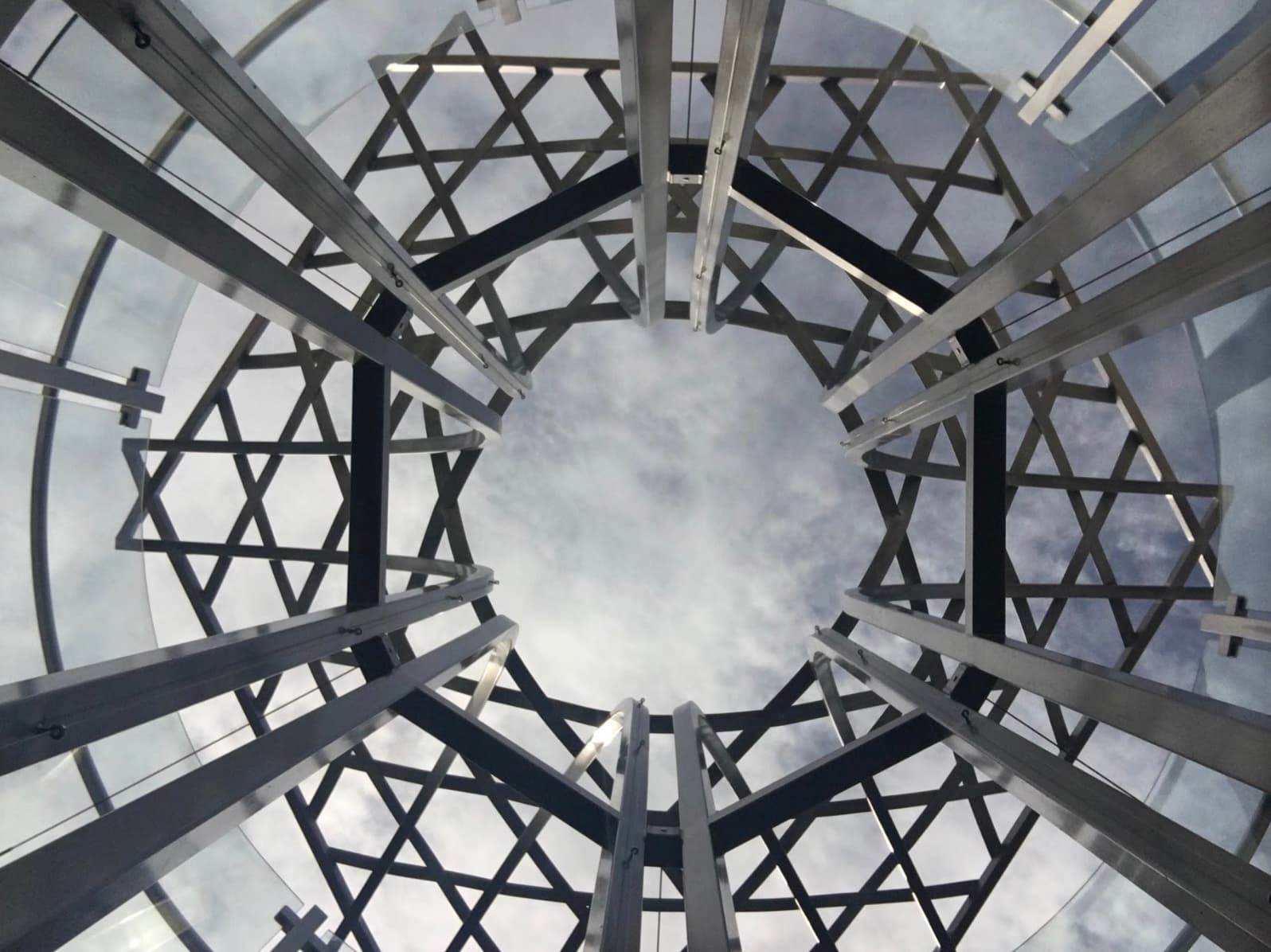
A detail from the Tree of Life sculpture created by Joel Adler for Mt Sinai College in 2018 (image: supplied)

Published: 1 October 2026

Last updated: 1 October 2026

Until recently, Joel Adler saw his art and his Judaism as largely separate. The artist and industrial designer is known for his large-scale outdoor sculptures – often bold, abstract works designed to reflect their natural surroundings. But one of his sculptures took on a very different meaning after the Bondi attack.

His Sunnukiah, Australia’s first solar-powered chanukiah, was installed two days before the attack, just three kilometres from Bondi Beach. In the aftermath, it was moved to Archer Park, where it became a memorial to the victims.

“The lights turned on automatically when the sun set on December 14, which is pretty much when the attack happened,” Adler says. “So, my work was flung into my Judaism in a way that I couldn’t have planned. And it made me really think about what it means to be an artist, what it means to be a Jew living in Australia.”

That realisation also prompted Adler to think more deeply about the role his work can play within the Jewish community. “It made me really consider my potential impact as an artist and what it means to create large monuments of Jewish identity and symbols of Judaism.”
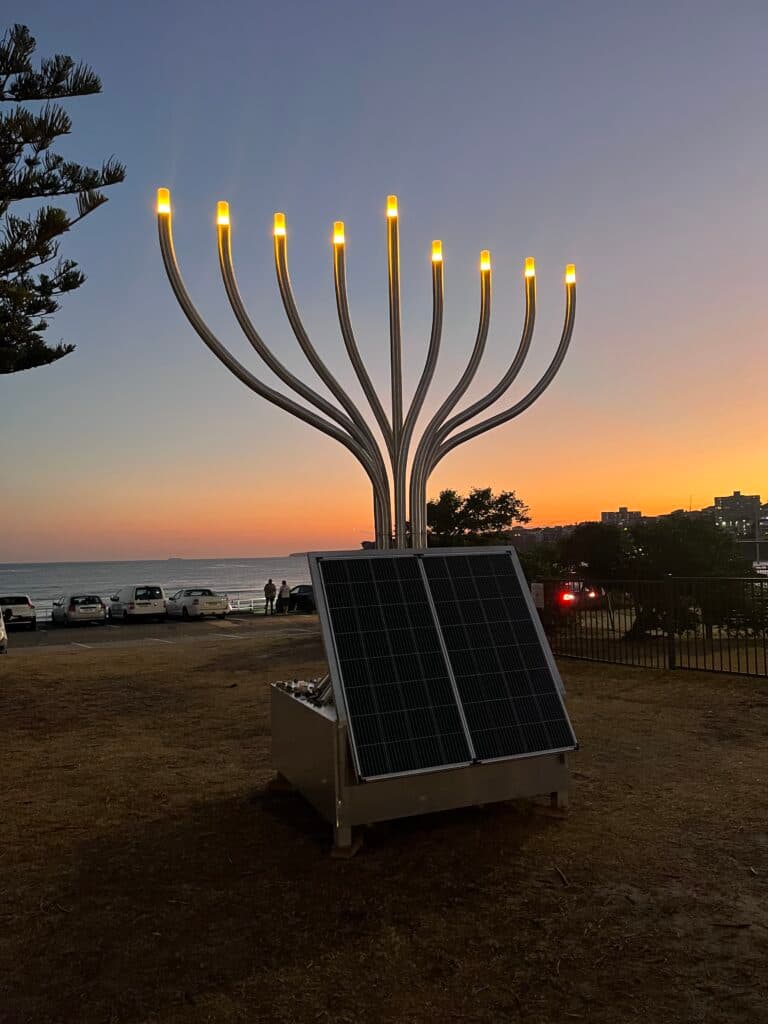
The <em>Sunnukiah </em>at Archer Park (image credit: David Riesel)
The Sunnukiah at Archer Park (image credit: David Riesel)

The Sunnukiah’s story also caught the attention of the Jewish Museum of Australia, which approached him in January to create a new work. The resulting sculpture, It Is a Tree of Life, is this year’s Eva and Marc Besen Contemporary Artist Commission. 
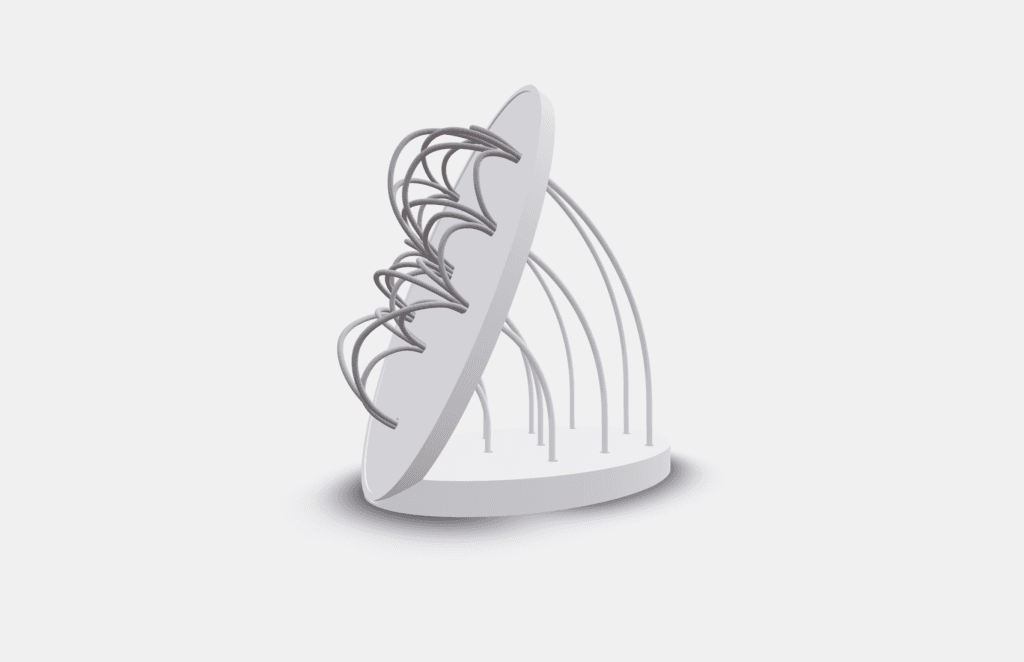
The sculpture will feature in Tree of Life: Four Perspectives, opening at the museum on October 8. The exhibition brings together contemporary works by Adler, Tunni Kraus, Amichai Lankri and Jonathan Tversky, each offering a different perspective on the enduring symbolism of the Tree of Life in Jewish tradition, including its connections to mysticism, nature, growth and renewal.

Adler’s sculpture moves from past to present to future: mirror-polished stainless-steel “roots” emerge from the ground and reach into a large mirrored panel, while woven steel cables appear to float across its surface. The cables follow the structure of the Kabbalistic Tree of Life, reflecting its symbolism of the connections between God, earth and Torah.

Standing 2.2 metres tall and weighing around 800 kilograms, the artwork will sit in the museum’s front courtyard. Adler describes it as “bigger than human height”, but says its scale remains intimate and relational to the viewer. The mirror adds another personal dimension: “If you stand in the right position, you’ll actually see yourself in the reflection,” he says. “And I think that’s quite special.”

Concept image for Joel Adler's new work <em>It Is a Tree of Life</em> (image: supplied)
Concept image for Joel Adler's new work It Is a Tree of Life (image: supplied)

The sculpture was technically complex to produce, requiring months of design and engineering before it could be fabricated in Sydney and transported to Melbourne. Engaging with the theme also presented a challenge for Adler. “I would call myself a spiritual person, but I’m definitely not very religious,” he says. Rather than approaching the symbol purely through its religious meaning, he was drawn to its structure: “It’s almost a mathematical way of viewing our relationship to the earth and to God, or whatever you believe in.”

He also listened to the prayer song Eitz Chaim Hi, from which the museum’s exhibition takes its name. Its words – “it is a tree of life for those who grasp it or hold it” – led him to his own understanding of the phrase. “To me, my interpretation is life is what you make of it,” he says. 

“It is about grasping everything you can and making the most of every present moment.”

For Adler, the idea of holding the Tree of Life is not only metaphorical. The cables in the sculpture represent the connections between the different Sephirot of the Kabbalistic Tree of Life, and he hopes visitors will find a connection of their own within the work. “I would invite people to grab onto the cable that they associate with, or somehow evokes something in them,” he says.

The work will also take on an added significance when Tree of Life: Four Perspectives opens on October 8, just one day after the third anniversary of October 7. Adler sees the work as a hopeful response to what has been a difficult period for the Jewish community – especially since December. 

The mirror, he says, represents both the unknown and the ideas of infinity and reflection – themes he feels resonate with what the community is experiencing. He hopes people will walk around the sculpture, see it from different angles and interact with the way the light reflects. 

“I think that once you go from past to present to future, there's a hopefulness that the work evokes, and I hope that is also true for the community and our future.”

An earlier work by Adler called simply Tree of Life stands at Mt Sinai College in Sydney.

You might also like
  • Sanctioning settlements is a defence of Israel, not an attack
    Elisheva Madar
  • Sanctions must influence, not just perform disapproval
    Adam Slonim
  • Confronting Richard Flanagan and the myth of the Israel lobby
    Mary Garden
logomark.67a07ee3
We believe in the free flow of information

Republish our articles for free, online or in print, by using our Creative Commons licence

You might also like

    Nadia
    ReflectionAustralia

    Between communities: finding Jewish belonging after migration

    Florencia Tuchin
    Generation change Template
    Generation ChangeInterviewAustralia

    Ash Densham: Building community through Humanistic Judaism

    Gideon Cohen 1
    tame kostakidis west
    AnalysisAustralia

    How not to apologise

    Zac Klugman

Comments

No comments on this article yet. Be the first to add your thoughts.

About the author

Gideon Cohen

Gideon Cohen

Gideon Cohen is a Melbourne-based journalist and a content creator and editorial assistant at TJI. He holds a master's degree in journalism from the University of Melbourne and his work has appeared in various publications including Broadsheet and The Jewish Chronicle.

More from the author

InterviewAustralia

Ash Densham: Building community through Humanistic Judaism

ReflectionWorld

A new generation reckons with 9/11

InterviewArts & Culture

‘L’chaim for the next 1,500’: Israeli drummer celebrates Cirque Du Soleil milestone