Aa
  • Read, Watch, Listen
  • TJI Series
  • Community Action
  • Events
  • Zedi
Follow us and continue the conversation
  • LinkedIn
  • Instagram
  • FaceBook
  • X
  • YouTube
Test yourself with the TJI Quiz!

Adjust size of text

Aa

Follow us and continue the conversation

  • LinkedIn
  • Instagram
  • FaceBook
  • X
  • YouTube

Your saved articles

You haven't saved any articles

What are you looking for?

Original reporting, insightful analysis and diverse views, delivered straight to your inbox

  • LinkedIn
  • Instagram
  • FaceBook
  • X
  • YouTube
Your support fuels our mission to inform, entertain and inspire.

The Jewish Independent is bound by the Standards of Practice of the Australian Press Council. If you believe the Standards may have been breached, you may approach The Jewish Independent or make a complaint to the Australian Press Council in writing at www.presscouncil.org.au. The Council may also be contacted on 1800 025 712.

  • Our Story
  • Contact us
  • Our Team
  • Support us
  • Guidelines
  • Pitch your idea
  • Republishing us
  • Community Action
  • Our Awards
  • LinkedIn
  • Instagram
  • FaceBook
  • X
  • YouTube
Aboriginal FlagTorres Strait Islanders Flag

The Jewish Independent acknowledges Aboriginal and Torres Strait Islander peoples as the Traditional Owners and Custodians of Country throughout Australia. We pay our respects to Elders past and present, and strive to honour their rich history of storytelling in our work and mission.

© The Jewish Independent 2026All Rights Reserved
Website design and development by Your Creative, MelbourneTerms & ConditionsPrivacy Policy
HomeRead, Watch, ListenAustralia
FeatureAustralia

Who volunteers? The hidden network sustaining our community

Women and retirees sustain most communal organisations but their work is rarely recognised
Florencia Tuchin
Print this
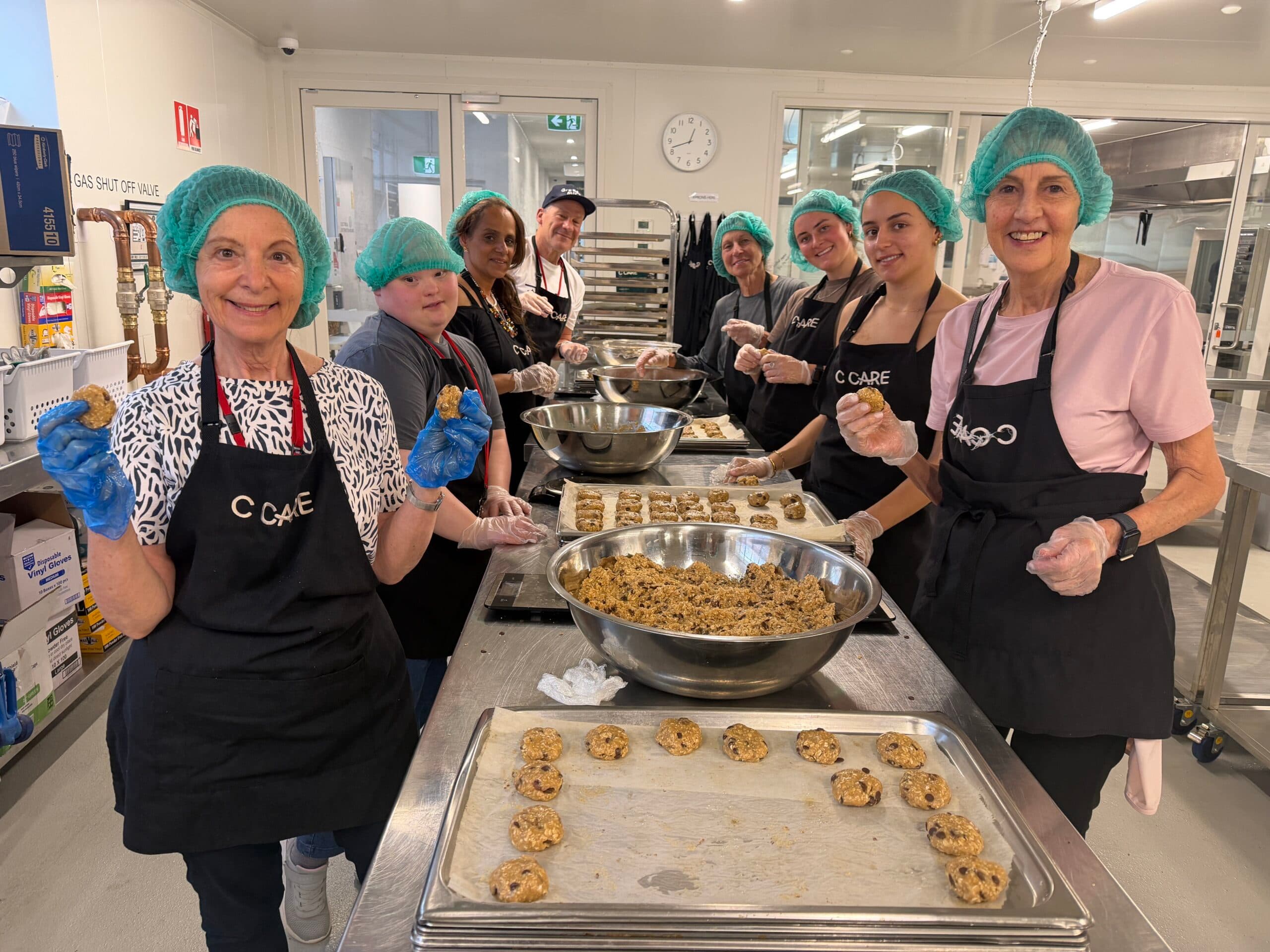
C care volunteers

Volunteers prepare food at Ccare (supplied)

Published: 28 October 2026

Last updated: 28 October 2026

For many people, everyday life depends on the care of others, for physical essentials, including food and for emotional needs like companionship. Much of this work is unpaid and taken for granted, although society and the economy depend on it. 

Volunteering has always been essential to Jewish life, but there is often little understanding of who provides this care or what it takes to sustain it. 

While volunteers are not paid, their commitment becomes like a job. They receive training, must commit to shifts and follow organisational protocols. Those who run volunteer programs often carry the load of human resources managers in large organisations.  

“I think people totally underestimate what it means to actually volunteer in any capacity,” says Lesley Ber, Vice President of the National Council of Jewish Women (NCJW) Victoria. “It’s a huge commitment that comes with responsibility.” 

What motivates volunteers? 

Rabbi Allison Conyer, Senior Rabbi at Temple Beth Israel (TBI), says volunteering is both an act of giving and a communal responsibility, but it is not just one way. People contribute money, skills or time, and gain the satisfaction of connection.  

“The more people volunteer, the more connected they feel to the community. The more they feel connected, the more they feel valued,” she says.  

NCJW Victoria President Anna Serry describes Jewish values such as tikkun olam, the responsibility to repair the world, as a powerful motivation for volunteers, alongside belonging and collective responsibility. 

She says being part of the organisation provides a place of connection and belonging, supporting women’s social and emotional wellbeing through life’s transitions and creating opportunities for community through shared experiences and events. 
Dan Rotman began volunteering because he loves cooking and wanted to share the good fortune his refugee mother felt at finding a home in Australia. 

Now he co-ordinates TBI’s Nourish program, which provides hot meals to around 50 people outside the synagogue gates from 5.15pm every Monday until food runs out, enabling the work of about 30 volunteers a week. 

Friendship also helps sustain volunteering at KOGO, which brings together more than 20,000 volunteers across Australia to knit and crochet items for distribution through more than 400 partner charities. CEO Vicki Davis says the organisation has never needed to actively recruit volunteers: its network grows through a welcoming atmosphere and volunteers bringing their friends. 

Who volunteers?  

Women have always dominated the volunteer workforce and continue to do so. Conyer estimates that women make up about two-thirds of the volunteers providing emotional support and care at TBI. 

Older volunteers are also dominant, with more flexibility in both time and their willingness to take varied roles.  

Conyer says retirees often ask how they can help while younger people respond to specific tasks matching their interests: supporting refugees, feeding people experiencing homelessness or helping at a Purim carnival. “Younger volunteers need to be asked directly, targeted for a specific task,” she says.  

At CCare, an organisation supporting those experiencing food insecurity and social isolation, most of the 852 volunteers last year were over 70, though there are hopes of partnering with student organisations to bring on a younger cohort. 

At Nourish, Rotman says the preponderance of older volunteers can be an issue because the work can be physically demanding: a pot of pasta and boiling water may weigh seven kilograms. 

NCJW has succeeded in attracting a cohort of younger volunteers who are interested in programs such as Caring Mums, which supports new mothers, and Make Space for Her, which supports women to step into positions of influence and works with communal organisations to address systemic barriers and strengthen gender equality in leadership. 

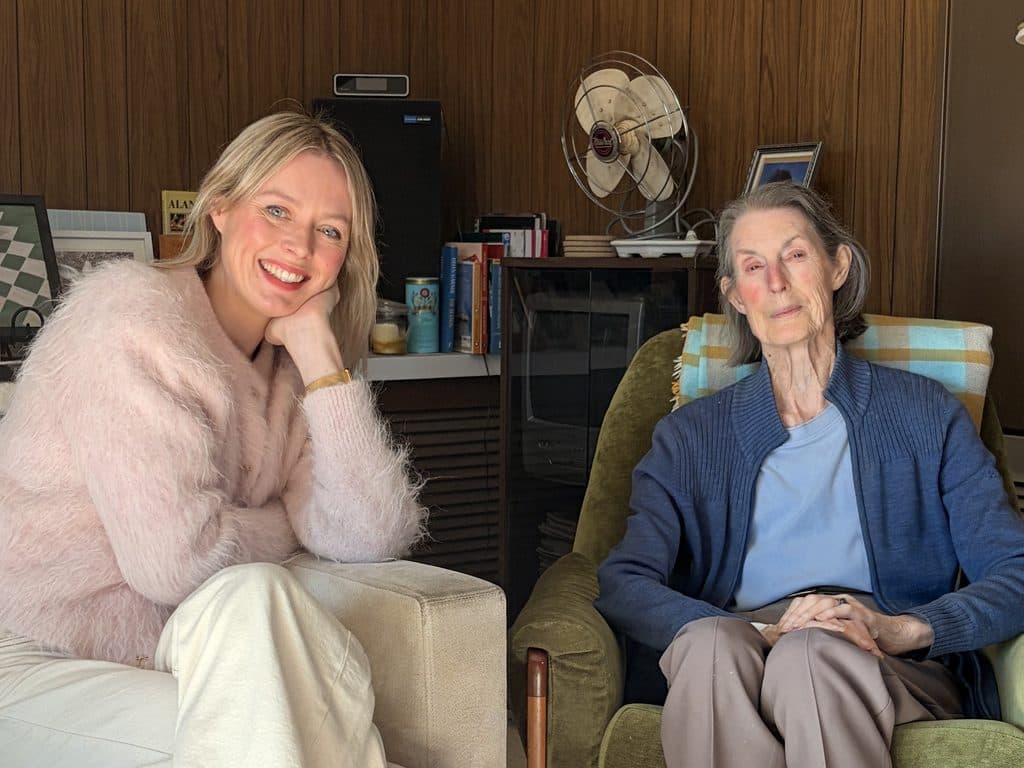
A CCare Aged Care visitor and the woman she visits  (supplied)
A CCare Aged Care visitor and the woman she visits (supplied)

Supporting volunteers 

Volunteer co-ordinators must manage long lists of volunteers, juggling availability, providing training and supervision and ensuring workers are matched to tasks.  

The Manager of CCare’s government-funded Aged Care Volunteer Visitors Scheme, Tamara Taylor, recruits, screens, trains and matches volunteers with older people seeking companionship.  

“I’m more like a matchmaker,” she says. 

A staff member accompanies the first visit to ease introductions, helping out with early conversations that can feel artificial until people become familiar presences in each other’s lives.  

The program asks volunteers to commit to weekly visits for six months, with visits potentially continuing for as long as the older person wants. 

The NCJW Caring Mums program pairs trained volunteer mothers with women during their baby’s first year, providing weekly social and emotional support for a year. Ber describes it as preventative mental health support. Since 2012, 302 volunteers have been trained and 1,067 mothers supported. 

Ensuring volunteers have the capacity for the work is essential: volunteers receive fortnightly group supervision and must be mothers whose youngest child is at least five, allowing time and emotional capacity to support someone else. 

You might also like
  • ‘Our children already belong’: Petition calls Jewish schools to cooperate for disabled support
    Gideon Cohen
  • Freedom Rides: Allyship for dark times
    Eliezer Rubenstein Sturgess
  • Learning from the Jewish refugee story
    Peter Kohn
logomark.67a07ee3
We believe in the free flow of information

Republish our articles for free, online or in print, by using our Creative Commons licence

You might also like

    Joni Fleischer
    Generation ChangeInterviewAustralia

    Joni Fleischer: Connecting charities with tech talent

    Gideon Cohen
    JA06
    FeatureArts & Culture

    From Bondi to the Tree of Life

    Gideon Cohen
    Zoe Better pillars of light crop
    FeatureAustralia

    NDIS changes threaten disabled participation in community life

    Jarod Rhine-Davis

About the author

Florencia Tuchin

Florencia Tuchin

Florencia Tuchin is an Argentinian journalist specialising in human development and a solutions journalism trainer. Florencia is the founder of the newsletter and media outlet Otra Economía, holds a Bachelor's in History from the Universidad de Buenos Aires, and is completing a Master's in Economic Sociology at the Universidad Nacional de San Martín.

More from the author

ReflectionAustralia

Between communities: finding Jewish belonging after migration

OpinionWorld

Argentina’s president wraps himself in Jewish symbols while taking a chainsaw to the country