Aa
  • Read, Watch, Listen
  • TJI Series
  • Community Action
  • Events
  • Zedi
Follow us and continue the conversation
  • LinkedIn
  • Instagram
  • FaceBook
  • X
  • YouTube
Test yourself with the TJI Quiz!

Adjust size of text

Aa

Follow us and continue the conversation

  • LinkedIn
  • Instagram
  • FaceBook
  • X
  • YouTube

Your saved articles

You haven't saved any articles

What are you looking for?

Original reporting, insightful analysis and diverse views, delivered straight to your inbox

  • LinkedIn
  • Instagram
  • FaceBook
  • X
  • YouTube
Your support fuels our mission to inform, entertain and inspire.

The Jewish Independent is bound by the Standards of Practice of the Australian Press Council. If you believe the Standards may have been breached, you may approach The Jewish Independent or make a complaint to the Australian Press Council in writing at www.presscouncil.org.au. The Council may also be contacted on 1800 025 712.

  • Our Story
  • Contact us
  • Our Team
  • Support us
  • Guidelines
  • Pitch your idea
  • Republishing us
  • Community Action
  • Our Awards
  • LinkedIn
  • Instagram
  • FaceBook
  • X
  • YouTube
Aboriginal FlagTorres Strait Islanders Flag

The Jewish Independent acknowledges Aboriginal and Torres Strait Islander peoples as the Traditional Owners and Custodians of Country throughout Australia. We pay our respects to Elders past and present, and strive to honour their rich history of storytelling in our work and mission.

© The Jewish Independent 2026All Rights Reserved
Website design and development by Your Creative, MelbourneTerms & ConditionsPrivacy Policy
HomeRead, Watch, ListenAustralia
ReflectionAustralia

Between communities: finding Jewish belonging after migration

Five Latin American Jews in their late 20s and 30s reflect on rebuilding a sense of community after migrating to Australia
Florencia Tuchin
Print this
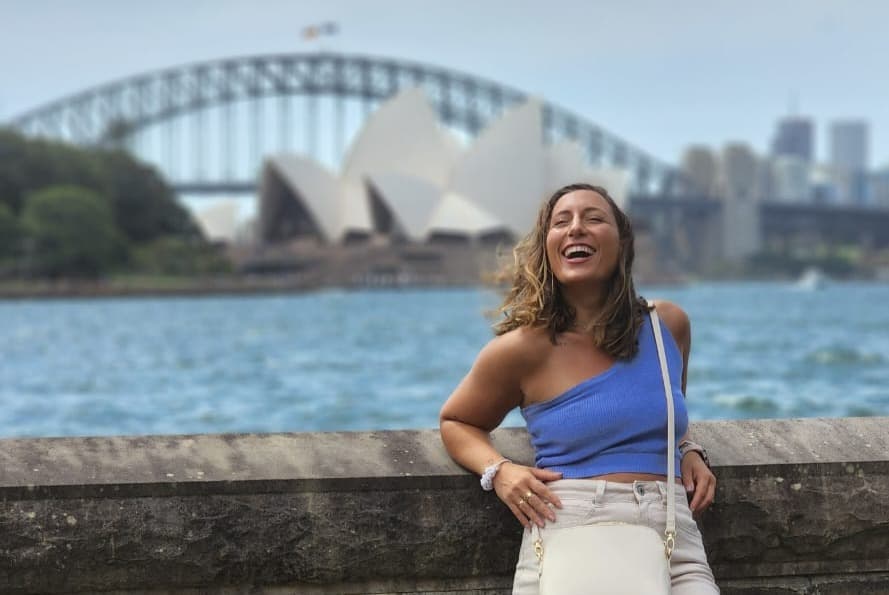
Nadia

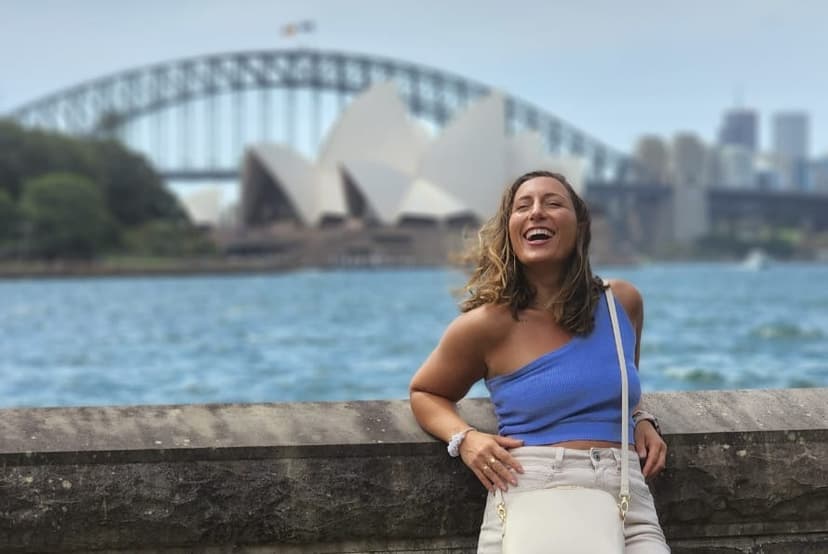
Nadia Vainstein, an Argentine living in Sydney (Image: supplied)

Published: 28 September 2026

Last updated: 28 September 2026

One of my greatest fears about leaving Argentina was what I would do if something happened to a family member. A week after arriving in Melbourne, my grandmother died. With no familiar place to mourn, I attended her funeral online, but watching through a screen only made the distance feel greater.  

That Friday, although I did not know anyone there, I went to a synagogue in St Kilda for a Shabbat service to honour my grandmother’s memory. It brought me some relief. 

Three years later, I still think back to that evening. It made me wonder what happens to Jewish identity and communal life when Latin American Jews migrate to Australia. 

For many Jews, growing up within a community is rarely a conscious choice. Guided by their parents, they attend Jewish schools and community clubs, join youth movements or go to synagogue, forming relationships over time. After migration, remaining involved means building trust and finding a place in a community shaped by another country. 

Because I said, ‘Hi, I’m Jewish’, they adopted me 
The Jewish Independent

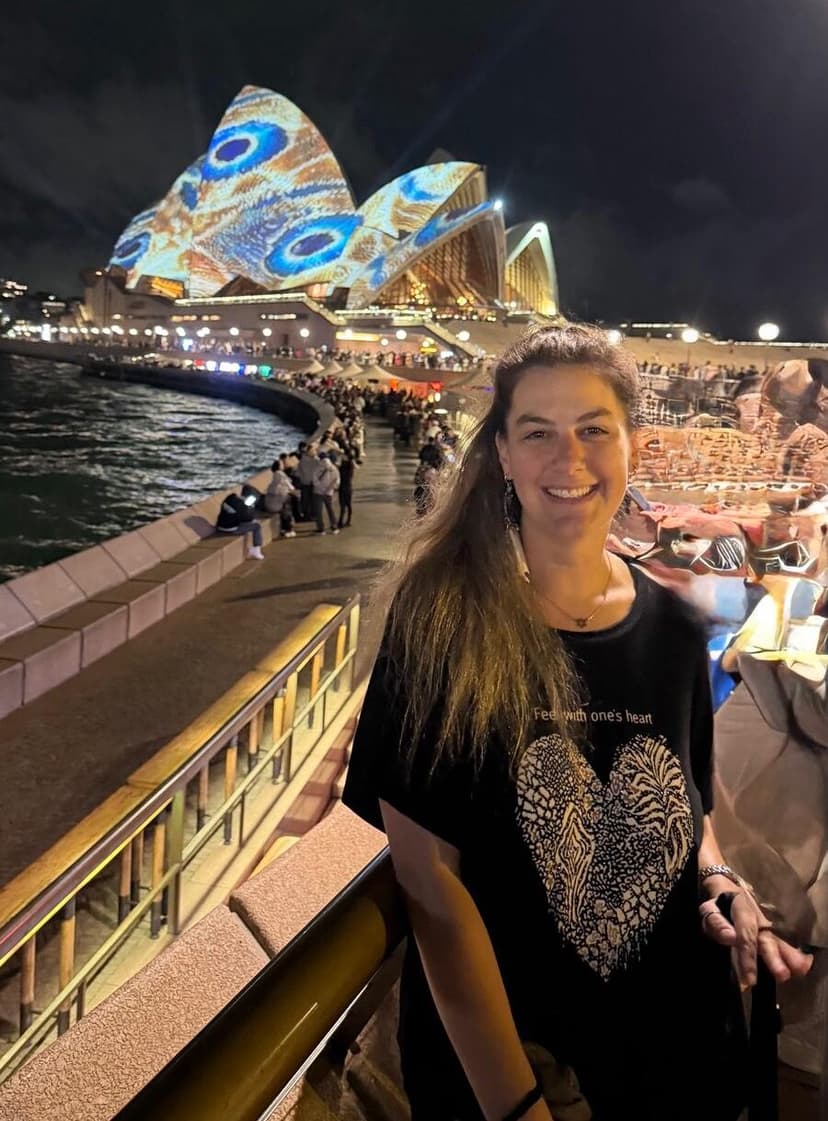
Jesica Grinblat joined Macabi in Argentina at the age of five and later became a youth leader. Community had surrounded her as she grew up; after moving to Australia in 2020, she had to find it again. The turning point came while she was working as a bartender at a bat mitzvah in Melbourne. Grinblat recognised the prayers and songs and began singing along as she served drinks. The familiar music moved her to tears. 

Grinblat saw the event as an opportunity to reconnect with Jewish life. She approached some of the bat mitzvah girl’s relatives, told them she was Jewish and asked to be put in touch with someone in the community. They called over the girl’s grandmother, who took Grinblat’s number and invited her to Shabbat. 
Since then, the family has invited her to Shabbat dinners and celebrations of Rosh Hashanah and Passover. When Grinblat’s parents visited Australia, they were welcomed to the table as well.  

“Simply because I said, ‘Hi, I’m Jewish’, they adopted me, embraced me, made me part of their family and invited me in,” she says. 

But being welcomed into one family did not immediately give Grinblat a sense of belonging to the broader community. She has attended different events and synagogues but has not found the same sense of belonging she experienced at Macabi in Argentina. 

He kept walking past the synagogue 

The Jewish Independent

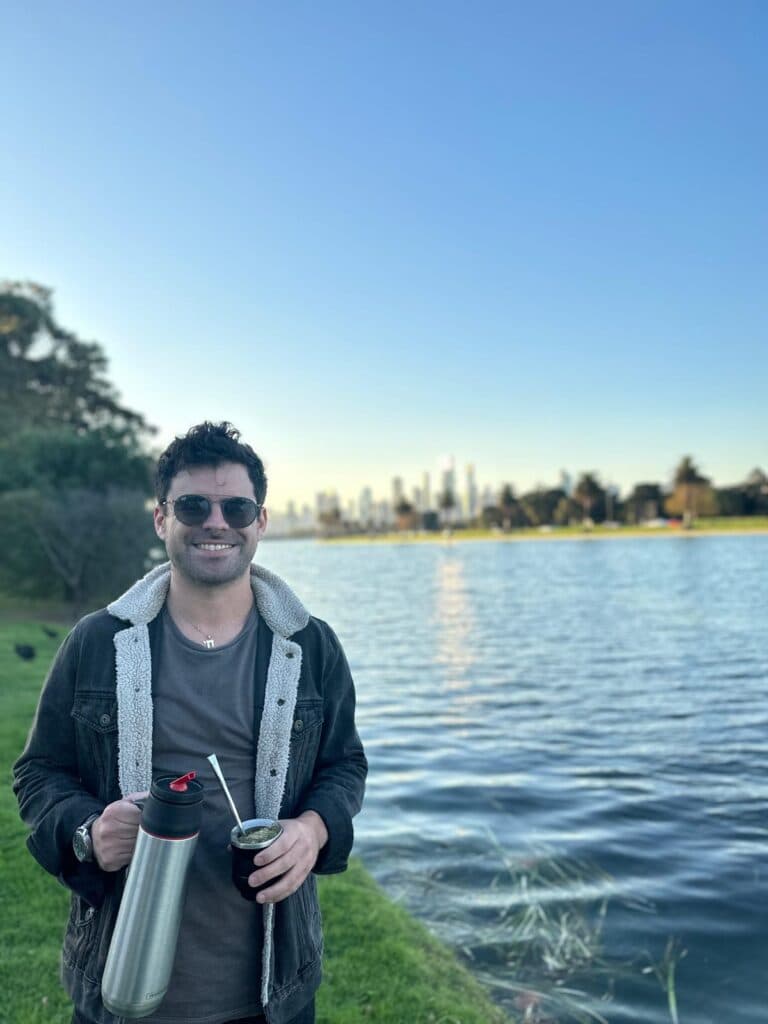
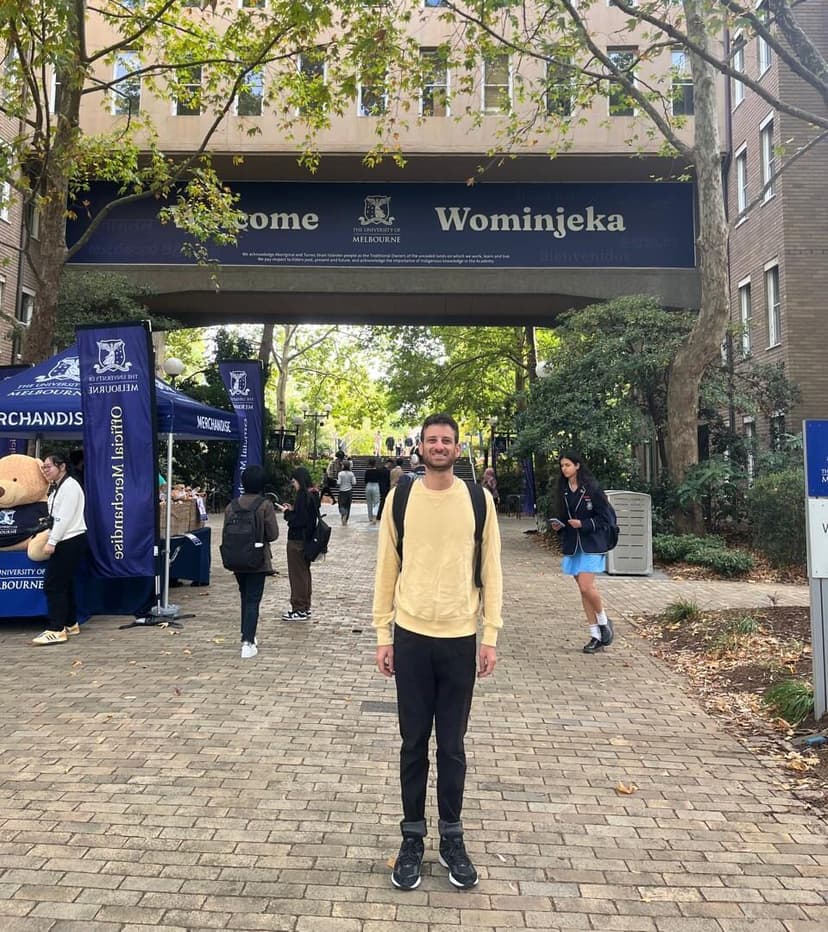
Iván (who asked not to use his family name) did not actively seek out a Jewish institution. He moved from Argentina to Melbourne two and a half years ago to pursue a PhD in culture and communication at the University of Melbourne. 

Shortly after arriving, he walked past a synagogue and considered going inside. It was not primarily a religious impulse; the place represented something familiar at a time when almost everything around him was new. In the end, he kept walking. At university, he discovered a number of student associations, including a Jewish group, but he hesitated and never approached them. 

In Argentina, Iván did not need to seek out Jewish life. Family gatherings and shared cultural codes kept him connected. In Melbourne, without those structures, his Jewish identity became less visible in everyday life, but no less meaningful. 

Community ‘feels like a safety net’ 

The Jewish Independent

Renata Zimbarg, a Brazilian-born cultural strategist, moved to Melbourne in 2022 to complete a master’s degree and live closer to her sister, who had migrated to Australia years earlier. 

After October 7, Zimbarg felt increasingly isolated and posted in a Melbourne Jewish Facebook group looking to meet new people. The post led to the creation of a WhatsApp group. One of its members invited her to a Pride Shabbat at a progressive synagogue. She gradually started attending Shabbat activities for families with her niece and nephew. 

Zimbarg had learnt to bake challah when she was 12 and began baking it again in Melbourne. “My niece and nephew devour it,” she says.  

She works for an organisation that runs activities for Jewish seniors living in non-Jewish aged-care facilities, helping them remain connected to Jewish life. The role opened doors and introduced her to many people within the community. She also became a member of a Jewish artists’ network, where she participates in monthly activities. 

“No matter where you are in the world, there will always be someone in the Jewish community for you,” she says. “It feels like a safety net.” Zimbarg does not idealise that network. “The community is not perfect. It can also disappoint you,” she says. “But that is what families are like.” 

She has now formed a group with other Brazilian Jews who organise dinners for Jewish holidays. It has become a small community of her own: a new circle that does not reproduce the relationships of her childhood but gives her a way to experience Brazilian and Jewish life together in Melbourne. 

Migration made me more involved 

The Jewish Independent

Architect Roberto Goren grew up in Santiago, where he attended a Jewish school, participated in youth movements and had Jewish friends from childhood. Because those relationships were embedded in his life, he did not need active institutional participation to feel part of the community. 

In Melbourne, the opposite happened. Without that lifelong circle, he began attending more events and celebrations. Paradoxically, migration made him more involved in Jewish communal life than he had been in Chile. 

Goren arrived in Australia in 2018, lived in different cities and settled in Melbourne five years ago. His search for a place to live led to a lasting friendship. When Goren arrived at a studio apartment inspection, only one other person was waiting. They began talking and later went for coffee. When they exchanged Instagram handles, Daniel noticed that Goren’s profile included a Magen David. Daniel, who was from Brisbane, was also interested in becoming involved in Jewish life. Together, they began attending events run by different Jewish organisations. 

Adopting a new practice 

The Jewish Independent

For Nadia Vainstein, an Argentine living in Sydney, a dating app became her first entry point into the community. She downloaded it because she did not know how else to meet other Jewish people. Through the app, she formed a friendship that gave her access to information about activities and institutions. “I’m quite introverted, so I couldn’t really see myself going to a synagogue or a community activity alone,” she says. 

Vainstein had attended a Jewish kindergarten and participated in communal activities as a child. Her parents encouraged her to remain connected to Jewish life. 

In Australia, she met her husband and adopted a new practice: celebrating Shabbat every Friday. “If we don’t get together with the family, we still light the candles,” she says. 

Across these five journeys, migration did not erase Jewish belonging; it changed the relationships through which each person experienced it.  

Grinblat describes finding that continuity at a Passover dinner in Melbourne: “I found it fascinating to be on the other side of the world, sitting at a table that looked like those of my childhood, reading the Haggadah, singing the same songs and eating kneidlach.” 

You might also like
  • We must fight Hanson’s regressive monoculturalism
    The Jewish Independent
  • Pita with Vegemite now screening on SBS on Demand
    The Jewish Independent
  • This is not the community my father – or my daughter – knew
    Lynda Ben-Menashe
logomark.67a07ee3
We believe in the free flow of information

Republish our articles for free, online or in print, by using our Creative Commons licence

You might also like

    Protest against settler violence in Jerusalem
    DebateAustralia

    Sanctioning settlements is a defence of Israel, not an attack

    Elisheva Madar 3
    bialik Jewish schools shabbat
    OpinionAustralia

    Jewish schools are the marinade that infuses continuity

    Jeremy Stowe-Lindner
    jiff26-cancelled.jpg
    ReflectionArts & Culture

    On despair: A reflection after watching ‘Cancelled’

    Deborah Stone 2

About the author

Florencia Tuchin

Florencia Tuchin

Florencia Tuchin is an Argentinian journalist specialising in human development and a solutions journalism trainer. Florencia is the founder of the newsletter and media outlet Otra Economía, holds a Bachelor's in History from the Universidad de Buenos Aires, and is completing a Master's in Economic Sociology at the Universidad Nacional de San Martín.

More from the author

OpinionWorld

Argentina’s president wraps himself in Jewish symbols while taking a chainsaw to the country

Comments

No comments on this article yet. Be the first to add your thoughts.