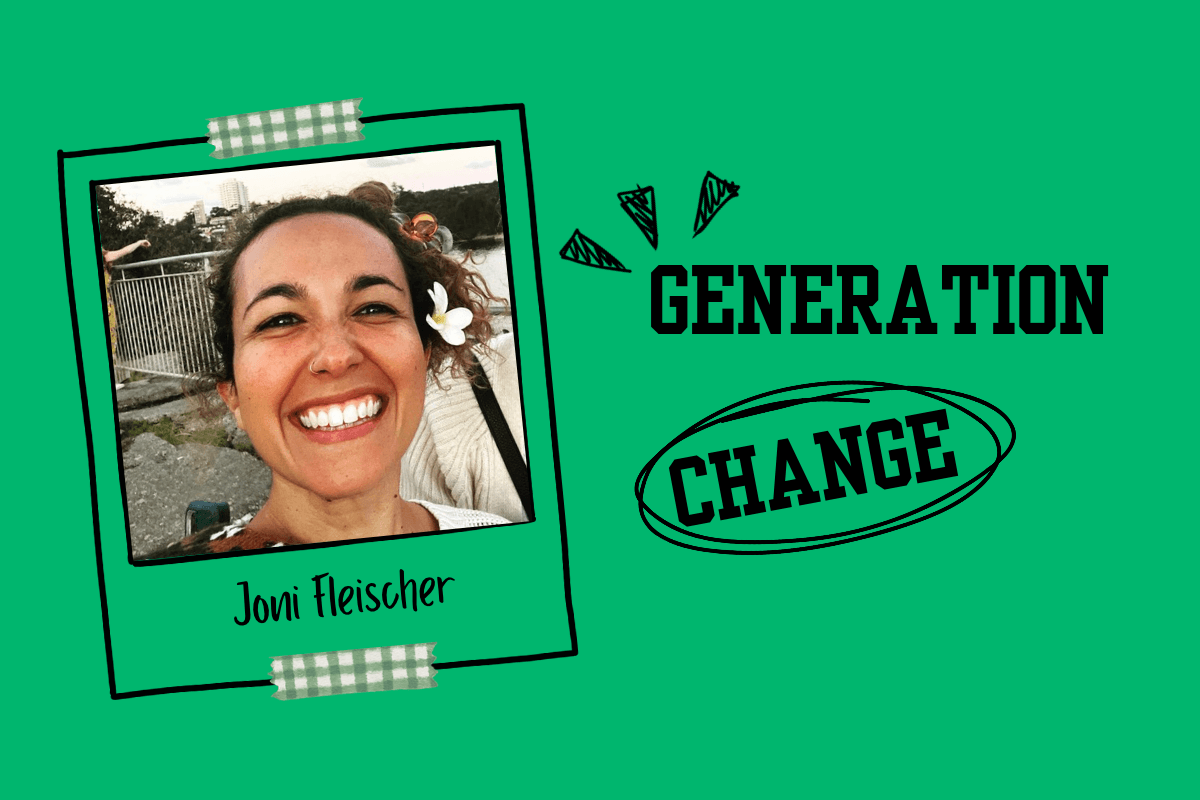
Joni Fleischer: Connecting charities with tech talent
As co-founder of Sydney-based tekFoundation, Joni Fleischer helps charities turn their digital wish lists into reality, matching them with skilled volunteers who can update their websites, sharpen their social media and provide digital tools to expand their impact
Gideon Cohen
Joni Fleischer is the the co-founder and head of tekFoundation.
Published: 8 October 2026
Last updated: 8 October 2026
To start off, tell us about yourself – what do you do?
I'm originally from California and moved to Sydney about six years ago. I'm the co-founder and head of tekFoundation, which is a small, Sydney-based not-for-profit that connects charities around Australia with skilled volunteers and companies to amplify their impact.
That all started about three years ago. I moved out here in the middle of COVID with a different company. I was laid off from that company, bought a van, drove to Perth and back, and taught yoga. I was on a part-time student visa and wanted to stay in the country and happened to be at the right place, at the right time, when my co-founder was looking to get this charity started.
What was your connection to Judaism growing up?
In California, I grew up going to a Conservative synagogue. I'm learning, since I moved to Australia, that these terms mean all different things depending on where in the world you are. So, that was a fun learning experience.
I had my bat mitzvah. My mum actually taught at a Jewish day school, so I went there for a couple of years before they switched me to public school. I wasn't really religious at the end of the day, but I think my favourite memories growing up were the camping trips that we would do with a group of Jewish families, the havurah, and the holidays that we would celebrate together.
I guess you could say it was probably less about God and the religious aspect and more about just feeling like I was part of a community, and that’s what stuck with me over the years.
What does your Jewish identity look like today? Does it influence the work that you do?
I'd say I have a handful of friends here that are Jewish. Most of my friends are not Jewish, but not necessarily by design. I think moving to a foreign country in your thirties is hard. It's hard to make friends as an adult in general. So, I feel incredibly lucky to have the group of friends that I've made over the years. I think it's really fun that I get to share my culture with them and they share their culture with me.
I've actually hosted, every year since I've moved here, a Passover seder or a Chanukah party, and we've made them really fun. One year, we had everyone dress up as a biblical character, so we had Jesus there, an apple, a snake, and desert people. Another year, I made my whole apartment look like a desert scene, and everyone had to sit on the floor, and we projected The Prince of Egypt on the wall.
After the Bondi shooting, my friends, even the non-Jewish friends, were incredibly supportive. That was obviously a very difficult time for many of us. I came over to my friend’s apartment and she had bought a menorah and all the ingredients for latkes, and basically said, “Teach me Chanukah”. I think I definitely started crying when I showed up. It’s really nice to feel like I have that kind of supportive community here, especially if a lot of my friends here aren't Jewish.
As it relates to work, I love being Jewish and at the same time I'm also deeply interested, invested, and a participant in other cultures that are around me in my community. I definitely think that's important, especially in today's climate, that we're building bridges and not burning them down.
At tekFoundation, my co-founder’s not Jewish. He's from the UK. We don't have a religious affiliation or a political affiliation, and I'm actually kind of proud to be working with charities that are a diverse group, supporting the people in need in their communities.
That's something that I love about the work that I'm doing, because a lot of people I've met haven't even met a Jewish person before, so that opens up an opportunity for me to have a conversation with them. If I can make a positive impact on their impression of our people, that's a win.
After university in the US, you moved to Israel for a few years. How was that experience?
At the time I decided to move there, my brother was living there, and I had gotten an international business degree. I was honestly just a bit lost, thinking, all right, what do I want to do next with my life?
It would be fun to move to another country and be able to experience a place for myself that you learn about growing up as a Jew, and so that was kind of the reason that I ended up moving out there. I didn't have a job or much of a plan, but I was trying to find a business-related job.
I found this opportunity to move down to a village in the middle of nowhere, Nitzana, and they were looking for an English speaker to promote a tourism program to have people come and learn about the culture, learn about the desert region, do sport, and just have an Israeli experience. And I think I was just crazy enough to take the job.
At the time, social media was so different from what it is now. Back then, it was making a Facebook group and writing some posts. And then I just had to promote it and come up with an itinerary. It was an incredible experience.
I think by the time I finished it, though, I thought: “I'm so far. I don't think this is what my actual path is, but I enjoyed the experience, and I think it's time for me to like, move back.”
You're so young at that point, right after college. It's good to just travel and have some experiences that, in some ways, change the course of your life.
Fast forward to today – for someone who's never heard of tekFoundation, can you explain what you do?
Basically, tekFoundation works with charities and tries to outline what their strategic goals and tech goals might be. The easiest way to explain it is that I talk to a charity, we work out some tech projects that a volunteer might be able to pick up, and then we turn around and find a skilled volunteer that's interested in doing that work.
So, things like a charity's website hasn't been updated in 15 years because they haven’t got the budget. They got a grant to get it started, or maybe someone that works there knew how to build a website, but has now left. We help them find a volunteer, or a team of volunteers, that over the course of a quarter designs and updates their website.
It's helping them get things done that they might never otherwise be able to do. Especially nowadays, it's quite difficult for a lot of charities to get IT projects covered, either resourced or outsourced, so we're addressing that issue.
How did the idea for it come about? What was the process of actually setting it up as a charity?
My cofounder Nick runs a digital recruitment agency, so it was actually his idea to think about taking the recruitment model and using that to help charities find skilled volunteers. He’d been approached by some charities in the past asking for support, and then said that he was interested in applying that.
At the time, I was on a student visa. I could only work part-time and happened to cross paths with him. I found the job ad and found his website, and I think what really interested me about this was the challenge of it. Getting to build something from the ground up.
The more I looked into it, it was a real issue. Over half the charities in Australia are run entirely by volunteers. I don't know if that's common knowledge or not, but that was surprising for me to find out. These charities are doing incredible work, and a lot of their volunteers have full-time jobs doing other things, and then on the side they're running these organisations.
So, I picked it up as a challenge at first, and then over three years now it's like I've run a startup charity myself and have become more invested in the issues that we're trying to solve in the first place. My passion for it's grown over time.
Why would you say that digital innovation is an essential part of building a charity these days?
A regular startup business that is built for profit, like a pizza shop, is expected to have a digital presence and put money into their back office, because they know that's what they need to be able to succeed, right? They need tech infrastructure. They're going to need a website. They're going to need a payments platform. They're going to need marketing, social media, all of that.
But then a charity, that is just like any other business, needs those same things to be able to solve the issues in the world that we care about. How are they supposed to actually address food scarcity, or women who have survived domestic violence, if no one knows that they exist and they can't get access to the funding and support that they need?
How else can we help people working at charities?
More of what we need to be doing is supporting these people that are working really hard and burning themselves out year-round. When people think about social impact, it’s the people who are actually doing the hard work to support their communities. Sometimes, their voices don't get heard as much. So, how can we actually support the charity community and the people to make sure that they don't burn out? Because if they quit, we're totally screwed. That's really important and what I think tekFoundation is trying to advocate for – shining a light on that issue.
I think that a lot of times what someone can do is underestimated. An hour from a senior leader on the phone with a charity, to help them with their strategy could really change the course of that charity and save them thousands of dollars. Like, if some charity doesn't know what product to invest in, or they've got an idea, and they don't know if it has legs. If you've got experience in that area that they need help with, and an hour chatting to them changes that course for them, that's incredibly valuable.
It doesn't have to just be about money. It can be time. It can be making an introduction to someone. All of that is worth considering.
We like to end with the same question: what does social impact mean to you?
Because of the word social, I think it's about actually getting offline, which is a bit of an irony, because tekFoundation is here to support the digital presence, because that's the world that we live in today.
But I'm really invested in building relationships with people, because the people are the ones that are using the tech. To me, it's about doing what you can to make people feel like they're part of something, less alone in their work, and that people don't have to go through these things alone. It’s about creating that social network for people to get support and helping them move the needle on social impact.
About the author
Gideon Cohen is a Melbourne-based journalist and a content creator and editorial assistant at TJI. He holds a master's degree in journalism from the University of Melbourne and his work has appeared in various publications including Broadsheet and The Jewish Chronicle.