Aa
  • Read, Watch, Listen
  • TJI Series
  • Community Action
  • Events
  • Zedi
Follow us and continue the conversation
  • LinkedIn
  • Instagram
  • FaceBook
  • X
  • YouTube
Test yourself with the TJI Quiz!

Adjust size of text

Aa

Follow us and continue the conversation

  • LinkedIn
  • Instagram
  • FaceBook
  • X
  • YouTube

Your saved articles

You haven't saved any articles

What are you looking for?

Original reporting, insightful analysis and diverse views, delivered straight to your inbox

  • LinkedIn
  • Instagram
  • FaceBook
  • X
  • YouTube
Your support fuels our mission to inform, entertain and inspire.

The Jewish Independent is bound by the Standards of Practice of the Australian Press Council. If you believe the Standards may have been breached, you may approach The Jewish Independent or make a complaint to the Australian Press Council in writing at www.presscouncil.org.au. The Council may also be contacted on 1800 025 712.

  • Our Story
  • Contact us
  • Our Team
  • Support us
  • Guidelines
  • Pitch your idea
  • Republishing us
  • Community Action
  • Our Awards
  • LinkedIn
  • Instagram
  • FaceBook
  • X
  • YouTube
Aboriginal FlagTorres Strait Islanders Flag

The Jewish Independent acknowledges Aboriginal and Torres Strait Islander peoples as the Traditional Owners and Custodians of Country throughout Australia. We pay our respects to Elders past and present, and strive to honour their rich history of storytelling in our work and mission.

© The Jewish Independent 2026All Rights Reserved
Website design and development by Your Creative, MelbourneTerms & ConditionsPrivacy Policy
HomeRead, Watch, ListenArts & Culture
AnalysisArts & Culture

Popular culture’s shameless Holocaust obsession feeds continuing hatred

After October 7, it has become clear that the glibness of Holocaust popular culture is far from harmless.
Tanya Gold
Print this
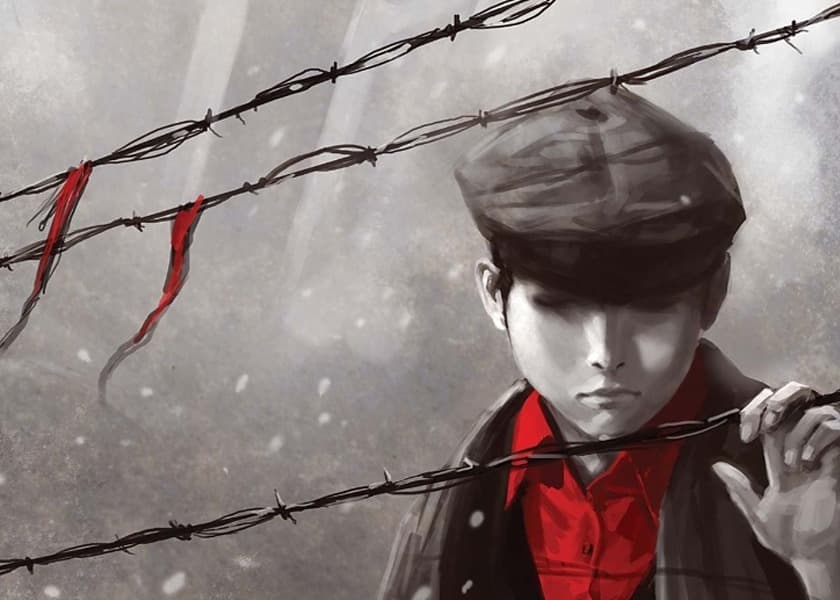
Boy in cap looking through barbed wire, drawn in a graphic style

The backstory of Marvell Comics anti-hero Magneto constructs him as an Auschwitz survivor

Published: 26 August 2025

Last updated: 26 August 2025

“Is this all that will be remembered of the Event?” 

—Elie Wiesel 

Last spring my sister sent me a photograph of a novel called The Stable Boy of Auschwitz: A Heartbreaking True Story of Courage and Survival. I stared at the photograph, and I thought: who is this novel for? What does it serve?  

There is a glut of Shoah popular culture nowadays, and it is self-perpetuating. The Shoah can be a creation myth or a punchline. Marvel’s X-Men (2000) begins in Auschwitz; X-Men: Apocalypse (2016) ends there. Bridget Jones’s mother begs her not to walk around 1990s London “looking like someone from Auschwitz, darling”. As I write, Wendy Holden’s new novel, The Teacher of Auschwitz, has just been published, and The Boys from Brazil, the 1978 Jewsploitation film (Hitler lives, as multiple clones!) is being remade for fools. 

The Shoah is everywhere in popular culture but, as it really was, it is nowhere. There is too much of it, and too little. It is spoken of ceaselessly but it is almost never faced. 

Until 7 October 2023, I knew this, and I didn’t care. Let people watch X-Men’s Magneto raze Auschwitz; let them reanimate the Wannsee Conference as an English-style tea party in Conspiracy (2001). (In this film the genocidaire Reinhard Heydrich says of Schubert’s Quintet in C major: “The adagio will tear your heart out.” No doubt.) 
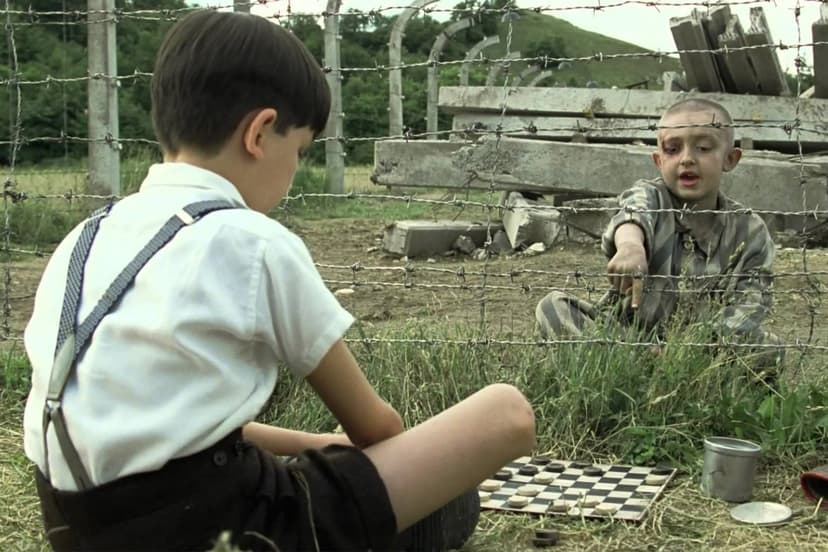
A still from the film of 'The Boy in Striped Pyjramas', based on the novel by John Boyne. Both book and film were widely criticised as unrealistic exploitations of the Holocaust.

Great Holocaust works

I have my own Shoah culture as memorial: the works of survivors Primo Levi, Elie Wiesel and Tadeusz Borowski; the testimony of the Sonderkommando Zalmen Gradowski and the historian of the Warsaw Ghetto, Emanuel Ringelblum; two incalculably tender novels by the British writer Martin Amis; Cynthia Ozick’s short story “The Shawl” (1980); and a few films, including The Pawnbroker (1964), Son of Saul (2015) and the immense documentary Shoah (1985) by Claude Lanzmann. 

Before he died in 2018, Lanzmann said: “Shoah is the construction of a memory. And the act of transmitting is all that matters. There was no reality to film. It had to be created. Shoah is the abolition of all distance between past and present. Shoah shows eyes that saw. I wanted to make this film to resurrect them and kill them a second time so we could die with them, and they wouldn’t die alone.” 

After October 7

After 7 October 2023, when the murder of Israeli Jews was celebrated on the streets of Europe, I thought I had been wrong to dismiss the glut as harmless. I re-read and rewatched the famous works that are apparently about the Shoah: the blockbuster novels and films that non-Jews read and watch; the literary novels pseudo-intellectuals praise.  

And I understood, for the first time, the connection between the emphasis, glibness and heartlessness of these works, and the shameless existence – the continuation – of the hatred that created the Shoah. Because they amount to, by instalments – sometimes subconsciously, sometimes not – the erasure of the Jew from the Shoah, and his own history.

Patterns emerge in these works: Jews are stripped of Jewish character and hinterland, so the reason for their murder is obscured; the perpetrator is an object of fascination, often glamour; the Jew is replaced by the non-Jew to create a non-Jewish tragedy to rebuke the Jew himself; sometimes the Jew is the perpetrator. Inside these cumulative fictions the Jew becomes, as he has always been, a mythical being who cannot be loved or mourned: you cannot love – or harm – an idea. And of the overwhelmingly Yiddish-speaking Jewish nation that is gone there is almost nothing.  

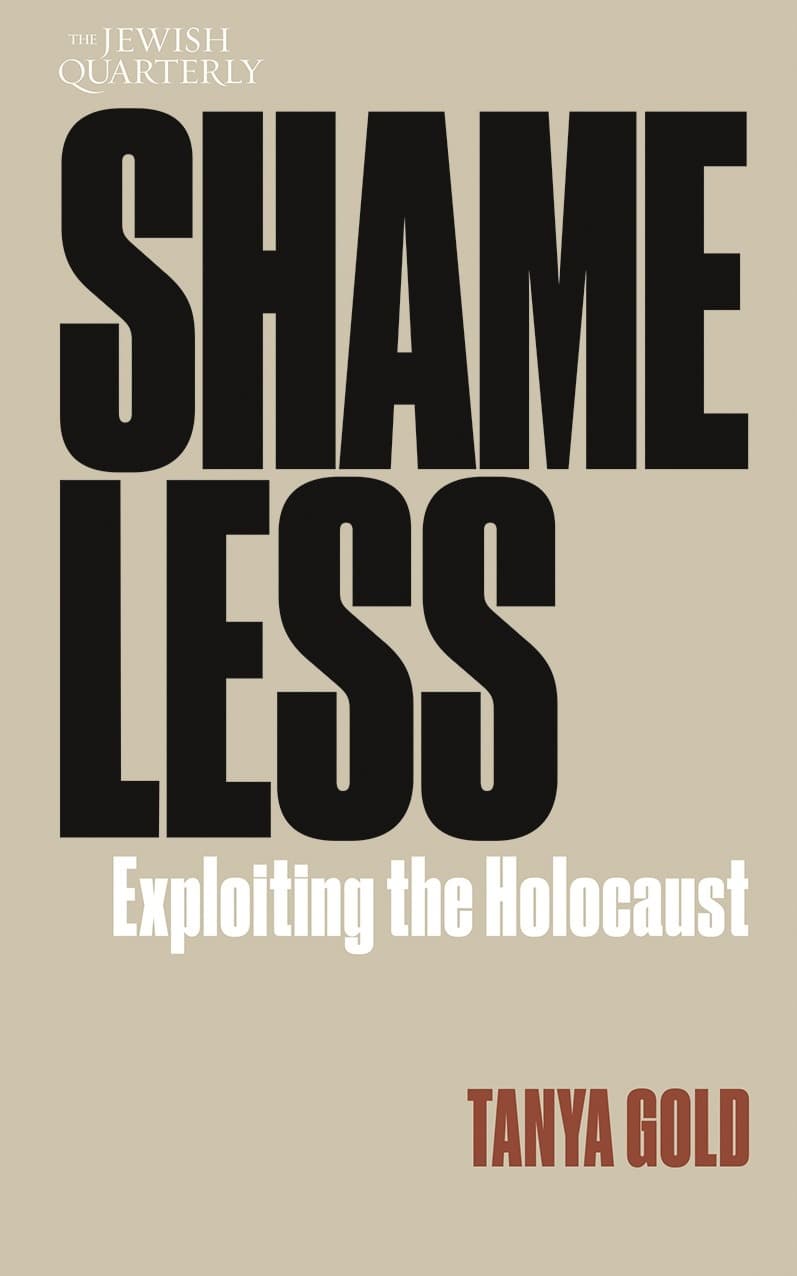
The Jewish Quarterly cover of Gold's essay Shameless: Exploiting the Holocaust

It began with Anne Frank. Last year a friend sent me a photograph of a child, the daughter of an acquaintance of hers. 

The child was reading The Diary of a Young Girl, her head bent to the page. This was code. It was supposed to tell me that my friend, who has remained silent on the anti-Israel protests in our country since October 2023, understood the meaning of the Shoah, and of my fear. This – sending me the photograph – was her speech, and her consolation. It angered me, and I wanted to reply: why are you sending me a photograph of a living Christian child reading a book by the world’s most famous dead Jewish child?  

This article is an extract from Shameless: Exploiting the Holocaust by Tanya Gold published by the Jewish Quarterly and available here. 

You might also like
  • The winning Jewish books by Australians in the past year
    Gideon Cohen
  • This might be the smallest synagogue in the world 
    György Polgár
  • Happiest man resurrected on stage
    Peter Kohn
logomark.67a07ee3
We believe in the free flow of information

Republish our articles for free, online or in print, by using our Creative Commons licence

You might also like

    haredi street guitar
    Photo EssayArts & Culture

    Jerusalemites through the lens

    Sharon Gabay
    Generation Change: Rachel Moshel
    Generation ChangeInterviewArts & Culture

    Rachel Moshel: Creating a space for Jewish art and joy

    Gideon Cohen
    Amidah main
    FeatureArts & Culture

    A circle of communal healing on stage, with a dash of humour

    Miriam Hechtman

About the author

Tanya Gold

Tanya Gold

Tanya Gold is an award-winning journalist whose work has appeared in Harper's, the Spectator, the New Statesman and the New York Times. She lives in the UK.

Comments

No comments on this article yet. Be the first to add your thoughts.