Published: 24 August 2026
Last updated: 24 August 2026
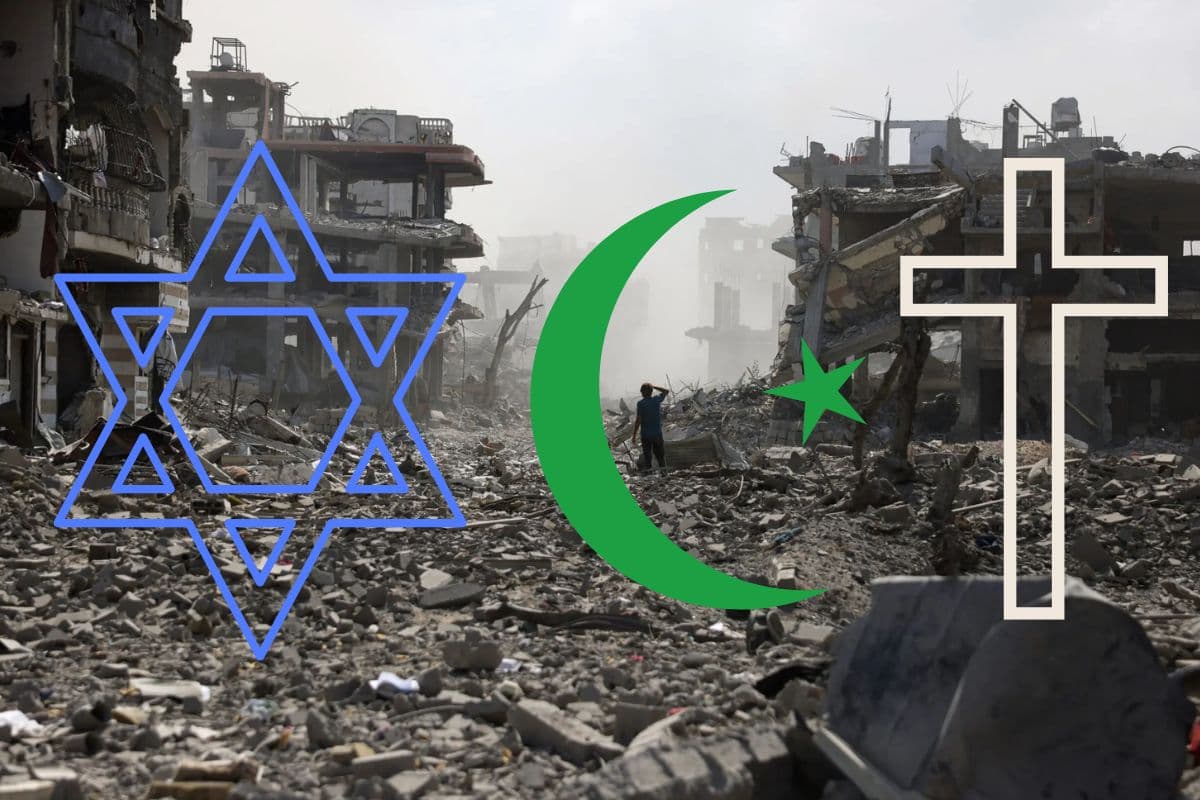
For centuries, religion has been simultaneously indicted as a primary driver of human conflict and invoked as our greatest hope for peace. At the intersection of these two realities lies the concept of the “just war” – a framework historically used to determine when violence is morally permissible and how it must be contained. But how do the three Abrahamic traditions – Judaism, Christianity, and Islam – actually understand this concept today?
The Wellington Abrahamic Council of Jews, Christians, and Muslims met recently in a closed session to discuss this topic. We are one of the few organisations internationally where Jews, Christians, and Muslims are still in dialogue after October 7, 2023. Despite the diverse histories of each religious group, as well as diversity of opinion within each group, the discussion was very friendly, based on the Abrahamic Council’s values of kindness, respect, openness, honesty, curiosity, boldness, and forgiveness.
Representatives from the three faiths drew on different historical and scriptural lineages to arrive at their conclusions, but converged on a shared ethics of restraint, a mutual anxiety over modern warfare, and a desire to abandon the justification of war in favour of constructing a “just peace.”
Divergent paths to moral restraint
To understand the similarities in how these faiths approach conflict, one must first examine the differing historical and theological mechanisms they use to arrive at this conclusion.
The Jewish tradition approaches the ethics of war through a lens profoundly shaped by historical displacement. Because the Jewish people lived without political sovereignty or standing armies for nearly two millennia, Judaism lacks a formalised, institutional “just war theory” akin to the European Christian tradition. Instead, its ethics are rooted in rabbinic thought, which frames war as a social aberration – a severe deviation from the divine ideal.