Commission told of lasting scars from October 9 demonstration in Sydney
The infamous pro-Palestinian protest at Sydney’s Town Hall and Opera House occupied centre stage at this week’s Royal Commission hearings
Peter Kohn
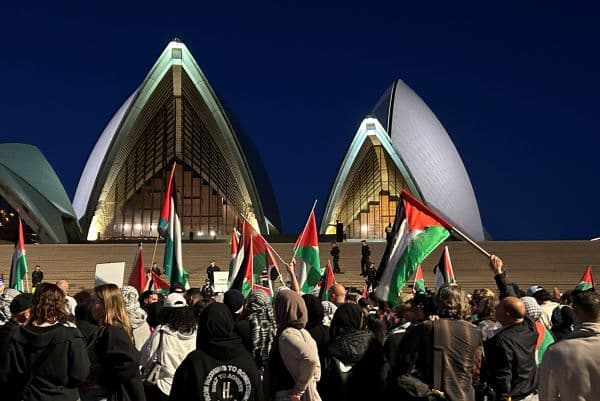
Pro-Palestinian demonstration outside Sydney Opera House, October 9, 2023
Published: 6 August 2026
Last updated: 10 August 2026
The temperature inside the Royal Commission on Antisemitism and Social Cohesion was turned up this week when Commissioner Virginia Bell publicly rebuked a senior Jewish community leader for accusing lawyers leading evidence for pro-Palestinian groups of “hijacking” the RC. Additionally, Bell condemned “vile Islamophobic emails” to one of the lawyers following publication of the Jewish leader’s comments.
Cross-examination of witness David Ossip, president of the NSW Jewish Board of Deputies (JBD) by lawyers for the pro-Palestine groups, was panned outside the RC by Executive Council of Australian Jewry co-CEO Alex Ryvchin on Tuesday. Accusing them of “clickbait theatrics and gratuitous slurs against Israel”, he said these lawyers “should be limited to being called as witnesses”.
Quoted in The Australian, the Jewish leader said: “it is deeply concerning that these groups predictably used the opportunity to hijack an examination of lethal antisemitism for their clickbait theatrics and gratuitous slurs against Israel. Their involvement in this Royal Commission should be limited to being called as witnesses to answer for their incitement against the Jewish community, their propaganda operation that turns Jewish Australians into targets and their primary role in the destruction of Australian social cohesion.”
While not naming Ryvchin, Bell raised his comments in the opening session of Wednesday’s hearings, noting that after the story was published, Ragni Mathur SC, appearing for the Australian Palestine Advocacy Network (APAN), “received a series of truly abusive, Islamophobic emails”.
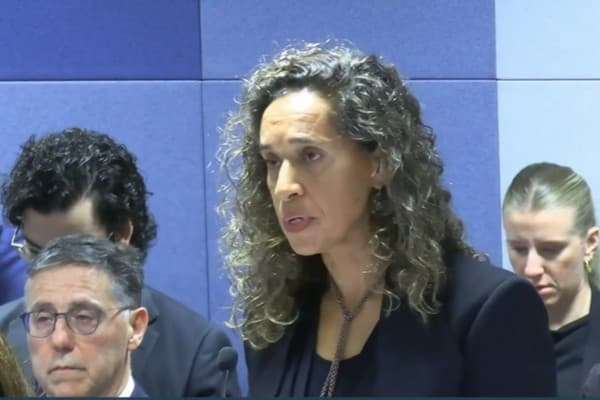
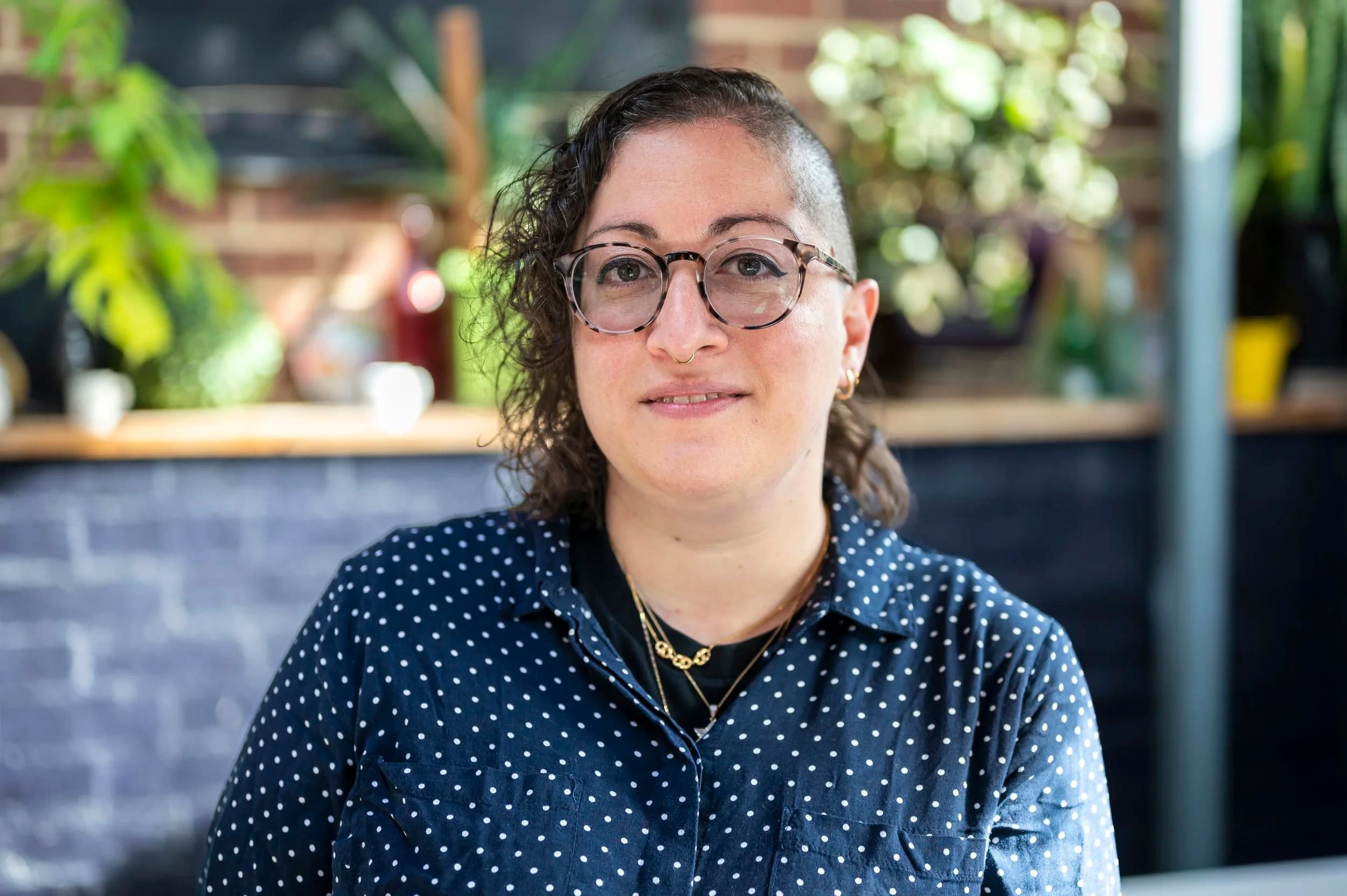
Ragni Mathur SC, counsel for APAN
Bell made two points. Firstly, she said Mathur “did not hijack this Royal Commission”. She had legitimately cross-examined an aspect of Ossip’s testimony relating to “his opinion about the conduct of the State of Israel in the period immediately following the attack by the terrorist group Hamas.
“She was granted leave to do that because procedural fairness – a concept familiar to lawyers but perhaps not more widely understood – demanded it,” said Bell.
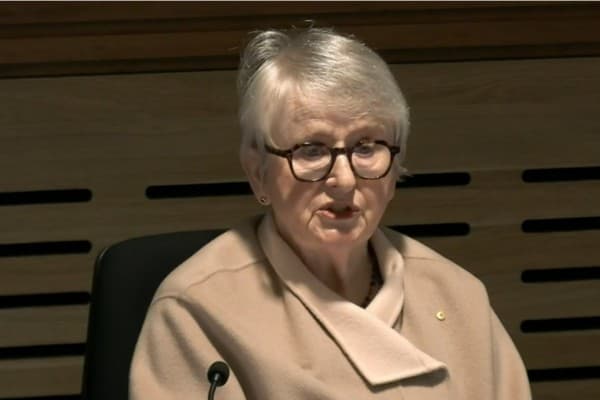
Royal Commissioner Virginia Bell
Secondly, Bell said that “counsel appearing for groups before this Royal Commission should no more be the subject of Islamophobic or other attacks, than should members of the Jewish community who have come before it and given evidence and who have been subjected to vile antisemitic attacks. It doesn't reflect well on those who make either antisemitic or Islamophobic attacks on the interests that they seek to promote.”
However, lawyers for the APAN and Palestine Action Group (PAG) came in for criticism from NSW Premier Chris Minns, who said: “The idea that the focus shifted from antisemitism in Australia to testing a witness on foreign policy by the lawyers representing PAG and APAN is disappointing and doesn’t reflect the purpose of these hearings.”
Gaza and Sydney: Two faces of one conflict
In Hearing Block 7, the Commission this week examined the events of October 9, 2023, two days after the Hamas attacks on Israel, when an anti-Israel protest took place at the Sydney Opera House, which had been illuminated in blue and white, Israel’s national colours, as a gesture of solidarity after October 7.
The sessions relating to the October 9 events at Sydney’s Town Hall and the Opera House effectively brought the traumatic October 7 attack on Israel and its aftermath squarely into the RC’s realm, demonstrating the close ties between events in Israel and Gaza and the aftershocks felt in the Australian Jewish community.
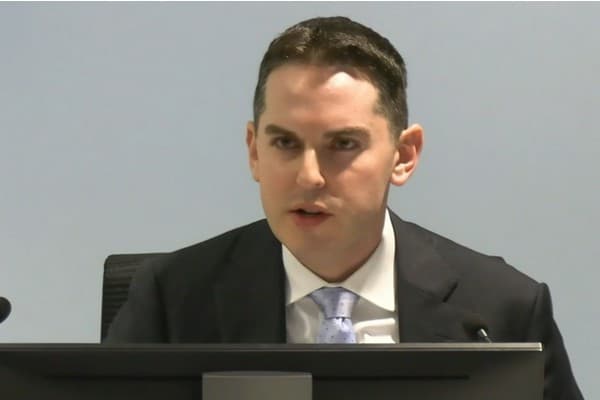
David Ossip, President of JBD
“Events in the Middle East rarely stay in the Middle East,” David Ossip testified. It was a profound insight, because Ossip would soon find himself confronted with alleged actions by the Netanyahu government and the IDF under cross-examination from counsels for PAG and APAN.
It was a challenging moment for the leader of a Jewish community in Australia who had come to testify, not about seismic geopolitical events per se, but about the fear and anger his community felt in the local aftermath to the October 7 bloodbath.
Responding to questions from Richard Lancaster SC, counsel assisting the RC, Ossip said he had no in-principle quarrel with protests. But he described the PAG-organised October 9 demonstration at Sydney Town Hall, which spread to the Opera House forecourt, held just two days after the Hamas ambush and while terrorists were still active inside Israel, as “a scene of international disgrace”.
“You had the coalescence of a terrorist attack in southern Israel, which brought about all of this intergenerational trauma, you had a proliferation of anti-Israel and what I consider to be antisemitic social media activity, which started as the attack was still ongoing.
“You had the celebrations on the streets of Sydney on the 8th of October, you then had the despicable Opera House protest on the 9th of October – and the police effectively told the community to avoid at least that part of the CBD. And I think all of those factors gave rise legitimately to fear within the Jewish community about communal safety and security,” said Ossip.
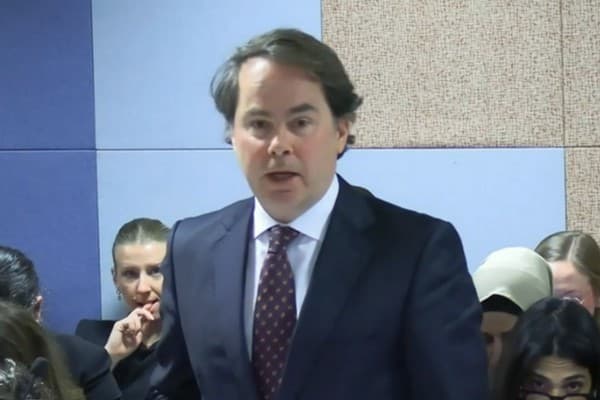
Dominic Toomey SC, counsel for PAG
Dominic Toomey SC, counsel for PAG, put to Ossip that claims he had made that no Israeli military response had occurred at the time of the October 9 demonstrations were false and, in fact, the IDF had begun airstrikes on Gaza on the afternoon of October 7.
The JBD president responded: “This is a Royal Commission on antisemitism. We’re dealing with a protest where protesters shouted out ‘f**k the Jews’ … ‘I’m going to kill them all’. I’m a bit confused as to why we’re getting caught up in the minutiae of the timeline of a foreign military operation.”
But Ossip’s criticism of the counsel’s examination was cut short by Commissioner Bell, who said that “if the line of questioning falls outside matters that are properly informing, I will rule the question inadmissible. I have not made that ruling.”
Under cross-examination by APAN counsel Mathur, Ossip was asked if he understood “that Palestinians in the occupied territory and here in Australia have also suffered deep psychological trauma”. Ossip said he was “a proud Zionist” who felt empathy for the suffering of “any innocent Palestinian”.
When Mathur confronted Ossip with a welter of findings about Gazans’ suffering from the 2025 UN Commission on Gaza, Zoe Hillman, counsel for various Jewish bodies, interjected that “it’s not fair” that the witness was being presented with volumes of material he had not had an opportunity to review.
Moreover, a microscopic detailing of UN reporting of the Israel-Gaza conflict was “outside the terms of reference” of the RC, she said. It prompted Bell to state, “Ms Mathur, I don’t think you’re going to get very far with this line”, adding that Ossip had already acknowledged the “very contested history” of the conflict.
However, minutes later, when the APAN counsel claimed that on October 7, Palestinian-Australians “were likewise filled with fear” as they anticipated an imminent Israeli backlash in Gaza, Bell overruled Hillman, saying she would allow it, as Palestinian-Australian fears were a legitimate issue.
Jewish diaspora a ‘soft underbelly’
Ossip said Israel’s enemies have identified Jewish communities around the world as a “soft underbelly” and a source of “secondary ways to inflict damage on Israel”.
He described police advice, relayed by the Community Security Group (CSG), for Jewish people not to be present in the CBD on the night of the Town Hall protest, as extraordinary – a community in Sydney had been told: “not to enter their CBD”.
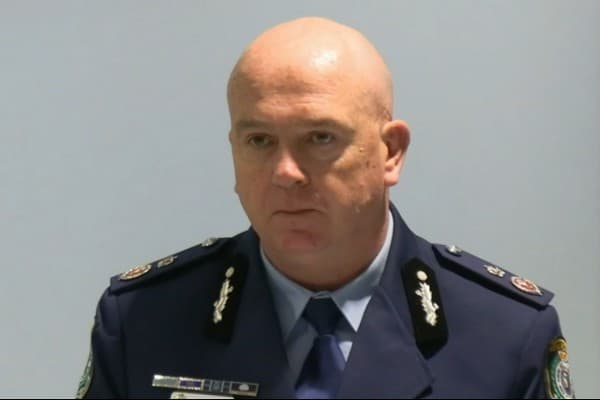
NSW Police Acting Deputy Commissioner Peter McKenna
NSW Police Acting Deputy Commissioner Peter McKenna later testified that he could not categorically confirm whether police had advised the Jewish community to stay away from the CBD, but agreed that line would almost certainly have been taken in police communications with the CSG.
The JBD president stated that an emailed alert to the community not to be present in the CBD on the night of October 9, 2023, was purposely worded to have come from CSG, not from police, to quell potential communal outrage at police demands. It synced with testimony by McKenna that CSG had agreed a Jewish counter-protest on October 9 would have been dangerous to its participants. McKenna described the need to balance the right of public assembly against police resources to maintain public safety.
Approving the Town Hall protest, for which no “Form 1” application had been lodged, presented the JBD with an “agonising” dilemma, said Ossip. Warning the Jewish community to leave or keep away from the CBD for their safety meant asking them not to assemble in solidarity with Israel at its moment of deep crisis.
Ossip said some Jews had indicated they wanted to visit the Opera House to add their personal solidarity to the state government’s blue-and-white illumination of the sails. While expressing thanks to police, he criticised the decision to allow the anti-Israel protesters to march from the Town Hall to the Opera House, saying he found it hard to believe there was not “another way to handle the situation”.
‘Where’s the Jews?’ was ‘unmistakably antisemitic’
The notorious chants from the Opera House demonstration were raised, with McKenna recounting a finding by forensic audio analysis that “Gas the Jews”, which some attendees claimed they had heard, had not been chorused, rather it had been “Where’s the Jews?” In cross-examination, PAG counsel Toomey asked McKenna if he was aware that the “Gas the Jews” claim “was of concern not only to Jewish people in our community but obviously to the broader community?”
But that distinction – and “concern” about it – had earlier in the day been squarely placed into context by Richard Lancaster SC. In his introductory address to the hearing block, he intimated that the difference was overwhelmingly moot and the confirmed chants of “Where’s the Jews?” and “F**k the Jews” were, in any case, “unmistakably antisemitic”.
Toomey had earlier asked Ossip if he was aware that the offensive chants at the Opera House had come from a small group within the crowd and that, in fact, police had asked PAG to control that subgroup. Ossip said he welcomed PAG’s distancing itself from the chants.
McKenna was presented with the reality that no charges relating to the October 9 events were ever brought, however, two pro-Israel demonstrators with Israeli flags had been arrested and escorted from the area. The deputy police commissioner said it had been a matter of preventative policing, practised whenever opposing groups appear in a confrontational setting.
‘Human error’: Police contrite about handling of neo-Nazi stunt
The hearing block also examined the events of November 8, 2025, when a neo-Nazi demonstration took place outside NSW Parliament House by 60 black-clad figures displaying a banner reading “Abolish the Jewish Lobby” and chanted a Hitler Youth slogan. The demonstration lasted about eight minutes.
McKenna said legal advice sought by police before the event was that holding a rally was in itself not an offence. He conceded police had failed to notify the Jewish community about the event, describing the omission as “human error”.
McKenna said police could not make the presumption that participants in a legally sanctioned demonstration would necessarily commit criminal offences. The only option was to seek fresh legal advice after the event had been staged.
In manufacturing, there’s a quality compliance concept called “chain of custody”. It requires stakeholders from procurement managers, to production personnel, to marketers and advertising agencies to observe a chain of custody, delivering a prescribed set of certified standards.
Perversely, antisemitism in Australia’s creative arts community appears to have developed its own informal but consequential chain of custody. From upstream brand managers at Jewish communal organisations, all the way to downstream venue managers, media executives and festival directors, behaviours are developing around avoidance of an overtly Jewish brand. It’s not always antisemitic in intent, certainly not at the Jewish end. It’s more of a way of getting by, of not rattling the chain.
That trend became obvious from the testimonies of Jewish witnesses in Australia’s creative community, as they appeared before the RC during Hearing Block 6 last week and this week, which examined strategies to short-circuit antisemitism in Australia.
Jewish artists and ‘reputational risk’
Under the pseudonym CGM, an Australian Jewish comedian revealed to the Commission that after the October 7 attacks, his gig in a comedy show had been cancelled because of his Jewish identity. Moreover, he said cancelling Jewish performers has become routine. The motivation in that instance, he said, was that the organisers were receiving push-back. He could have persisted, he said, at the cost of “a huge argument”, but decided instead to yield. There was discomfort with his Jewish identity from an industry colleague who had previously been friendly and supportive.
CGM said the most common response for not including a Jewish creative is “a security risk or a reputational risk”. Festival directors don’t want violence or discord at their events. (At one gig post-October 7, CGM was stunned when a member of another performer’s entourage told him, unprovoked: “F**k the Jews!”)
And organisers don’t want a “reputation” that may come from hosting a Jewish artist, which might cost them the cooperation of other artists, or the patronage of institutional supporters, or a drop in public attendance. For Jewish Australian creatives, it’s a scenario that has echoes from a dark past in another place.
Rabbi Aron Meltzer, former director of programs at Sydney’s Shalom Collective, a Jewish social and artistic organisation, related the six months of preparation that had gone into plans for a rebrand in 2023. In late October that year, shortly after October 7, a representative from a marketing agency Shalom Collective had selected advised its board that the timing was wrong. “Now is not the time to do a rebrand for a Jewish organisation and to put yourself out there in the public space,” was the representative’s advice, said Rabbi Meltzer. Indeed, Shalom Collective board members agreed with the agency representative.
But after the representative left, Rabbi Meltzer became very direct with his board. He told them that what they had been advised – even though it was calm, considered and probably short-term beneficial – and what they had pragmatically accepted, was in fact “antisemitism at play – that a non-Jewish brand agency told us, an arts and culture organisation in the Sydney Jewish community, not an Israeli advocacy organisation, that we should be quiet”.
For board members, it was a lighthouse moment, the rabbi said. They conceded that, indeed, they had agreed to be excluded for no other reason than right now isn’t a great time for Jewish content in Australian arts and culture. (The organisation then wrote and expressed its view to the agency, which responded that marginalising Jewish artists had certainly not been its intention).
Rabbi Meltzer told Commissioner Bell, “If we value and appreciate Indigenous stories, and Asian stories, and South American stories … then we should be able to value the Jewish story.”
Nina Sanadze, a Soviet-born Melbourne Jewish visual artist, who was among some 600 Jewish creatives doxxed from a private WhatsApp group in 2024, testified about being asked to surrender her residency at a well-known publicly funded institution, as the organisation was under critical strain because of her involvement there.
Around that time, a commercial gallery showing her works cut ties. The reason it gave her was that, as a small business, it could not afford the financial repercussions of the backlash it was enduring from showcasing her art. Both organisations promptly scrubbed their online information about Sanadze. Additionally, other galleries removed material about her.
Sanadze responded by founding Goldstone Gallery in Melbourne early in 2025 as a space for Jewish artists. Ironically, the new gallery held an event later that year at which 31 Israeli and Palestinian women dialogued. It hosts Russian, Iranian, Chinese and Australian dissident artists.
Professor David Slucki, director of Monash University’s Australian Centre for Jewish Civilisation, said Australia’s creative bodies have been faltering along a perilous road navigated between the distress of Jewish and Muslim artists and stakeholders, with “robust consultation” the only remedy.
Antisemitism’s key drivers
On Wednesday, the RC moved to Hearing Block 8, which is focusing on key drivers of antisemitism in Australia, including religious, far-right and other ideologically motivated extremism and radicalisation. It examines the role of social media and hate preachers and best-practice responses open to different levels of government and the community.
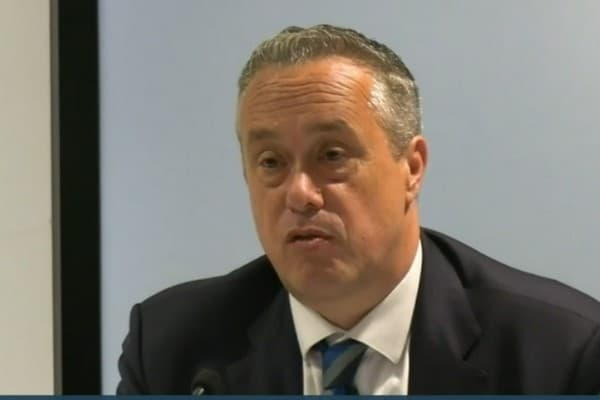
Professor Julian Droogan, from Macquarie University
Counter-terrorism expert witness Professor Julian Droogan of Macquarie University gave evidence of far-right extremism advocating the violent overthrow of liberal democracies and the establishment of “white ethno-states”. Online networks on social media share content focusing sharply on physical culture and the celebration of the male gender. Lone terrorists often have manifestos that contain tracts they found online.
Antisemitism plays a significant role in these ideologies and is “an organising principle”, he said. It portrays theories, including “replacement” theory, which claims “Jewish cabals” are conspiring to amass power by flooding the West with immigrants from non-European cultures.
Far-right extremists are aware they have little support in Australia, said Droogan, and have used milestones such as the Covid pandemic, as well as online messaging and physical rallies, to promote their conspiratorial, antisemitic narratives to targets that might otherwise be beyond their ambit.
However, not all antisemitism in Australia comes from the fringes. An interesting insight came from Dr Joshua Roose, a professor of politics at Deakin University, who spoke of a “blind spot” for Australians when it comes to identifying antisemitism. Anti-racism frameworks are primed to detect visible disadvantage, while Jewish Australians are generalised as being highly educated and relatively prosperous, and in fact, may be vulnerable to Australian “tall poppy syndrome”, he said.
About the author
Peter Kohn is an Australian journalist who began his career at the Herald & Weekly Times. For 43 years, he was associated with The Australian Jewish News. For the past decade, he held the title of Senior Journalist at the newspaper. He is the author of two novels. Rachel’s Chance is the story of his family’s experiences as Jewish refugees in Shanghai during World War II, and View From A Sandcastle is based on his own story, growing up in Melbourne suburbia during the 1960s and 1970s.