Aa
  • Read, Watch, Listen
  • TJI Series
  • Community Action
  • Events
  • Zedi
Follow us and continue the conversation
  • LinkedIn
  • Instagram
  • FaceBook
  • X
  • YouTube
Test yourself with the TJI Quiz!

Adjust size of text

Aa

Follow us and continue the conversation

  • LinkedIn
  • Instagram
  • FaceBook
  • X
  • YouTube

Your saved articles

You haven't saved any articles

What are you looking for?

Original reporting, insightful analysis and diverse views, delivered straight to your inbox

  • LinkedIn
  • Instagram
  • FaceBook
  • X
  • YouTube
Your support fuels our mission to inform, entertain and inspire.

The Jewish Independent is bound by the Standards of Practice of the Australian Press Council. If you believe the Standards may have been breached, you may approach The Jewish Independent or make a complaint to the Australian Press Council in writing at www.presscouncil.org.au. The Council may also be contacted on 1800 025 712.

  • Our Story
  • Contact us
  • Our Team
  • Support us
  • Guidelines
  • Pitch your idea
  • Republishing us
  • Community Action
  • Our Awards
  • LinkedIn
  • Instagram
  • FaceBook
  • X
  • YouTube
Aboriginal FlagTorres Strait Islanders Flag

The Jewish Independent acknowledges Aboriginal and Torres Strait Islander peoples as the Traditional Owners and Custodians of Country throughout Australia. We pay our respects to Elders past and present, and strive to honour their rich history of storytelling in our work and mission.

© The Jewish Independent 2026All Rights Reserved
Website design and development by Your Creative, MelbourneTerms & ConditionsPrivacy Policy
HomeRead, Watch, ListenAustralia
OpinionAustraliaZedi

Navigating language minefields in pursuit of civil conversation 

Words such as ‘Zionist’, ‘apartheid’ and ‘genocide’ often shut down conversation. Strategic adaptation requires us to sacrifice words that push buttons for meaningful dialogue.
Ruby Starr Miller
Print this
dialogue conversation language

Image: TJI

Published: 18 February 2026

Last updated: 18 February 2026

Two years ago, I began to hide a silver star that once hung openly around my neck. Today, although I no longer hide, my fears have only worsened. 

I hesitate to express my Jewish lineage, incessantly second-guessing each word before daring to speak, uncertain of a safety that once felt assured. This is what it means to be Jewish in Australia today. 

In an age of polarisation, extremism, and terror, language strikes with alarming gravity: one misstep, and dialogue between differing views isn't just halted, it's obliterated. 

Since October 7, 2023, it has become apparent to me, as a Jewish student at university, that words such as “Zionist”, “apartheid” and “genocide” do not only describe political positions. They trigger defensiveness, tap into trauma and all too often, shut down the very conversations they are supposed to initiate. The more I attend tutorials, observe protests, or scroll through the modern battleground that is comment sections, the clearer it becomes: language is quietly determining whose pain is listened to and whose is dismissed. 

Some of these trigger words describe collective identities; others make claims to facts. Yet that line now feels dangerously blurred. These words no longer communicate clearly. They collapse nuance, arrive burdened with assumptions, embody clashing moral identities, and act as formidable barriers to understanding, conversation, and empathy. 

Campuses, workplaces, and even everyday interactions have become linguistic minefields, where every word risks detonation

In today's social media landscape, algorithms trap us in echo chambers where alternative views rarely surface. Disparate communities consume curated content that blocks genuine dialogue and stalls real progress. This fuels a polarising downward spiral of closed-mindedness and conversational starvation.  
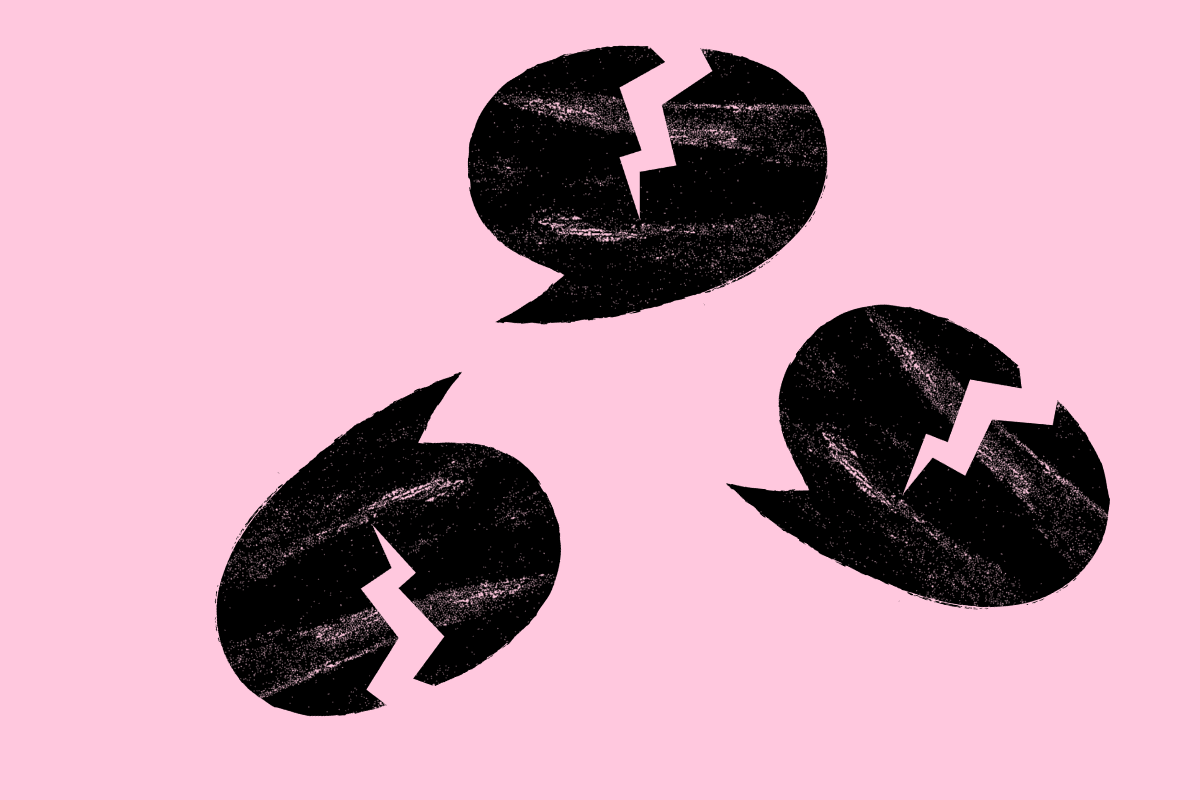
Language has become a tripwire to moral standoffs, where “Zionist” or “genocide” instantly assigns guilt or victimhood, murdering the required nuance and empathy Australian Jews need for our very survival.  

To break this stand-off, we must venture into uncomfortable spaces, where direly needed conversation can emerge. 

Dialogue on Israel and antisemitism demands complexity. The issue is deeply personal and sensitive, the stakes sometimes literally life and death. The conflict is not distant to me, nor my diasporic community - it is woven into my Jewish identity.  

Human nature urges us to protect and defend group identity. When language feels like moral condemnation, we have a tendency to double down, rather than reconsider. To call myself a "Zionist" in a Jewish space clarifies my identity - it's integral to many of us. On my university campus, it flags me as a target: safety at risk, branded "genocide-enabler," exposed to Jew-hatred, blame, and dehumanisation. Just as predictably, labelling Israel's actions "genocide" or "apartheid" in mainstream Jewish spaces signals existential threat and dissent, risking killing any willingness to engage at all. In an Australian university, those same words now signal moral superiority and unassailable righteousness. 

Campuses, workplaces, and even everyday interactions have become linguistic minefields, where every word risks detonation. Yet these tripwires don’t have to end every conversation. 

When faced with this tension, two instincts often surface: to push back or to retreat.  

Pushing back means asserting “Zionism” as Jewish self-determination and statehood—holding firm in definition and refusing to let others distort it. It can also mean naming injustice - “genocide,” “apartheid” - until it’s recognised. Pushing back feels principled but it risks entrenching standoffs, worsening polarisation and turning dialogue into a deadlock.  

Retreating, by contrast, means softening. Letting "Zionist" go on misused and misunderstood and hearing "genocide" without instant rebuttal. You preserve jobs, friendships and conversation, but risk eroding your identity, forfeiting your voice and critically, letting others define you by default. 

Both have merit. Both falter alone. 

Dialogue is essential for change, and for an Australian Jew, it is a change essential for our survival

I don't pretend to have all the answers for rebuilding dialogue amid these tensions, none of us do. But small, intentional shifts can keep conversation alive when everything is urging us to walk away. 

I propose a third path: strategic adaptation. 

This isn't cowardice or submission. It is not simply stepping back and allowing us to be redefined. It means approaching conversations strategically, to effectively enhance dialogue in seemingly hostile, closed-minded, ill-informed or provocative environments.  

Strategic adaptation calls for intentional speech.  

It means adapting our approach to dialogue based on our contextual and relational circumstances. If you are in a space where your identity feels threatened, dismissed or misunderstood - lead with intention and mutual ground. 

If you're Zionist, strategic adaptation means staying proud in identity, but holding relational stakes uppermost in every conversation. Explain the meaning of “Zionist” first, with the label second. From my experience, you may stumble upon more common ground than initially assumed.  

Further, it challenges us to reflect on our goal before entering a conversation. What is driving us to engage in a dialogue? Is it to vent? To persuade? To provoke? To educate? To learn? When we approach dialogue with clarity and intention, we’re far more likely to foster understanding, reduce tension, and use our words to build bridges, rather than barriers, to empathy and connection. 

Dialogue is essential for change, and for an Australian Jew, it is a change essential for our survival. 

I write this not to determine right or wrong, shame others, or discourage differing views. Instead, I share my experience of navigating a time rife with media frenzy, political division, religious tension, cultural clashes, and raw hatred. 

As Australians, we must uphold moral clarity without dehumanising others or diminishing them to reductive labels. We can challenge assumptions and harmful views without overlooking the person across from us.  

The strategic words we choose here won't end wars or heal deep trauma, but they may help foster a generation that values dialogue over division and understanding over noise.

You might also like
  • Tame apologises – but with little grace
    Deborah Stone
  • Confronting Richard Flanagan and the myth of the Israel lobby
    Mary Garden
  • Facing a new year with the knowledge life can be better
    The Jewish Independent
logomark.67a07ee3
We believe in the free flow of information

Republish our articles for free, online or in print, by using our Creative Commons licence

You might also like

    Beinart Doogue 600
    Israel Hamas WarNewsAustralia

    Beinart takes a wrecking ball to Israel

    Michael Visontay 1
    Albanese Bondi
    Royal CommissionAnalysisAustralia

    Prime minister’s absence exposes weakness in Royal Commission hearings

    Michael Visontay
    Commissioner Virginia Bell
    Royal CommissionAnalysisAustralia

    Now is the time for the Royal Commission to deliver, not be politicised

    Dean Sherr 2

About the author

Ruby Starr Miller

Ruby Starr Miller

Ruby Miller studies Political Science and International Relations at the Australian National University in Canberra. She works across marketing and communications roles and is passionate about how political media drives meaningful change in Australia.

More from the author

ReflectionAustralia

‘Pick a side’: Progressive Jews face crisis of belonging

Comments4

  • Avatar of Dennis Altman

    Dennis Altman19 February at 06:45 am

    No disagreement, but just to note that over the last month I have spoken at 4 events around my new book and have always talked about my Jewish identity and how it feels more significant since 2023. The response has been that many non Jews tell me how important it is for them to hear this, and the only disagreement—very civil—came from a fellow Jew who supported Herzog’s visit

  • Avatar of Taryn

    Taryn19 February at 12:40 am

    Truly incredible!

  • Avatar of Katia Auerbach

    Katia Auerbach18 February at 11:14 am

    Just wow. Amazing article.

  • Avatar of 'Mike Kleviansky'

    'Mike Kleviansky'18 February at 03:37 am

    Great article!