Aa
  • Read, Watch, Listen
  • TJI Series
  • Community Action
  • Events
  • Zedi
Follow us and continue the conversation
  • LinkedIn
  • Instagram
  • FaceBook
  • X
  • YouTube
Test yourself with the TJI Quiz!

Adjust size of text

Aa

Follow us and continue the conversation

  • LinkedIn
  • Instagram
  • FaceBook
  • X
  • YouTube

Your saved articles

You haven't saved any articles

What are you looking for?

Original reporting, insightful analysis and diverse views, delivered straight to your inbox

  • LinkedIn
  • Instagram
  • FaceBook
  • X
  • YouTube
Your support fuels our mission to inform, entertain and inspire.

The Jewish Independent is bound by the Standards of Practice of the Australian Press Council. If you believe the Standards may have been breached, you may approach The Jewish Independent or make a complaint to the Australian Press Council in writing at www.presscouncil.org.au. The Council may also be contacted on 1800 025 712.

  • Our Story
  • Contact us
  • Our Team
  • Support us
  • Guidelines
  • Pitch your idea
  • Republishing us
  • Community Action
  • Our Awards
  • LinkedIn
  • Instagram
  • FaceBook
  • X
  • YouTube
Aboriginal FlagTorres Strait Islanders Flag

The Jewish Independent acknowledges Aboriginal and Torres Strait Islander peoples as the Traditional Owners and Custodians of Country throughout Australia. We pay our respects to Elders past and present, and strive to honour their rich history of storytelling in our work and mission.

© The Jewish Independent 2026All Rights Reserved
Website design and development by Your Creative, MelbourneTerms & ConditionsPrivacy Policy
HomeRead, Watch, ListenArts & Culture
FeatureArts & Culture

Upcycling, recycling, hiring: The rise of anti-fast fashion in the Jewish community

Young Jews are ditching the stigma associated with second-hand clothing, inspiring older generations to turn towards slower, ethical and environmentally-friendly fashion practices.
Ruby Kraner-Tucci
Print this
Ethical fashion

Everything old is new again (Image: TJI).

Published: 16 September 2025

Last updated: 16 September 2025

The phrase 'everything old is new again' is applicable in many contexts but perhaps none more acutely than the fashion industry.

Buying second-hand, hiring clothes, hand-me-downs and upcycling were once considered a lifeline to Jewish immigrants arriving in Australia, but quickly became accompanied by stigma for their children.

Today, younger generations are challenging this notion, embracing responsible fashion and inspiring those around them in the process. The Jewish Independent shares three of their stories below.

The Upcycler

“Everyone should just learn how to sew,” Leah Herszberg’s great-grandmother used to say – the matriarch's words inspiring the 26-year-old's endeavour into fashion.

Herszberg runs Nana Rodan, an upcycled fashion label, and its associated events brand Studio Nana, where she teaches people how to sew and mend clothing. 

Upcycling is the way I feel most comfortable supporting the fashion industry

"I've always had a problem with the way fashion impacts our planet," Herszberg told The Jewish Independent from her South Yarra home studio.

"The only way fashion can continue without being so detrimental is if we slow it down. That’s what we’re trying to do. You see how clothes are made, and hopefully you consume less and more mindfully. Upcycling is the way I feel most comfortable supporting the fashion industry."
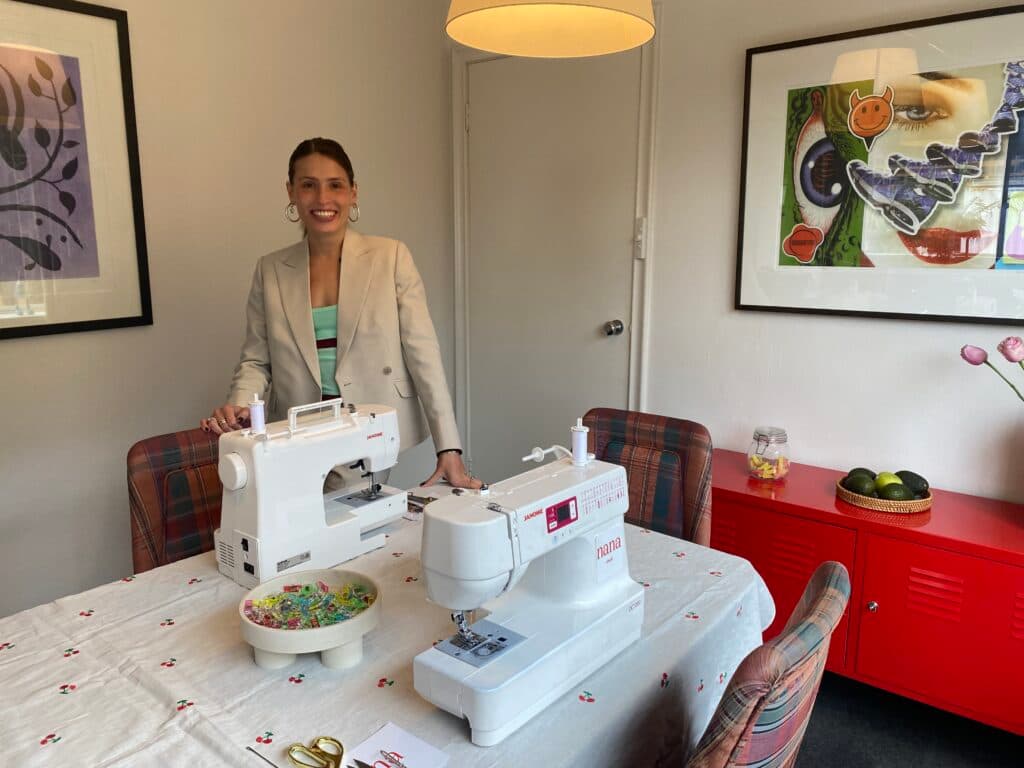
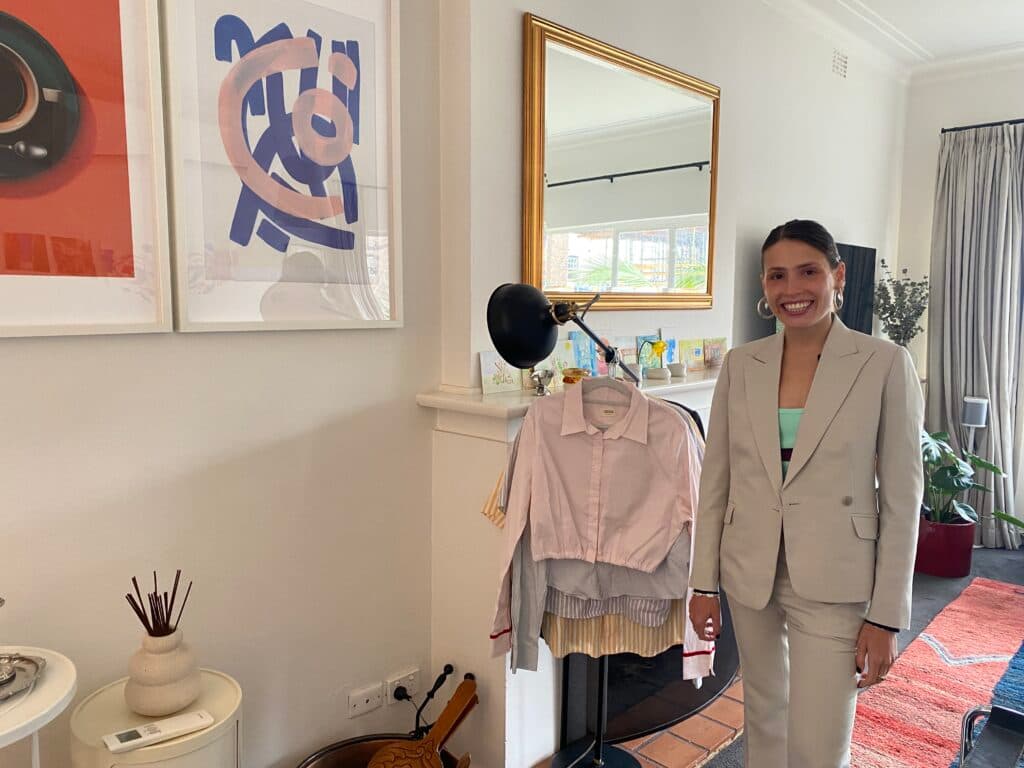
Herszberg runs two types of classes through Studio Nana, helping learners to either make a garment from scratch – using recycled fabric discarded by other labels – or to upcycle their own pre-loved clothes. She will soon add virtual lessons to her offering, enabling people to order a kit online and learn to sew at home through instructional videos.

"Everybody comes into class thinking they are going to be so bad because they don't know what they're doing. They leave kind of in shock about what they achieved,” explained Herszberg, who is currently running between one to three classes for up to six students each week.

"It’s an awesome feeling to see that shift as they get more comfortable. Then they take the skill home, or they come back to learn more."

Herszberg at her in-home studio (Image: TJI).
Herszberg with a selection of upcycled garments (Image: TJI).

Herszberg believes there has been a shift in the way fashion is viewed, with young people buying second-hand and upcycling without the stigma attached to previous generations.

"When I started thrift shopping years ago, my parents said, ‘What on earth are you doing? You're not poor. Put those clothes back’. They were very confused. Fast forward to now and my mum owns about three thrifted dresses, so we’re making progress."

The Recycler

When Mushkie Gordon, 37, and Tova Mochkin, 39, first put out a call to the Jewish community for clothing donations, they didn't anticipate such an overwhelming response.

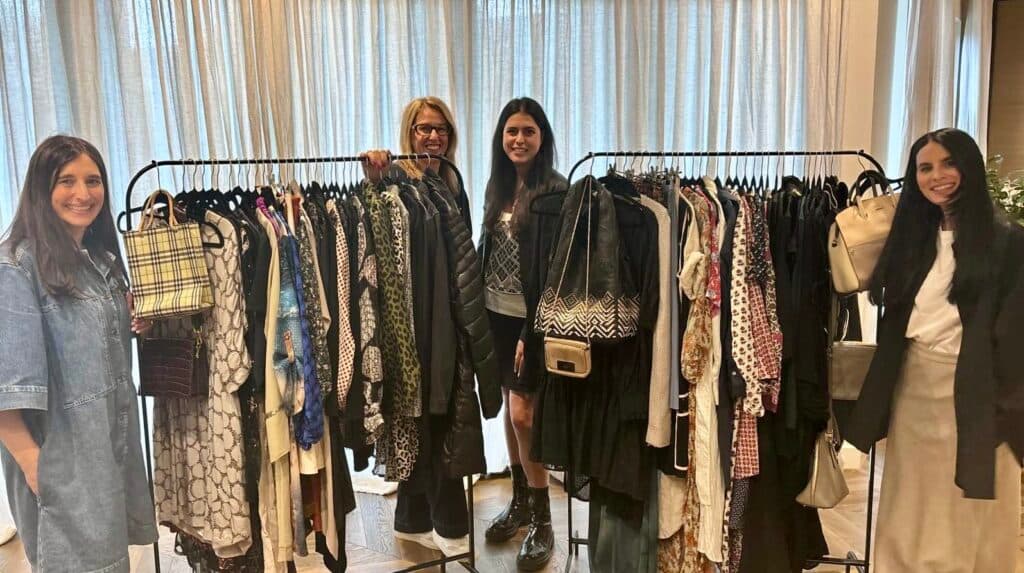
The duo is part of the team behind The Giving Closet, a volunteer-driven social enterprise blending fashion and sustainability. Through pop-up op-shops, The Giving Closet collects and sells pre-loved women’s garments, with all proceeds going to the Melbourne Jewish Charity Fund (MJCF).

The team behind The Giving Closet (Image: supplied).

"People were still donating the week we were selling. We did it as a once-off to see if it’s needed and necessary, and we were all surprised at what a gap it filled," Mochkin told The Jewish Independent.

Their first event in April – held in Melbourne’s fashion mecca, High Street, Armadale – saw over $26,000 raised in the 18 hours the shop was open. Their next pop-up begins tonight in Balaclava, with the aim to eventually find a permanent space.

Their model was informed by Sydney’s Fashion Forward initiative, which has so far raised over $850,000 for non-profit Jewish House, and joins the rising trend of high-end op-shops such as Mutual Muse and Goodbyes.

Loading Instagram post...

Both Gordon and Mochkin agree that there is “definitely” appetite for second-hand stores within the Jewish community, with the past stigma of buying used clothing no longer present. 

"More people are aware of buying second-hand, it’s a cool thing now, and with the rising cost of living, people can’t afford to buy new," Gordon explained. 

"There was no shame about buying other people’s clothes [at The Giving Closet]. That didn’t exist. It was about doing something good together – good for people, good for our community, and good for the environment.

"It was also about dignity. We set up the shop nicely so people could come in and not experience a traditional shmutty op-shop. All different ages in the community came in – young girls with their friends, mums with their daughters – everyone was so excited."

The Hirer 

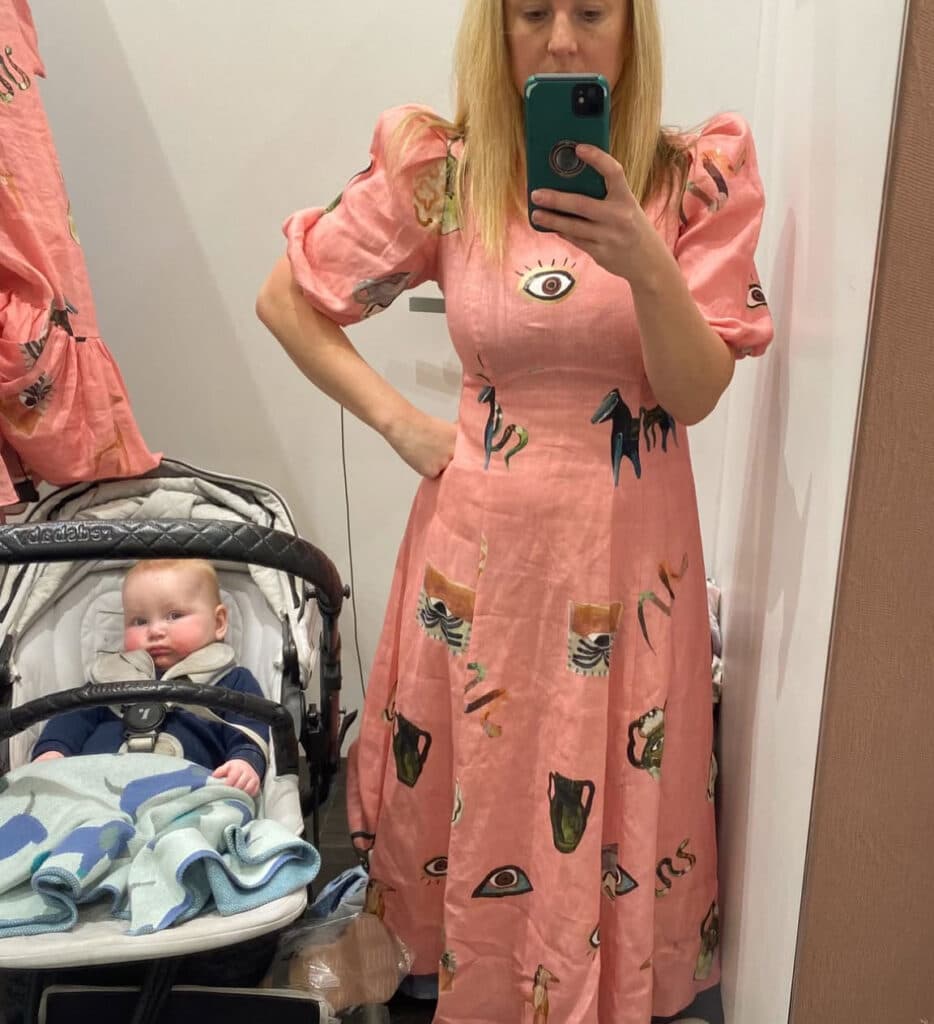
Mia Roth didn’t intend to start a dress hire empire. The now 40-year-old was on maternity leave when she saw an Alemais dress she loved. She couldn’t justify the price, but thought if she hired it out and made the cost back, she wouldn’t feel so guilty about buying it.

Over the three years since that purchase, Roth has seen her ethical fashion business Lone Dress Hire grow from “pocket money to side hustle money to part-time money”.

“By the end of the first summer, I had about 20 dresses. By that March, I had 80 dresses. Today, I have 500 dresses in the collection, and I’ve done about 6,500 hires over that time for thousands of clients. It’s been a very exciting journey,” Roth told The Jewish Independent.

The Alemais dress that started it all for Mia Roth (Image: supplied).

Through a mixture of postal orders and in-studio consultations, Roth caters to a broad clientele, including a strong Jewish base. Her stock is typically a quarter of the retail price and includes many dresses that have sold out in-store – some are so popular, Roth has to wait months to wear it herself.

"There’s a thousand simchas – bar and bat mitzvahs, weddings, engagements, plus everything else – and so the Jewish community is a big part of [my operations].

"People who haven't hired before are surprised at how up-market my clientele is. A lot of them are people where money is no issue for them, but there's something nice about being able to hire it rather than purchase it."

Particularly my age demographic, in their 40s and 50s, are getting around [hiring]. That's been a big area of growth for me in terms of removing that stigma

Lone Dress Hire's "anti-fast fashion" approach is particularly appealing for a younger demographic, with Roth citing sustainability – recyclable fashion and not buying a garment only to wear it once – and attainability – accessing designer pieces at a discounted price – as key motivators. But she says the previous generation are increasingly turning to hiring as well.

"Particularly my age demographic, in their 40s and 50s, are getting around it. That's been a big area of growth for me in terms of removing that stigma," Roth concluded.

"The next generation upwards [in their 60s and 70s] I think will take more training because those practices weren’t in place and they really weren’t exposed to it. But for Gen Z, that stigma has been completely removed."

You might also like
  • Yentacore: The new alt-fashion trend
    TJI Pick
  • Poverty: Cost of living increase forces more people to seek communal support
    Paula Towers
  • From Haredi to TikTok fashion influencer
    TJI Pick
logomark.67a07ee3
We believe in the free flow of information

Republish our articles for free, online or in print, by using our Creative Commons licence

You might also like

    Copy of Website books template (2)
    FeatureArts & Culture

    The winning Jewish books by Australians in the past year

    Gideon Cohen
    jiff26-cancelled.jpg
    ReflectionArts & Culture

    On despair: A reflection after watching ‘Cancelled’

    Deborah Stone
    MJBW main
    FeatureArts & Culture

    Melbourne writers fest a place of connection both outward and inward

    Peter Kohn

About the author

Ruby Kraner-Tucci

Ruby Kraner-Tucci

Assistant Editor

Ruby Kraner-Tucci is a journalist and TJI's assistant editor. Her writing has appeared in The Age, Australian Jewish News, Time Out and Broadsheet, among others. Ruby was awarded Multicultural NSW’s Best Report in Multicultural Media 2025 and has been named a Top 36 Under 36 Jewish Changemaker by B'nai B'rith.

More from the author

FeatureAustralia

‘True essence of being an ally’: The non-Jews choosing to work in the Jewish community

InterviewAustralia

Elliot Szafran: food that feels like a hug from Zaide

NewsAustralia

Antisemitic incidents down from peak but still triple pre-Gaza war

FeatureArts & Culture

Bringing Terezin music to life 

Comments

No comments on this article yet. Be the first to add your thoughts.