Published: 26 March 2018
Last updated: 4 March 2024
Weisman’s awakening from this complacency came in the form of a tweet. As the deputy editor in the New York Times’ Washington bureau, Weisman was active on Twitter and often shared content on the social platform with his many thousands of followers.
That’s what he did one morning in May 2016, grabbing a quote from a provocative column in The Washington Post by the neoconservative Robert Kagan, who warned of the rise of fascism in America.
Suddenly, Weisman was subjected to a noxious swarm of cyberbullying hatred from the emerging alt-right, white-nationalist extremists who unleashed a torrent of social media messages and harassing phone calls that trafficked in Holocaust imagery and often evoked Donald Trump, who was on his way to becoming the Republican nominee for president.
Unwittingly, Weisman joined a growing number of Jewish journalists — mostly but not exclusively conservative-leaning — who were harassed and targeted to an unprecedented degree as the presidential campaign accelerated toward Trump’s unlikely win.
Jane Eisner is Editor-in-Chief of the Forward
FULL STORY Awakening to the depth of American anti-Semitism (Washington Post)
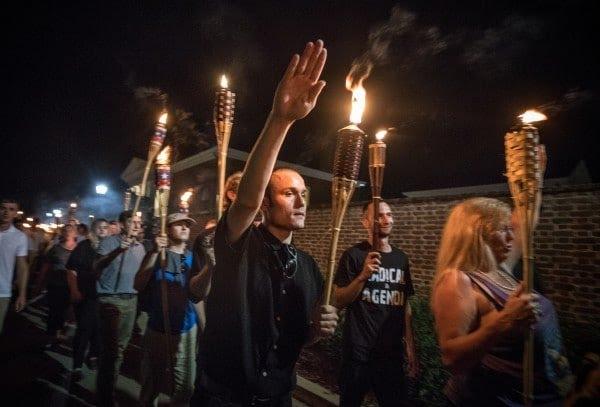
Photo: White-nationalist marchers at the Unite the Right rally in Charlottesville last August (Evelyn Hockstein/ Washington Post)
