Aa
  • Read, Watch, Listen
  • TJI Series
  • Community Action
  • Events
  • Zedi
Follow us and continue the conversation
  • LinkedIn
  • Instagram
  • FaceBook
  • X
  • YouTube
Test yourself with the TJI Quiz!

Adjust size of text

Aa

Follow us and continue the conversation

  • LinkedIn
  • Instagram
  • FaceBook
  • X
  • YouTube

Your saved articles

You haven't saved any articles

What are you looking for?

Original reporting, insightful analysis and diverse views, delivered straight to your inbox

  • LinkedIn
  • Instagram
  • FaceBook
  • X
  • YouTube
Your support fuels our mission to inform, entertain and inspire.

The Jewish Independent is bound by the Standards of Practice of the Australian Press Council. If you believe the Standards may have been breached, you may approach The Jewish Independent or make a complaint to the Australian Press Council in writing at www.presscouncil.org.au. The Council may also be contacted on 1800 025 712.

  • Our Story
  • Contact us
  • Our Team
  • Support us
  • Guidelines
  • Pitch your idea
  • Republishing us
  • Community Action
  • Our Awards
  • LinkedIn
  • Instagram
  • FaceBook
  • X
  • YouTube
Aboriginal FlagTorres Strait Islanders Flag

The Jewish Independent acknowledges Aboriginal and Torres Strait Islander peoples as the Traditional Owners and Custodians of Country throughout Australia. We pay our respects to Elders past and present, and strive to honour their rich history of storytelling in our work and mission.

© The Jewish Independent 2026All Rights Reserved
Website design and development by Your Creative, MelbourneTerms & ConditionsPrivacy Policy
HomeRead, Watch, ListenIsrael
FeatureIsrael

What this Leftie saw through a settler’s eyes

Nitzan Bernstein
Print this

Published: 21 April 2023

Last updated: 5 March 2024

A simulation exercise gave NITZAN BERNSTEIN a perspective on Israelis from the other side of the divide. She wishes she could give it to everyone.

When I was 17 and a member of the Hashomer Hatzair youth movement, I flew with a mixed group of Jewish and Arab Israelis to a summer camp in New York.

Our group was Leftist and settlers looked to me then like a group of anarchists and extremists who doomed soldiers to be killed protecting them.

But I still remember one special day when the Israeli team was given a mission: to step into someone else's shoes.

Each of us received a character of a different person from the Israeli social fabric. We had to write an imaginary monologue that came out of the heart of a person, light years different in beliefs and lifestyle, one we may have never even met. Then we had to present this monologue in front of the whole camp, in our new image.

I was assigned to be a settler. I remember throwing myself into character with great fervour. I called myself Moriah. I wore sandals with socks, a kerchief on my head and an orange ribbon on my bag. All the clichés were there. I was just like those settlers I saw screaming on TV.

But the most important moment came when I sat down to write. I imagined that I was a teacher who had moved to Israel from the only home she had ever known. I came not as a criminal nor an invader, but as a citizen whom the state had encouraged to settle.

As Moriah, I believed I was doing the most important thing to protect the people of Israel. I felt the world shaking under my feet.

I didn’t become right-wing after writing Moriah’s monologue. But I learned a powerful lesson about the compassion that can be found in the willingness to enter someone’s else’s worldview with an open heart, to walk in someone else's shoes, even for a moment.

In the past few months my heart has not been open. Like most of us, I am closed and angry and afraid and self-justifying. But when I remember my imaginary Moriah, I try, sometimes, to imagine what a person who is different from me feels.
I wish we would listen to what is in someone else's heart. Even if this heart looks angry and hateful, it is, like ours, mostly afraid and exhausted from the feeling of not being heard.

What an ultra-Orthodox woman who believes wholeheartedly in gender segregation feels when secular feminists claim she is brainwashed and delegitimise the way she wants to live.

What a religious-nationalist person who voted Right feels when he sees how the judicial system is still leaning to the Left and does not allow the elected government to pass laws that he believes will protect him from terrorism.

What a traditional Mizrachi woman feels when she is told that she is primitive because she kisses mezzuzahs.

What a settler feels when you look at her the way I looked at Moriah - as a caricature that looks and thinks in a certain way, as a dangerous, fascist messianist.

What a soldier feels when people yell at him asking where he was when settlers were attacking Palestinians in Huwara, after he eats shit at the checkpoints every day trying to protect us.

I imagine what an anti-occupation activist feels when she sees hundreds of thousands of Israelis protesting to protect democracy but remaining silent in the face of human rights violations happening daily in the territories, right under their nose, for years.

What an Arab feels when he watches the protests and believes that all this has nothing to do with him, that no one cares about him.

I also try to remember what it feels like to be me, someone who is demonstrating for a reform with broad consent, who despises the current government but really does not despise right-wingers or ultra-Orthodox, who opposes the government but does not feel the Opposition represents her.

I am aware of how others stereotype me. My great-grandfather drafted the Bill of Independence and worked day and night for settlement, agriculture and the Jewish people, but today others define me as an "Ashkenazi Kibbutznik, privileged and disconnected".

We have all stopped looking at each other as complex human beings and moved on to looking at each other like flocks of sheep. We think the very existence of others counters our existence, that their presence threatens our presence.

Our elected officials have been gaining votes through this divide-and-rule strategy for years. As they do so, they destroy every day a little more of the fragile social structure we share.

No matter how this reform story ends, we have to continue to live together. So, I wish, pray, beg that everyone reading this tries for a moment to imagine what it is like to be another person. Someone different. Maybe even agree to talk to someone with a different opinion with an open heart, not to convince each other, but to understand the fears, the hopes, the beliefs.

We do not have to agree on everything, but we also do not have to hate each either.

We do not have to sink to delegitimisation, horrible words, degrading signs, rude generalisations and excessive confidence that our way is the only our way.

I wish we would listen to what is in someone else's heart. Even if this heart looks angry and hateful, it is, like ours, mostly afraid and exhausted from the feeling of not being heard.

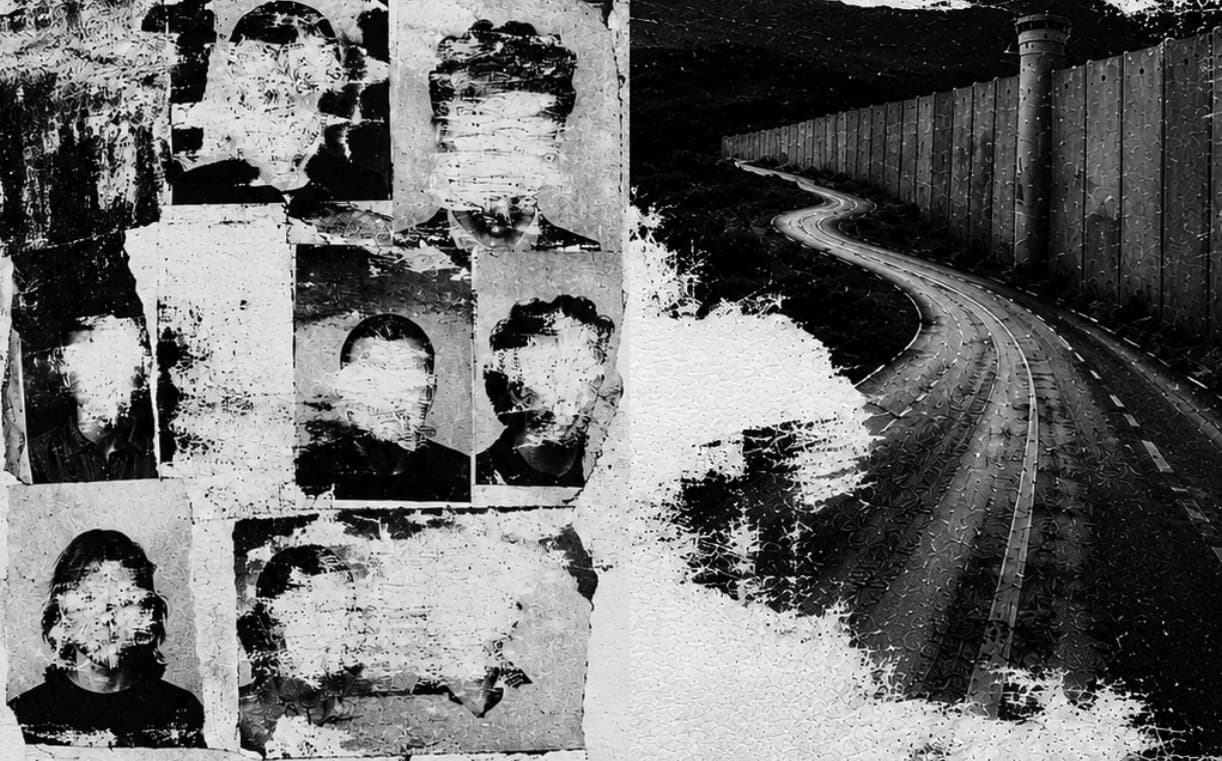
Illustration: Avi Katz

You might also like
  • Israel election explainer: the main parties
    Shahar Burla
  • Sanctioning settlements is a defence of Israel, not an attack
    Elisheva Madar
  • Sanctions must influence, not just perform disapproval
    Adam Slonim
logomark.67a07ee3
We believe in the free flow of information

Republish our articles for free, online or in print, by using our Creative Commons licence

You might also like

    Btselem
    NewsIsrael

    ‘Israel is systemically eliminating Palestinian collective life’:  Israeli human rights report

    Deborah Stone 1
    Woman with land and houses behind her
    NewsAustralia

    Australia to increase sanctions against West Bank settlements

    Deborah Stone 2
    Erdogan Turkey
    AnalysisIsrael

    Turkey emerges as military threat to Israel

    Dror Doron

About the author

Nitzan Bernstein

Nitzan Bernstein

Nitzan Bernstein is an Israeli blogger.