Published: 14 June 2019
Last updated: 4 March 2024
IN THE COLLECTIVE ISRAELI memory, in images from the heyday of the kibbutzim in the 1960s and '70s, volunteers from abroad play starring roles in stories of sex, drugs and rock 'n roll. Those who arrived after the Six-Day War made life in the fields and in the cowshed more colorful. Some remained, others took some of the best among us across the seas with them.
The aura surrounding volunteering on kibbutzim may have diminished in the interim, but even today, during a survey we conducted, we found plenty of names that are hard for Israelis to pronounce – albeit names from different parts of the world than way back when.
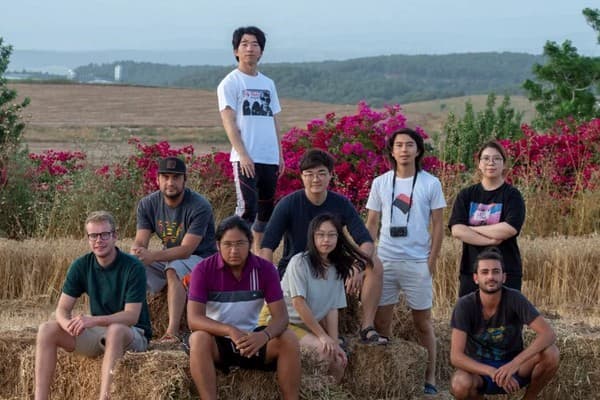
For example, we spied some unusual names on the work schedule at the factory at Kibbutz Ein Hashofet, in the Megiddo region in northern Israel. Shim Geonwoo, 21, hails from South Korea. He had looked for something to do between completion of his 21-month stint in his country's army and his studies at university. His sister, who volunteered at Kibbutz Ein Gev, on Lake Kinneret, suggested Israel.
“I wanted to spend time in a meaningful way and to learn how it is to live outside the country. That is what brought me here.”
At Ein Hashofet, we also met Ken Fuuruma, 21, who grew up in Fukushima, Japan. He said he came here mainly because he wanted to get to know Israeli culture “and to study socialism and communism.”
FULL STORY The Kibbutzniks of 2019: Chinese, Korean and Japanese volunteers find a home in Israel’s north (Haaretz)
Photo: Volunteers at Kibbutz Ein Hashofet, June 8, 2019 (Gil Eliyahu)