Aa
  • Read, Watch, Listen
  • TJI Series
  • Community Action
  • Events
  • Zedi
Follow us and continue the conversation
  • LinkedIn
  • Instagram
  • FaceBook
  • X
  • YouTube
Test yourself with the TJI Quiz!

Adjust size of text

Aa

Follow us and continue the conversation

  • LinkedIn
  • Instagram
  • FaceBook
  • X
  • YouTube

Your saved articles

You haven't saved any articles

What are you looking for?

Original reporting, insightful analysis and diverse views, delivered straight to your inbox

  • LinkedIn
  • Instagram
  • FaceBook
  • X
  • YouTube
Your support fuels our mission to inform, entertain and inspire.

The Jewish Independent is bound by the Standards of Practice of the Australian Press Council. If you believe the Standards may have been breached, you may approach The Jewish Independent or make a complaint to the Australian Press Council in writing at www.presscouncil.org.au. The Council may also be contacted on 1800 025 712.

  • Our Story
  • Contact us
  • Our Team
  • Support us
  • Guidelines
  • Pitch your idea
  • Republishing us
  • Community Action
  • Our Awards
  • LinkedIn
  • Instagram
  • FaceBook
  • X
  • YouTube
Aboriginal FlagTorres Strait Islanders Flag

The Jewish Independent acknowledges Aboriginal and Torres Strait Islander peoples as the Traditional Owners and Custodians of Country throughout Australia. We pay our respects to Elders past and present, and strive to honour their rich history of storytelling in our work and mission.

© The Jewish Independent 2026All Rights Reserved
Website design and development by Your Creative, MelbourneTerms & ConditionsPrivacy Policy
HomeRead, Watch, ListenIsrael
PeacebuildingOpinionIsraelWorld

Peacebuilding through the eyes of a sceptic

This is what happens when an American Jewish leader has his first opportunity to experience Israeli-Palestinian cooperation
Ron Finkel
Print this
Rozana Beit Oula

Members of the Rozana delegation in Beit Oula (supplied)

Published: 7 September 2026

Last updated: 7 September 2026

Keith Dvorchik is a veteran of American Jewish communal life. He has visited Israel many times, but until recently he had never set foot in a Palestinian village.

He freely describes himself as a sceptic about what can be achieved through joint Palestinian Israeli grassroots initiatives.

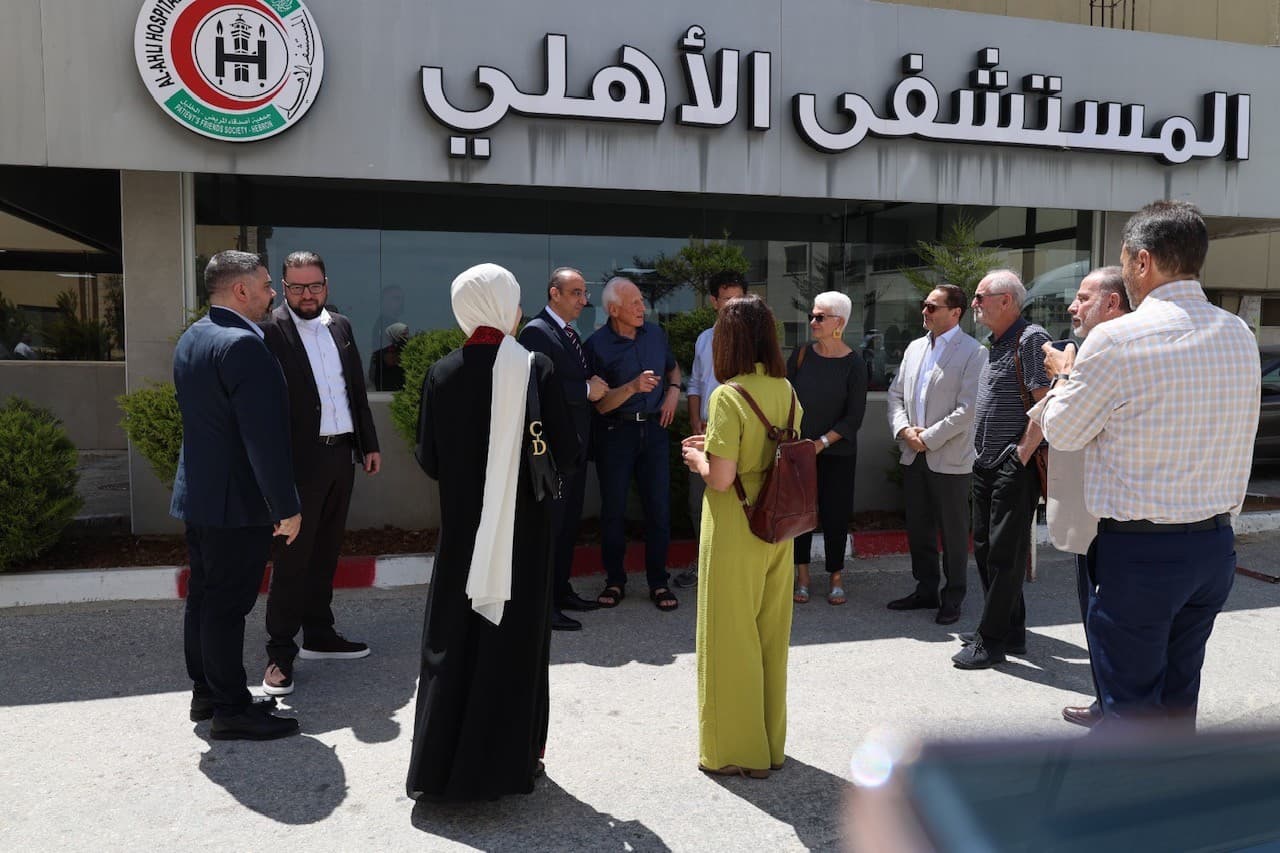
I watched what happened to him over three days as he observed the work of Rozana's joint healthcare, and I found myself seeing things I thought I knew as if for the first time.

On our first morning, in Beit Oula on the outskirts of Hebron, we visited Rozana’s Women4Women mobile clinic. The clinic is staffed entirely by Palestinian women – doctors, nurses, midwives, physiotherapists, nutritionists – and reaches three villages a week in areas of Area C where this level of care simply does not otherwise exist. That morning, an educational session on menstrual health was underway.

It is the kind of care we take completely for granted in Australia but can change the lives of women in Palestine.

One woman had walked two hours to reach the clinic. She had taken the long way round because settlers had attacked 12 women on the usual path the night before. She was the only one willing to come. I have cited stories like hers in donor briefings and board papers for years. Watching Keith encounter it for the first time, I felt the weight of it freshly.

The second day was harder. We visited Bedouin communities near Ramallah whose villages have been subjected to sustained, documented violence: homes burned, livestock stolen, water severed. One community had won a court order against settlers who cut their water line. The order is not enforced. For the past month, their water has been delivered by truck.
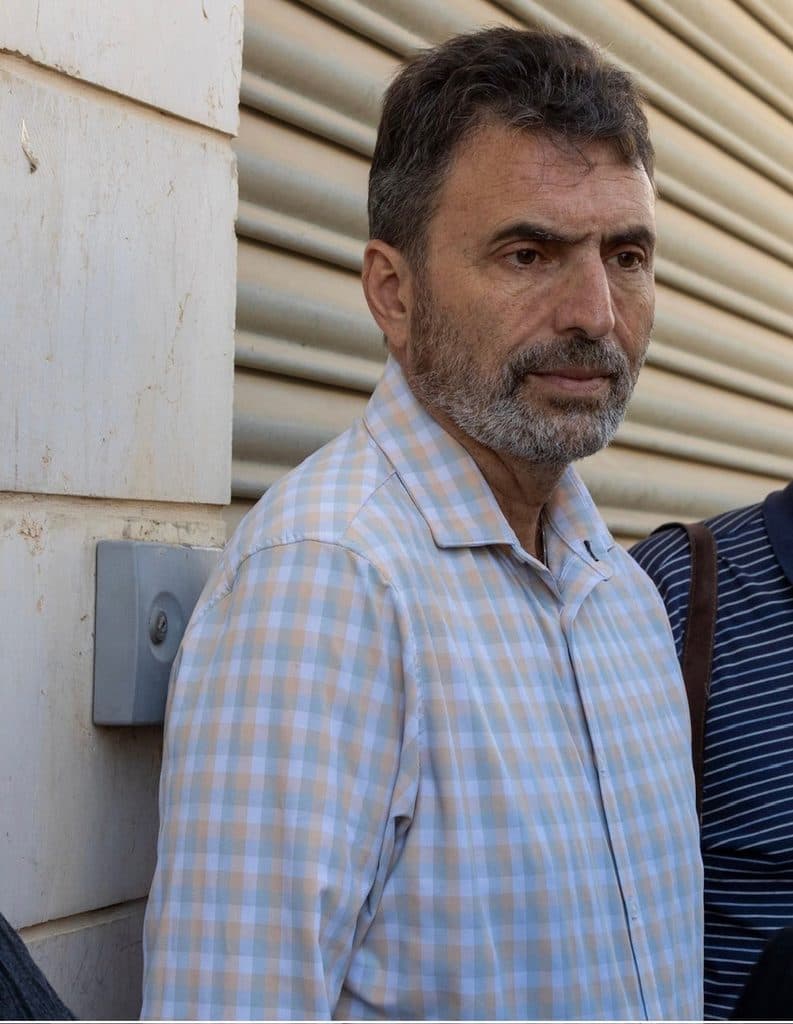
Keith is a man who loves Israel and has spent much of his career defending it. In the face of what we were seeing, he quoted Israel’s Declaration of Independence – its promise of complete equality, regardless of religion, race or sex – and said quietly that what we were witnessing was a betrayal of that founding document. Hearing him say it forced me to sit with the distance between the promise and the reality.

Keith Dvorchik (supplied)

On the third day, at Sheba Medical Centre, we met Dr Ruba Rizik. Ruba is a Palestinian physician from a village near East Jerusalem. She began her Rozana-funded fellowship at Sheba on October 11, 2023, four days after the Hamas attack. She did not know whether she would be safe. Each morning, she walked to the hospital while talking with her mother on the phone, both of them finding steadiness in the connection. She had multiple locks on her apartment door.

What she found in the workplace was that her supervisor and colleagues welcomed her. When conflict flared again earlier this year, she went home for 10 days. Then she came back because, she said, she had missed her “work family”. She has recently applied to extend her fellowship by two years to broaden her knowledge and experience in paediatric and general ICU; skills she will apply when she returns to her Palestinian hospital in East Jerusalem.

Dr Ruba Rizik (Rozana)

I have been involved in building programs like this for more than a decade. I still find it extraordinary.

Near the end of the week, one of our Palestinian colleagues mentioned a long conversation he had enjoyed with Keith during the visit. He had found it genuine and easy. Then he asked: “Is he Jewish?”

The question was not hostile. It was a form of recognition. Two people had talked as professionals, and as human beings, and somewhere in that conversation the usual categories had dissolved. I do not think either of them had planned it. I am not sure either of them noticed it happening.

This is not, I want to be clear, a story about how dialogue alone can resolve a conflict. I have spent 13 years watching what happens when people engage through the concrete, unglamorous work of keeping other people alive – in mobile clinics and fellowship programmes and rehabilitation hospitals – and I have never confused that with a political solution.

Gaza is in ruins. The West Bank is deteriorating. The ceasefire has collapsed again. Rozana is not a substitute for justice, and I do not pretend otherwise.

However, I have also watched, across those same 13 years, what accumulates when people meet through this work: a kind of human substrate that persists through the cycles of failure above it. The political process failed in Oslo because it was imposed on populations who were not ready. What we are trying to build – slowly, program by program, clinic by clinic, fellowship by fellowship – is the readiness.

Keith came as a sceptic. He left with his faith in the possibility renewed. If it can happen in three days, in the middle of everything, it can happen more widely than we sometimes dare to believe.

I came home to Melbourne, reminded of why the work matters. I also came home with something I had not quite expected: the gift of seeing it again, through a fresh pair of eyes.

You might also like
  • The Altalena should be a warning, not a political weapon
    Shahar Burla
  • Turkey emerges as military threat to Israel
    Dror Doron
  • Because of my Zionist values, I’m joining an Arab party
    Yoav Segalovitz
logomark.67a07ee3
We believe in the free flow of information

Republish our articles for free, online or in print, by using our Creative Commons licence

You might also like

    Ofer_Winter_2026
    Israel Votes 2026AnalysisIsrael

    Who is Ofer Winter and could he upset Netanyahu’s election?

    Shahar Burla
    ISRAEL-TRANSPORT-AVIATION-STRIKE
    Israel Votes 2026AnalysisIsrael

    Bennett’s balancing act: can he win over the right without losing the centre?

    Shahar Burla 1
    Segalovitz Abbas
    Israel Votes 2026AnalysisIsrael

    Segalovitz decision to join Arab party is a paradigm change for Israel

    Eetta Prince-Gibson

About the author

Ron Finkel

Ron Finkel

Ron Finkel AM is the founder and Chair of Rozana International, an organisation that works through health diplomacy to build Israeli–Palestinian partnership, with programmes in the West Bank, Israel, and Gaza.

More from the author

Lending a helping hand

Comments

No comments on this article yet. Be the first to add your thoughts.