Published: 4 March 2017
Last updated: 4 March 2024
When my family arrived in Australia in 1958 after the Hungarian uprising of 1956 we were not seeking asylum, we were immigrants. Yet for us too there was no return.
During the post World War II period in Soviet Block Hungary my socialist father had initially been very optimistic, but it was not long before several of his friends ‘disappeared’ never to be heard of again. And for both my parents the sight in 1956 of tanks rolling into Budapest yet again— this time, Soviet tanks crushing a popular uprising—was devastating. My father’s disillusionment ended in a nervous breakdown. We had been present when the revolutionaries brought the statue of Stalin down. Among the crowd someone said, ‘Now we can get rid of the rest of these bloody Jews’— a reference to Hungary’s leader of the Communist Party, Matyas Rakosi, who was Jewish.
‘That’s it!’ my mother said to my father, ‘We’re leaving!’
We bribed our way to an exit visa by selling our little summer cottage and every valuable item in our flat.
The journey from Budapest to Melbourne was long, with weeks in an old hotel in Vienna, and then longer weeks on the sea where everything was thrilling, frighteningly thrilling or wonderfully thrilling, and everything was ‘strange’, with the only familiarity being each other. The everyday that held everything that we had depended on: friends, buildings, food, habits, jobs, schools, emotions, all gone into some waiting place. There were moments of breathtaking beauty when we watched flying fish and dolphins from the deck. But every night I invaded my mother’s bunk and clung tightly to her.
My father slept in the men’s steerage section, one level up. We were three frightened individuals; our past was behind us, our future completely unknown. Stops at Port Said on the Suez Canal and in Colombo, Ceylon (now Sri Lanka) were so exotic and in the case of Colombo, so miserable because of the poverty in the streets that they created even greater fractures in my child psyche. There was no way for me to absorb what I was seeing.
Yet at least we knew that one day we would arrive and that another life would begin. We had relatives in Melbourne whom we knew and could rely on. My parents would be able to work and we would find a way into a new community. Indeed that is exactly what we did. It was not easy and for me as a child it was particularly difficult at school where I was very isolated until I learnt to speak English. Yet there was not much malicious suspicion or prejudice against us. We were ‘new Australians’ but there were plenty of jobs and plenty of opportunity for old and new Australians. There were just two million people in Melbourne which was at the time the most highly industrialised city in Australia. Plenty of factories, plenty of cheap housing, good public education and a culture ready to embrace the new.
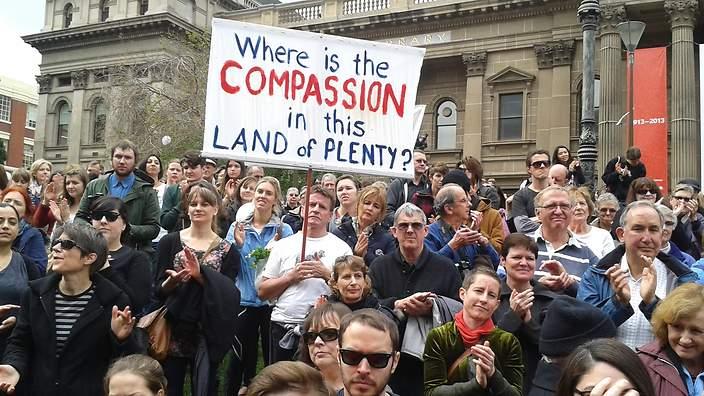
How different this is to the experience of an asylum seeker or refugee trying to come to Australia now. As a past president of the Melbourne PEN Centre I am very much aware of the fate of people like Behrouz Boochani a journalist being held in detention on Manus. A Kurd who has experienced great persecution in Iran and then found himself facing further horrors in Australia, Behrouz has written about his experiences. For the children hurt or orphaned in places like Syria and then trying to find their way to a new life beyond their imagination and sometimes beyond hope, the trauma is enduring and often permanent.
Each of today’s refugees and asylum seekers is a person who had a life before the events that made them a refugee. Surely each one deserves to be treated as at least as human as we were back in 1958.
In Hungary xenophobia seems to have reached new heights with the rise of antisemitism and the blocking of asylum seekers seeking even to cross the country, let alone remain there. Sadly in Australia too, despite our long history of multiculturalism, many are eager to exclude without knowing much at all about whom we are excluding. The problem of refugees is with us to stay, we must find new ways to think about and deal with it.
This The Jewish Independent article may be republished if acknowledged thus: ‘Reprinted with permission from www.thejewishindependent.com.au ’