Aa
  • Read, Watch, Listen
  • TJI Series
  • Community Action
  • Events
  • Zedi
Follow us and continue the conversation
  • LinkedIn
  • Instagram
  • FaceBook
  • X
  • YouTube
Test yourself with the TJI Quiz!

Adjust size of text

Aa

Follow us and continue the conversation

  • LinkedIn
  • Instagram
  • FaceBook
  • X
  • YouTube

Your saved articles

You haven't saved any articles

What are you looking for?

Original reporting, insightful analysis and diverse views, delivered straight to your inbox

  • LinkedIn
  • Instagram
  • FaceBook
  • X
  • YouTube
Your support fuels our mission to inform, entertain and inspire.

The Jewish Independent is bound by the Standards of Practice of the Australian Press Council. If you believe the Standards may have been breached, you may approach The Jewish Independent or make a complaint to the Australian Press Council in writing at www.presscouncil.org.au. The Council may also be contacted on 1800 025 712.

  • Our Story
  • Contact us
  • Our Team
  • Support us
  • Guidelines
  • Pitch your idea
  • Republishing us
  • Community Action
  • Our Awards
  • LinkedIn
  • Instagram
  • FaceBook
  • X
  • YouTube
Aboriginal FlagTorres Strait Islanders Flag

The Jewish Independent acknowledges Aboriginal and Torres Strait Islander peoples as the Traditional Owners and Custodians of Country throughout Australia. We pay our respects to Elders past and present, and strive to honour their rich history of storytelling in our work and mission.

© The Jewish Independent 2026All Rights Reserved
Website design and development by Your Creative, MelbourneTerms & ConditionsPrivacy Policy
HomeRead, Watch, ListenAustralia
Royal CommissionAnalysisAustralia

Beyond lone wolves: collective antisemitism enabled the Bondi massacre

Treating the Bondi shooting as an isolated incident ignores the impact of collective antisemitism on the perpetrators.
Jeremie Bracka
Print this
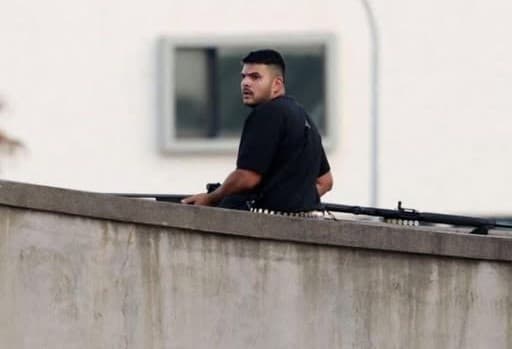
Naveed Akram Bondi attacker seated on a wall overlooking the attack

Bondi attacker Naveed Akram Bondi attacker captured during the massacre (supplied)

Published: 5 January 2026

Last updated: 6 May 2026

In November 1995, Prime Minister Yitzhak Rabin was assassinated by Yigal Amir, an Israeli religious extremist. At the time, Benjamin Netanyahu and figures on the Israeli right angrily rejected any suggestion that months of incitement, dehumanisation, and the misuse of religious language had helped make the murder possible. Responsibility, they insisted, lay with a single fanatic.

Three decades later, that account has not survived historical scrutiny. Amir may have pulled the trigger alone, but he acted within a political culture that had rendered Rabin a traitor and made political murder morally imaginable.

That history matters now. In the aftermath of the Bondi massacre, a similar refrain has taken hold: two isolated “lone wolves”, tragic but disconnected from any wider social environment. Australian police have stated that the father and son acted alone and were not part of a broader terrorist cell, even while acknowledging ideological motivation.

 “Acted alone” is a description of logistics, not an explanation. Yet it has shaped media commentary and opposition to calls for a Royal Commission, on the premise that there is no structural or systemic problem to examine, only individual pathology, gun reform and security failure.

This is a convenient absolution. It recasts concern about antisemitism since 7 October as hysteria, opportunism, or cynical attempts to suppress free speech, while insulating the surrounding rhetoric from scrutiny.


Lone actor, ideological community

Counter-terrorism research is clear that “lone actors” rarely emerge from a vacuum. Marc Sageman calls this leaderless jihad: individuals radicalised not by formal membership but by immersion in a worldview that legitimises violence and supplies moral permission.

Ramon Spaaij’s analysis of 88 lone-actor terrorist attacks demonstrates that such violence seldom arises in ideological isolation. Even where no organisation directs an attack, perpetrators are typically embedded in enabling ideological environments, drawing on online rhetoric, peer and movement socialisation, and shared symbolic narratives that scaffold and legitimise individual acts of violence.

To say the Bondi attackers acted alone is therefore descriptive of logistics, not worldview. True, they were radicalised before October 7, and jihadist hostility towards Jews long predate Gaza. That concession matters. But it does not exhaust the analysis. Prior radicalisation does not make the surrounding discourse irrelevant, especially where hostility toward Jews is normalised or treated as legitimate politics.

When lone actors strike, the task is not only to examine how they acted, but to ask what taught them that Jews were fair game

To be clear, this is not an argument against forceful criticism of the Israeli government or opposition to the war in Gaza. Israel is criticised most fiercely by Israelis themselves. Indeed, there is nothing more recognisably Zionist than scathing dissent. Just ask the hundreds of thousands of Israelis who, since 7 October, have taken to the streets week after week demanding a ceasefire, accountability, and political change. The difficulty arises when legitimate political critique shades into dehumanising frames that no longer distinguish between a state, an ideology, and a people.

When the extreme left and radical Islam converge

Radical Islamist antisemitism and the anti-Zionist left are not ideological siblings. One is animated by visions of a caliphate, the other by projects of decolonial liberation. Their sources, vocabularies, and ultimate aims differ markedly. At times, however they converge on shared dehumanising frames. One draws on the language of political Islam, the other on critical theory and settler-colonial discourse. The convergence is partial but consequential: Jews and ‘Zionists’ are cast less as people than as embodiments of power or moral corruption.

This does not mean progressive Australia radicalised the attackers, nor that criticism of Israel or its conduct in Gaza caused Bondi. The claim is narrower. Where “Zionists” are depicted as collective perpetrators and slogans like “globalise the intifada” circulate without restraint, a climate is produced in which harm to Jews is more easily recast as political rather than racist. What matters is not intent but effect. Dehumanisation, as social psychology shows, weakens moral restraint by pushing groups outside the circle of concern.

Coded hate, legal blindness

The Online Hate Prevention Institute’s 2025 report documents an eight-fold rise in online antisemitism since 7 October driven by platform dynamics that reward moral outrage and absolutism. It records a surge in explicitly dehumanising content, including portrayals of Jews as “snakes”, “baby killers” and “Nazi oppressors”. Crucially, the report identifies the growth of racist anti-Zionism, in which hostility toward “Zionists” functions as a proxy for hostility toward Jews. The idiom varies across platforms; the dehumanisation does not.

This online ecology helps explain a persistent legal blind spot. Under s 18C of the Racial Discrimination Act, vilifying speech is assessed by asking whether it is reasonably likely to offend, insult, humiliate or intimidate because of race or ethnicity, from the perspective of a reasonable member of the targeted group. In practice, courts have tended to approach anti-Zionist speech at a high level of abstraction, asking how a hypothetical listener would understand the language, rather than how it operates within Jewish historical experience, where Zionism is closely bound up with peoplehood, self-determination and collective survival.

That gap was on display in Wertheim v Haddad [2025] FCA 720. In that case, the Federal Court held that a series of lectures by a preacher breached s 18C by conveying antisemitic imputations about Jewish people, while treating other remarks in an interview and Friday sermon criticising Israel and “Zionists” as political commentary on the facts. Although the Court adopted the perspective of a reasonable Jewish listener, it treated that perspective as functionally equivalent to a generic audience, stating that the distinction “made no difference” (para 44). In doing so, the Court relied on a public meaning in which not all Jews are Zionists and criticism of Zionism is understood as purely ideological, largely detached from contemporary social context. The result is a doctrinal mismatch: the law searches for explicit racial naming, while antisemitism increasingly operates through coded language and repetition.

Misdiagnosing extremism

Nobody is suggesting the Australian left wanted Bondi. This is not Rabin’s Jerusalem in 1995. It is a more complex ecology. But complexity is not exculpation. If we treat the attackers as lone wolves, we blind ourselves to the discursive networks that made Jews a plausible target.  

In the wake of the massacre, much institutional and social media language defaulted to bland concern for “those affected” or quickly qualified expressions of sympathy with Islamophobia. For some, it seemed politically uncomfortable to explicitly acknowledge that Jews were the targeted victims. When Jewish trauma is described obliquely, conditionally, or only in the shadow of other harms, the message received is not solidarity but contingency.

At the same time, the Jewish community should model the humanity it seeks from others. We must not adopt narratives that equate all Gaza protesters with Hamas sympathisers, cast Muslim migrants as purveyors of hate, or rush to assign individual political blame. Grief should sharpen our moral clarity, not narrow it.

When lone actors strike, the task is not only to examine how they acted, but to ask what taught them that Jews were fair game. Antisemitism today rarely announces itself with swastikas or jackboots.It is more fluent online, more coded, and more ideologically agile. And if we continue to misdiagnose it, we should not be surprised when it becomes harder to name, and harder still to prevent.

You might also like
  • Antisemitism, homophobia and a radical response to both
    Dennis Altman
  • Confronting Richard Flanagan and the myth of the Israel lobby
    Mary Garden
  • Court decision fails to understand when ‘Fuk Israel’ becomes antisemitic
    Jeremie Bracka
logomark.67a07ee3
We believe in the free flow of information

Republish our articles for free, online or in print, by using our Creative Commons licence

You might also like

    Albanese Bondi
    Royal CommissionAnalysisAustralia

    Prime minister’s absence exposes weakness in Royal Commission hearings

    Michael Visontay
    Tame
    Australia

    Tame apologises – but with little grace

    Deborah Stone 1
    Woman with land and houses behind her
    NewsAustralia

    Australia to increase sanctions against West Bank settlements

    Deborah Stone 2

Comments8

  • Avatar of Muriel

    Muriel18 January at 10:27 pm

    Was this massacre really antisemitism? Was it ever spoken by these two gunmen that they were targetting jews or was it just an opportunity for them to create as much carnage as possible in a huge gathering at the time. Are we being devisive here too? What of the 2 innocent people gunned down on the street on their way to Bondi? Were they jewish? I just feel this was an assault on ALL Australians. Jewish or not, we are all Australians. Religion should not come into it.

  • Avatar of Boaz

    Boaz10 January at 05:25 am

    Mr bracka is correct by saying that “hundreds of thousands of Israelis who, since 7 October, have taken to the streets week after week demanding accountability” but is awefully wrong that they demanded a ceasefire and by not mentioning their main demand – the release of the hostages. Sadly, out of rage, hatered and revenge, most Israeli jews supported their government inhuman onslaught on Gaza. An aggression that only served a corrupt prime minister and an extreme government in Israel and a jihadist terrorist mob in Gaza

  • Avatar of Vicky Grosser

    Vicky Grosser9 January at 10:17 am

    Thanks you Jeremy for this article, and breadth of scope about anti-Semitism in practice. I would appreciate hearing your definition or how you describe Zionism to other people.

  • Avatar of Ruth Wilson

    Ruth Wilson9 January at 12:06 am

    There are facts underwritten by our intellect and then there are opinions, reflecting our emotional state, Like Simon Tatz in a previous article, this author navigates his way skilfully between the two, highlighting what it takes to achieve moral clarity in a very murky discourse. There is rarely right without some degree of wrong.

  • Avatar of Nathan

    Nathan8 January at 10:50 pm

    Excellent. Subtle. Onya.

  • Avatar of Michelle Braunstein

    Michelle Braunstein7 January at 09:25 pm

    Good article. Just because the terrorists did not seem formally affiliated with IS or another jihadist group it does not mean they weren’t one themselves. These are not centralised organisations with elected hierarchies or formal legal structures. They’re cells. Authorities need to stop projecting liberal constructs onto Jihadism. It’s ridiculous to measure it with the same frame, but Albo et al probably already know this. The lone wolf hypothesis is more weaseling out of revealing their role in the Bondi attack. The terms of reference of any RC need to incorporate comprehension of the crucially different ontologies of Islamism and liberalism but it’s doubtful that will happen, as liberal humanism is by its nature so narcissistic, it thinks everyone wants to be it.

  • Avatar of LARRY LIGHT

    LARRY LIGHT6 January at 05:09 am

    Excellent analysis Jeremie.
    The analogy of Yigal Amir acting “within a political culture that had rendered Rabin a traitor and made political murder morally imaginable” is valid.

  • Avatar of Gabby

    Gabby5 January at 06:15 pm

    Good article Jeremy. I think you aught to be involved with a Royal Commission into Antisemitism and Radical Islam in Australia

  • About the author

    Jeremie Bracka

    Jeremie Bracka

    Dr Jeremie M Bracka is an Australian-Israeli human rights lawyer, Jewish comedian and academic at RMIT University (Melbourne). He lectures in constitutional law, human rights law, international law and transitional justice.

    More from the author

    Australia

    Court decision fails to understand when ‘Fuk Israel’ becomes antisemitic

    AnalysisAustralia

    Tribunal draws a line on anti-Zionist hate speech

    ReflectionLifestyle

    From Caulfield to Colombia, we went to collect the baby