Published: 16 February 2026
Last updated: 17 February 2026
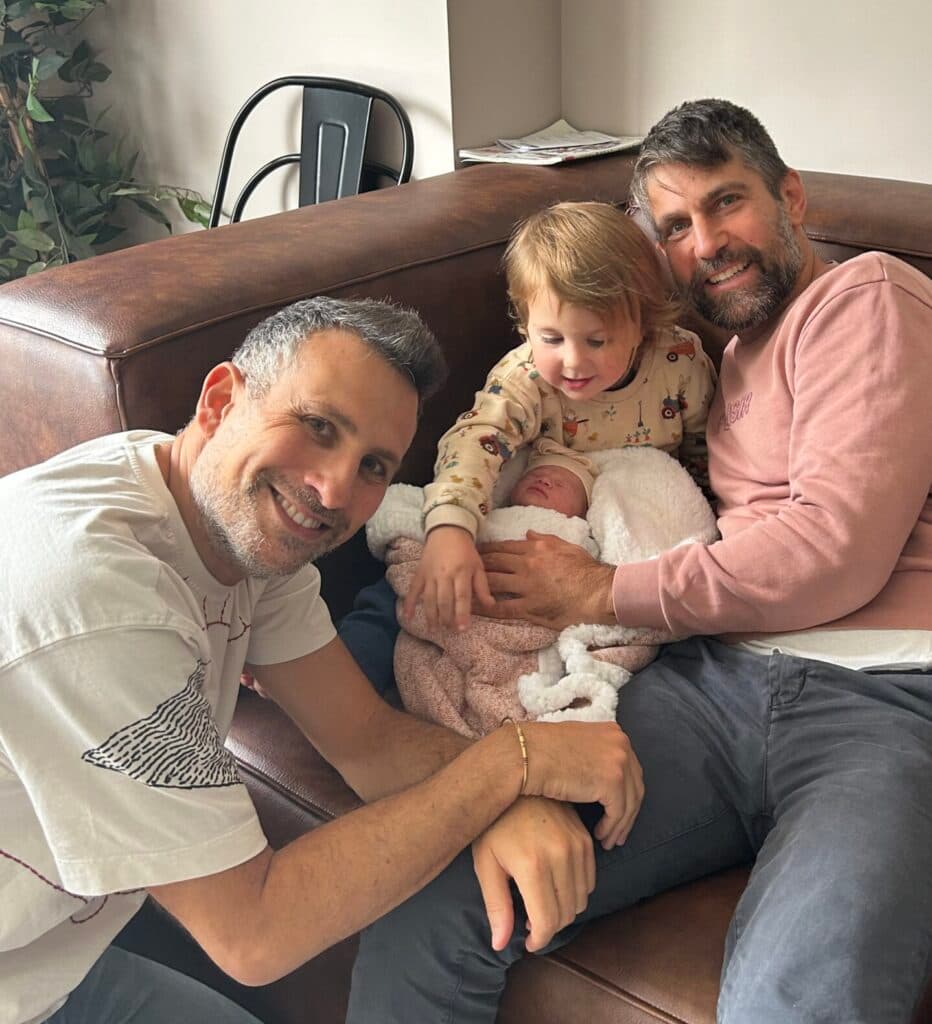
When I told my Aunty Bella that we were expecting our second child via surrogacy in Colombia, she beamed and said, “Mazel Tov!”
Then she paused.
Her first question wasn’t “How far along is the pregnancy?” or even “Do you know the gender?”
It was “But… how will you collect the baby?”
Collect. The. Baby.
I was tempted to reply, “Australia Post. Infant Express. Sunday delivery included – just wedge her between the bagels and smoked salmon". Instead, I smiled and explained that we’d be flying to Bogotá as a family to be there for the birth, just like we had when our son Matteo was born in Canada.
Turns out, “collection logistics” are a common concern for anyone unfamiliar with queer family-making. We don’t slot neatly into the usual scripts. There are no morning sickness updates, no gender-reveal doughnuts, no ultrasound photos stuck to the fridge.
Instead, there are documents. Truckloads of them. Legal contracts, notarised declarations, embassy forms, and a fertility journey powered by paperwork.
I try to meet those awkward questions with curiosity and kindness. I’d like to be that person who warmly welcomes others into our messy, magical, deeply intentional path to parenthood.
My Israeli husband? Not so much. Israelis, I’ve discovered, are just like Diaspora Jews, only they’ve taken all the angst and neurosis and distilled it into pure, unfiltered cynicism. When someone asked if we were bringing Matteo with us for the two-month stay in Colombia, Ronen didn’t miss a beat: “No. We’re leaving him at Yo-Chi. The Jews from Balaclava can take turns buying him yoghurt.”