Aa
  • Read, Watch, Listen
  • TJI Series
  • Community Action
  • Events
  • Zedi
Follow us and continue the conversation
  • LinkedIn
  • Instagram
  • FaceBook
  • X
  • YouTube
Test yourself with the TJI Quiz!

Adjust size of text

Aa

Follow us and continue the conversation

  • LinkedIn
  • Instagram
  • FaceBook
  • X
  • YouTube

Your saved articles

You haven't saved any articles

What are you looking for?

Original reporting, insightful analysis and diverse views, delivered straight to your inbox

  • LinkedIn
  • Instagram
  • FaceBook
  • X
  • YouTube
Your support fuels our mission to inform, entertain and inspire.

The Jewish Independent is bound by the Standards of Practice of the Australian Press Council. If you believe the Standards may have been breached, you may approach The Jewish Independent or make a complaint to the Australian Press Council in writing at www.presscouncil.org.au. The Council may also be contacted on 1800 025 712.

  • Our Story
  • Contact us
  • Our Team
  • Support us
  • Guidelines
  • Pitch your idea
  • Republishing us
  • Community Action
  • Our Awards
  • LinkedIn
  • Instagram
  • FaceBook
  • X
  • YouTube
Aboriginal FlagTorres Strait Islanders Flag

The Jewish Independent acknowledges Aboriginal and Torres Strait Islander peoples as the Traditional Owners and Custodians of Country throughout Australia. We pay our respects to Elders past and present, and strive to honour their rich history of storytelling in our work and mission.

© The Jewish Independent 2026All Rights Reserved
Website design and development by Your Creative, MelbourneTerms & ConditionsPrivacy Policy
HomeRead, Watch, ListenLifestyle
FeatureLifestyle

10 little known Rosh Hashanah customs from around the world

You know apples and honey, maybe pomegranates and fish heads, but not probably not these customs from places as varied as Tunisia, Iraq and Germany.
Menachem Posner
Print this
Rosh Hashanah Customs

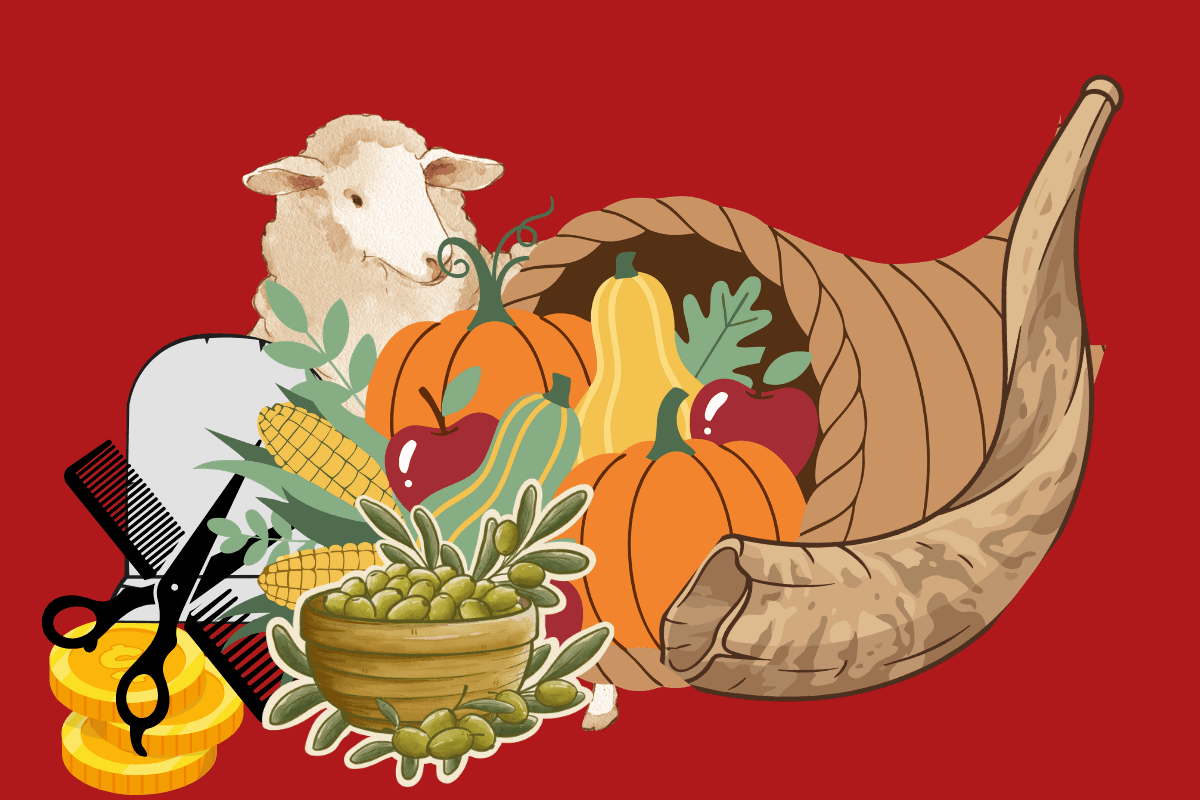
Image: TJI

Published: 7 September 2026

Last updated: 7 September 2026

1. Djerba: Pickling Fallen Olives

In Djerba, an island off the coast of Tunisia, which still has an active Jewish community, it is customary for children to comb the olive orchards in the days before Rosh Hashanah. They collect as many fallen olives as they can, which are then pickled in salt.

On the morning before Rosh Hashanah, they carry the olives through the streets calling, zeitun yehi ratzon, announcing that they have olives with which people can recite the traditional yehi ratzon blessing, asking that our merits multiply like olive saplings.2

2. Iraq: Slaughtering a Ram

On the night before Rosh Hashanah, every Jewish home was visited by the shochet (kosher slaughterer) who would slaughter the ram they had cared for at home for the past few weeks. (If the ram was found to be unkosher, the family would see this as an ill omen and reason to increase their repentance.)

The ram would be prepared in melon rinds, and its head served separately. Before partaking of the head, the diners would express the wish “that we be a head and not a tail.”

READ MORE

Ten Rosh Hashanah Customs from around the world (Chabad.com)

You might also like
  • Never tear us apart: a New Year reflection
    Ittay Flescher
  • Nobody wants this, but as a student rabbi I can’t look away
    Merissa Nathan Gerson
  • Multicultural Rosh Hashanah seder offers a gateway to understanding
    Peter Kohn
logomark.67a07ee3
We believe in the free flow of information

Republish our articles for free, online or in print, by using our Creative Commons licence

You might also like

    welcome mat
    ReflectionAustralia

    In celebration of Jews by choice

    Benjamin Elton 2
    original-6ACA4B6A-4208-4277-A4EE-E687C3C87523
    FeatureLifestyle

    The right to an ordinary Jewish life

    Jarod Rhine-Davis
    Keshet
    FeatureLifestyle

    ‘We won’t ever leave’: Keshet Europe’s fight for Jewish LGBT+ inclusion

    Gideon Cohen

About the author

Menachem Posner

Menachem Posner

Rabbi Menachem Posner serves as managing editor at Chabad.org, the world’s largest Jewish informational website. He has been writing, researching, and editing for Chabad.org since 2006, when he received his rabbinic degree from Central Yeshiva Tomchei Temimim Lubavitch. He lives in Chicago, Ill., with his family.

Comments

No comments on this article yet. Be the first to add your thoughts.