Aa
  • Read, Watch, Listen
  • TJI Series
  • Community Action
  • Events
  • Zedi
Follow us and continue the conversation
  • LinkedIn
  • Instagram
  • FaceBook
  • X
  • YouTube
Test yourself with the TJI Quiz!

Adjust size of text

Aa

Follow us and continue the conversation

  • LinkedIn
  • Instagram
  • FaceBook
  • X
  • YouTube

Your saved articles

You haven't saved any articles

What are you looking for?

Original reporting, insightful analysis and diverse views, delivered straight to your inbox

  • LinkedIn
  • Instagram
  • FaceBook
  • X
  • YouTube
Your support fuels our mission to inform, entertain and inspire.

The Jewish Independent is bound by the Standards of Practice of the Australian Press Council. If you believe the Standards may have been breached, you may approach The Jewish Independent or make a complaint to the Australian Press Council in writing at www.presscouncil.org.au. The Council may also be contacted on 1800 025 712.

  • Our Story
  • Contact us
  • Our Team
  • Support us
  • Guidelines
  • Pitch your idea
  • Republishing us
  • Community Action
  • Our Awards
  • LinkedIn
  • Instagram
  • FaceBook
  • X
  • YouTube
Aboriginal FlagTorres Strait Islanders Flag

The Jewish Independent acknowledges Aboriginal and Torres Strait Islander peoples as the Traditional Owners and Custodians of Country throughout Australia. We pay our respects to Elders past and present, and strive to honour their rich history of storytelling in our work and mission.

© The Jewish Independent 2026All Rights Reserved
Website design and development by Your Creative, MelbourneTerms & ConditionsPrivacy Policy
HomeRead, Watch, ListenAustralia
OpinionAustralia

Celebrating Indigenous survival makes January 26 meaningful

Tahlia Bowen
Print this
derech-eretz

Published: 3 February 2023

Last updated: 25 August 2025

Last week, the Derech Eretz group of Jewish volunteers in Indigenous communities experienced a positive way to mark the controversial date. TAHLIA BOWEN was among them.

January 26. Australia Day. Invasion Day. Survival Day. Day of Mourning. Citizenship ceremonies. Australian of the Year Awards. Nondescript barbecue day? Penalty rates! Public holiday (depending on who you work for). 

January 26 means different things to different Australians, and what it means to each Australian is changing year to year. Public sentiment towards changing the date of "Australia Day", a movement led by First Nations peoples, grows annually.

But some spearheads of this movement have more recently changed their tune. 

Until 2018, Amnesty Australia championed the "Change the Date" campaign. They asked the wider community to celebrate Australian nationhood on a date not representative of loss for Aboriginal and Torres Strait Islander peoples. Since then, however, they have reached a new conclusion. Australia’s national story, stained with the legacies of dispossession, violence and continuing trauma, is not one to be celebrated any day of the year. 

This year, Amnesty articulated its stance on social media: “Changing the date doesn’t hold governments accountable, doesn’t acknowledge the pain of colonisation, and doesn’t hold us accountable as an organisation, or make us confront our part in the ongoing violence of colonisation”.  

Survival against weighted odds, and all of the acts of resistance that this involves, is worth celebrating.
Australian Greens senator Lidia Thorpe also believes that no appropriate day exists, “You can’t change the date of dancing on our graves. You gotta deal with the impact of colonisation — have a treaty”, she said on Q&A this week. Thorpe proposed that the day a treaty is signed between First Nations and non-Indigenous Australia be the “day that we should celebrate”. 

So, what are we to do with January 26?

It’s clear that abolishing Australia Day is not on the Labor government’s agenda. Flag raising and citizenship ceremonies persist. And despite an increasing number of workplaces no longer enforcing it, January 26 remains a public holiday. 

For at least 85 years, First Nations communities have taken matters into their own hands, facilitating spaces to mourn and protest.

With the stories of loss that make up the nation’s history, however, come stories of remarkable resilience and strength. Celebrating survival, therefore, is how some Aboriginal and Torres Strait Islander communities have chosen to observe each January 26. One prominent example is Yabun Festival on Gadigal Country, now in its 20th year. 

Survival against weighted odds, and all of the acts of resistance that this involves, is worth celebrating. This is not unfamiliar for us as Jews, whose oral and written traditions involve stories of resilience despite persecution. At the centre of many Jewish holidays lie Hebrew prayers, religious garments and significant foods—cultural reminders that we are still here. 
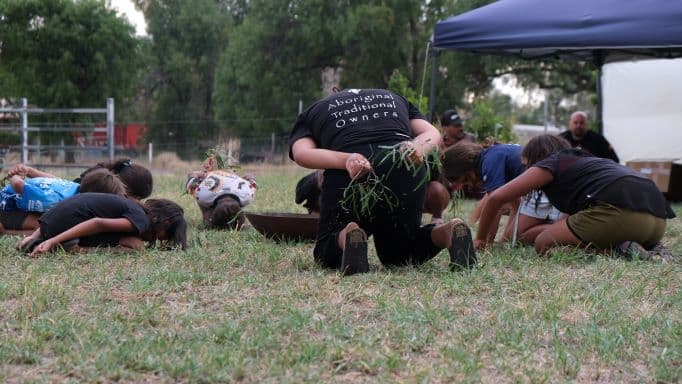
 Girls dance workshop and performance facilitated by Yulugi Marumali at Boggabilla Survival Day event. 
 Girls dance workshop and performance facilitated by Yulugi Marumali at Boggabilla Survival Day event. 

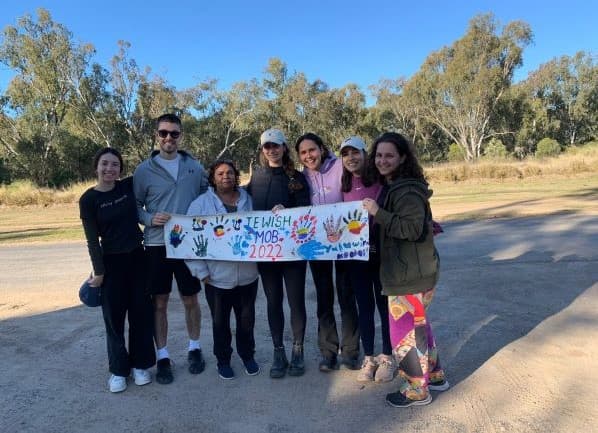
This January 26, I was privileged to spend the day celebrating Gomeroi/Gamilaraay/Kamilaroi survival while on Stand Up’s Derech Eretz program.

Derech Eretz offers young Jewish adults (aged 18-30) the opportunity to travel to the predominantly Aboriginal communities of Toomelah and Boggabilla. Participants facilitate holiday activities for local youth, connect with community members and participate in informal education sessions designed to bridge the blind spots of Australia’s mainstream curriculum in relation to First Nations Australia.

This year marks the 18th year of friendship between Toomelah and Boggabilla and us, the affectionately-titled "Jewish mob". 

Our January 26 began with an early rise as we set out for the Invasion/Survival Day rally in Moree, NSW. Moree’s history of official segregation is impressed upon its contemporary demography. Speaker Uncle Lyall Munro pointed out the irony that new immigrants were being welcomed to Australia in citizenship ceremonies across the river, rather than being “over here with us”, welcomed by the true sovereigns — First Peoples. His comment served as a reminder of how lucky our Derech Eretz group was to spend the morning with the local Gomeroi community. 

As the commemorative march ended, a celebration of survival ensued. The crowd of a few hundred dispersed between a number of stalls, featuring weaving, boomerang-painting, song and dance, a sausage sizzle and SOBAH (bush-tucker infused, non-alcoholic beer). Later that afternoon, we were invited to take part in a similar range of activities at a Survival Day event organised by Winangali Infusion. Between eating damper, gathering bush teas and learning from community members, we celebrated what is most worth celebrating about Australia: the survival of the oldest continuing cultures in the world. 

January 26 is an uncomfortable day for Australia. I’m certainly not suggesting that non-Indigenous Australia co-opt January 26 as Survival Day to assuage our own guilt. If we are to celebrate the survival of First Nations, it must be on Aboriginal and Torres Strait Islander peoples’ terms. Non-Indigenous Australians must grapple with our settler privileges, and if offered the opportunity to celebrate Survival Day (there are many public events!), seize it. 

I can guarantee it will be more meaningful than hosting a barbecue.

Photo: The Derech Eretz group in Moree on "Survival Day".

You might also like
  • Decolonising the Jewish mind
    Hava Mendelle & Simonne Whine
  • Sounds for a sky we all share
    Peter Kohn
  • We need to stop thinking of Judaism as a religion
    Ben Freeman
logomark.67a07ee3
We believe in the free flow of information

Republish our articles for free, online or in print, by using our Creative Commons licence

You might also like

    jiff26-cancelled.jpg
    ReflectionArts & Culture

    On despair: A reflection after watching ‘Cancelled’

    Deborah Stone
    chai necklace copy
    ReflectionAustralia

    Facing my mortality, the Book of Life is no metaphor

    Talia Slonim 4
    antisemitism online
    NewsAustralia

    Proposed digital care law to offer protection against online antisemitism

    Deborah Stone

About the author

Tahlia Bowen

Tahlia Bowen

Tahlia Bowen is a Jewish writer of Ashkenazi and Papua New Guinean heritage. She is an active member of the Jewish Council of Australia and the Jewish Greens, and is an Advisor to Victorian MP Tim Read.

More from the author

OpinionAustralia

“Jewish Mob” welcomed in Indigenous communities