Aa
  • Read, Watch, Listen
  • TJI Series
  • Community Action
  • Events
  • Zedi
Follow us and continue the conversation
  • LinkedIn
  • Instagram
  • FaceBook
  • X
  • YouTube
Test yourself with the TJI Quiz!

Adjust size of text

Aa

Follow us and continue the conversation

  • LinkedIn
  • Instagram
  • FaceBook
  • X
  • YouTube

Your saved articles

You haven't saved any articles

What are you looking for?

Original reporting, insightful analysis and diverse views, delivered straight to your inbox

  • LinkedIn
  • Instagram
  • FaceBook
  • X
  • YouTube
Your support fuels our mission to inform, entertain and inspire.

The Jewish Independent is bound by the Standards of Practice of the Australian Press Council. If you believe the Standards may have been breached, you may approach The Jewish Independent or make a complaint to the Australian Press Council in writing at www.presscouncil.org.au. The Council may also be contacted on 1800 025 712.

  • Our Story
  • Contact us
  • Our Team
  • Support us
  • Guidelines
  • Pitch your idea
  • Republishing us
  • Community Action
  • Our Awards
  • LinkedIn
  • Instagram
  • FaceBook
  • X
  • YouTube
Aboriginal FlagTorres Strait Islanders Flag

The Jewish Independent acknowledges Aboriginal and Torres Strait Islander peoples as the Traditional Owners and Custodians of Country throughout Australia. We pay our respects to Elders past and present, and strive to honour their rich history of storytelling in our work and mission.

© The Jewish Independent 2026All Rights Reserved
Website design and development by Your Creative, MelbourneTerms & ConditionsPrivacy Policy
HomeRead, Watch, ListenLifestyle
ReflectionLifestyleWorld

I am my sister’s keeper

Our sense of responsibility to the female victims of October 7 has brought Jewish women together in sisterhood and made us stronger.
Tamar Paluch
Print this
women yellow roses hostages

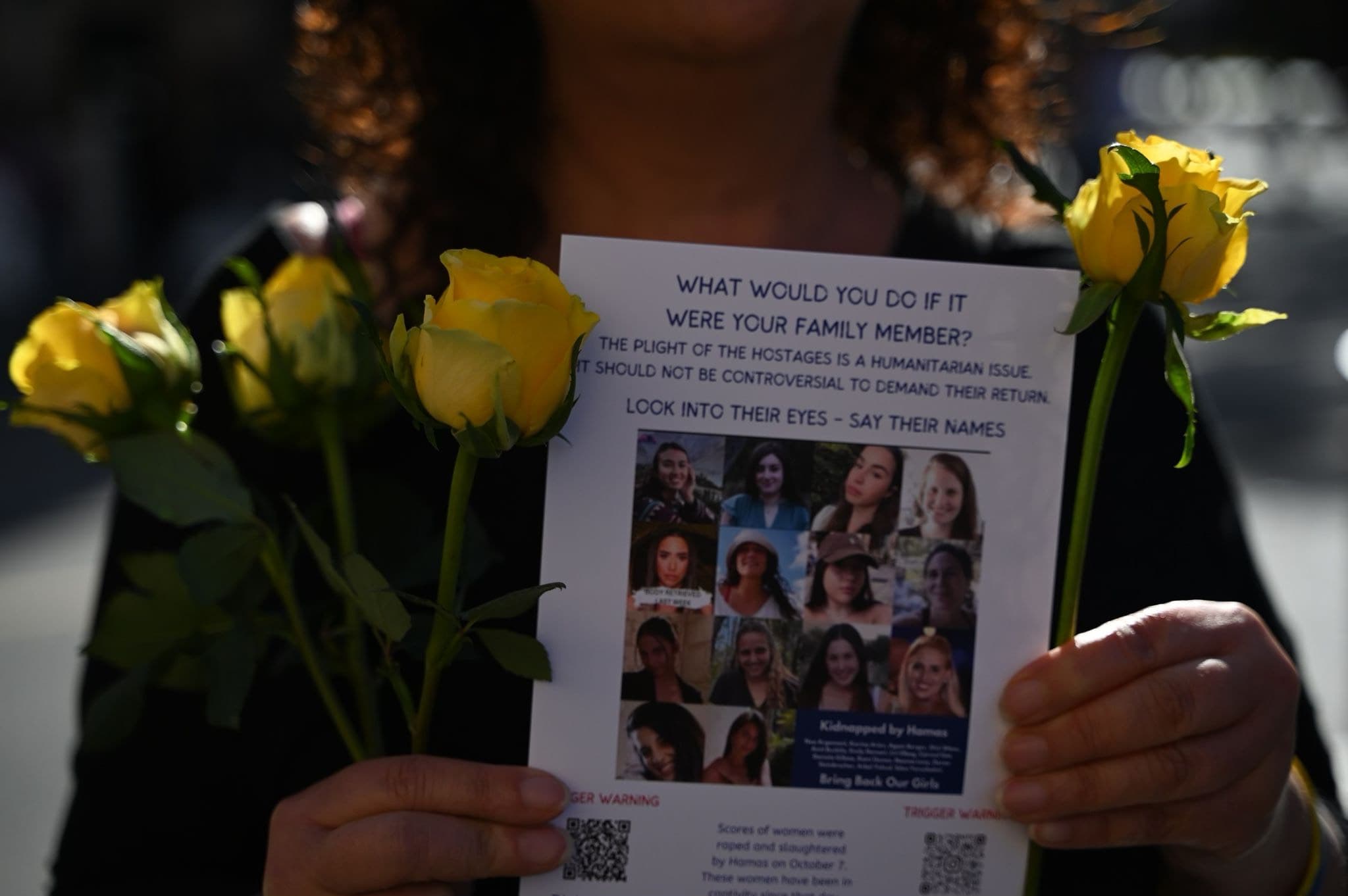
A woman holds a poster with pictures of female hostages at a vigil in Melbourne (supplied)

Published: 21 November 2024

Last updated: 20 November 2024

Liri. Daniella. Emily. Shiri. Doron. Romi. Naama. Amit. Noa. Karina. Agam. Arbel. Eden. Carmel. These are the names of the female hostages, the names that each Jewish woman can repeat in their sleep these past months. In the light, we stare back at their eyes. In the darkness, we wince as we imagine what they are enduring in captivity. In these moments we are their sisters, their friends, their aunts. We ache their pain, the pain of their families. Our paths have never crossed, yet we declare - I am my sister’s keeper.

Ten of these female captives may still be alive. One - Noa - was retrieved in a dramatic rescue. Two - Eden and Carmel - were executed on day 331 of captivity. They were found with point blank wounds, emaciated and in horrific underground conditions. The DNA of Yahiye Sinwar, head of Hamas, was found in their hellish den under Rafah. These women, together with four male captives, were kept as his human shields.

Early on I became attached to Carmel, 40, an occupational therapist - like me - who loved yoga, travel and family. I resolved to encourage our mutual professional peers within the global occupational therapy circles to advocate for her. Perhaps the World Federation could lobby the global health organisations and the International Red Cross, who - at that stage - had yet to stun us with their indifference and abrogation of responsibility to victims of war. It was also before we knew what awaited us in the global compassion stakes. I was stunned into a deep anger by the silence I encountered. In time I would connect with peers in the US, the UK and Israel, and discover that they too experienced the same blunt encounters.
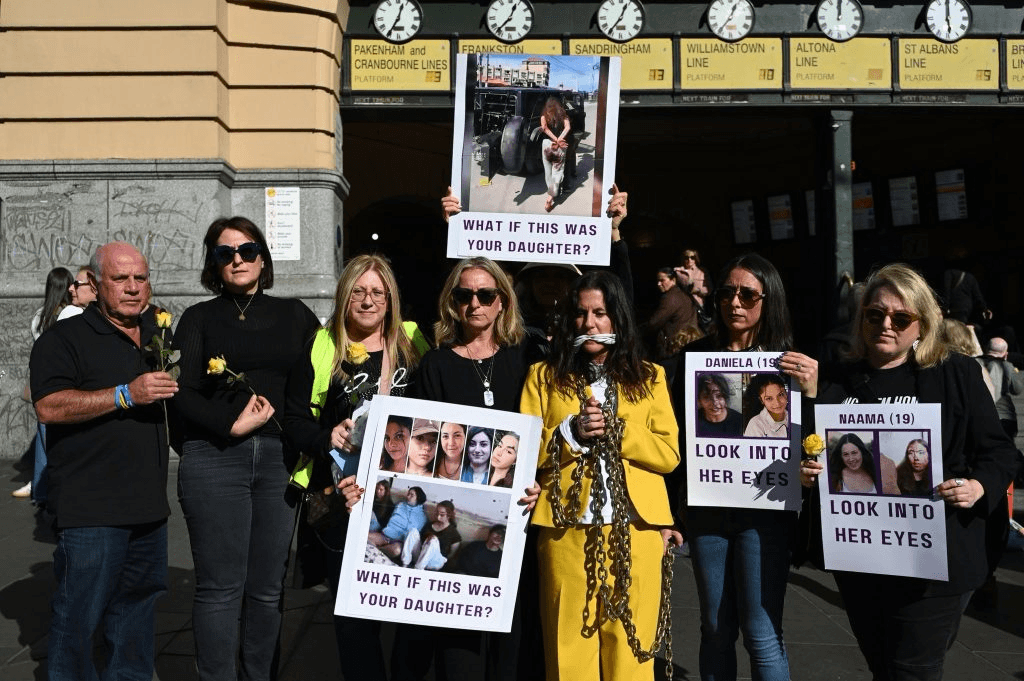
Jewish women hold a vigil in support of women hostages at Flinders Street station in Melbourne (supplied)

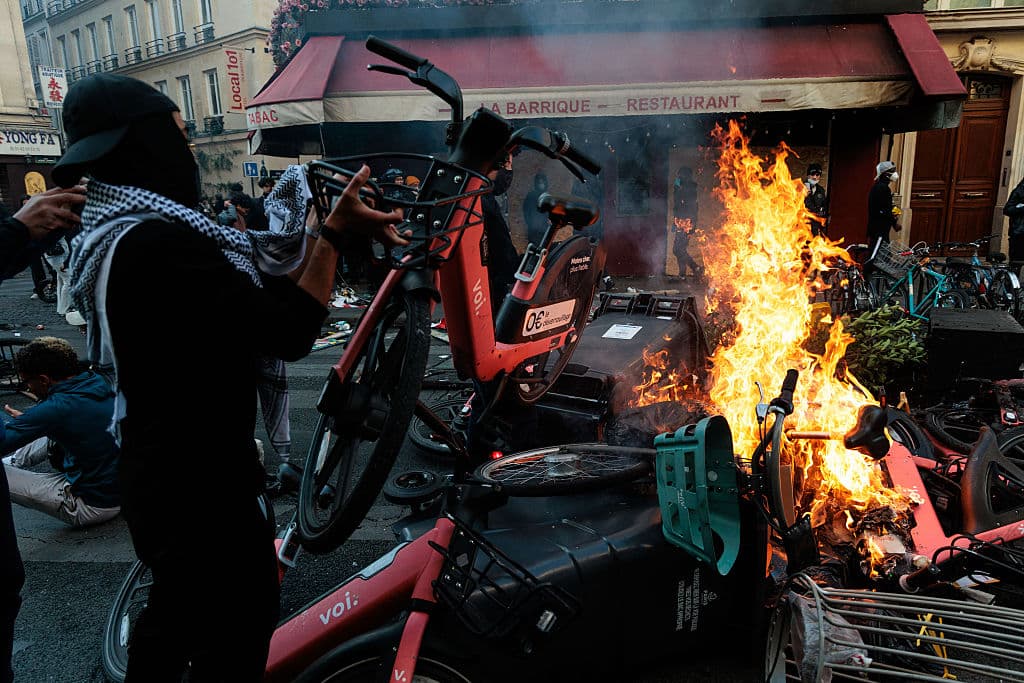
On the street, something else was unfolding which would become emblematic of the times. A callousness so fierce, that saw regular everyday people tearing down hostage posters or scrawling “Actors! Lies! Propaganda!” across the faces of these people torn from their beds and from the sunrise set of a bush rave.

One day my daughter, aged 9, came across torn hostage posters outside our local playground. Her eyes brimmed with tears as she asked “Why would someone do that?”. In the world she inhabited there was no such thing as a world that doesn’t care, let alone wilfully dehumanises and blots people out.

But this is my daughter’s world now. A world which minimises and excuses our pain at best, or erases and denies it at worst. There is an old saying that the antisemite likes nothing as much as to watch the Jew turn his pockets out as he stands accused of stealing. Surely the feminist movement has a similar analogy for a woman violated and forced to defend herself against a chorus of deniers. October 7 brought these two analogies into a crossroads - the violated Jewish woman, a sacrificial lamb for the hate of these dark days.

Leading this movement of dehumanisation are the women’s and human rights organisations who have refused to tell the Israeli story. It has taken a full year for human rights organisations to minimally acknowledge the pain and fear of Israelis, the sheer horror wrought by Hamas on that black day in 2023, or meaningfully advocate for the hostages. The selective humanitarianism by organisations whose core business is advocating, with neutrality and impartiality, for victims of war and sexual violence has been especially disturbing.

These groups are storytellers - they give a voice to human suffering, they bank on empathy. How they represent conflicts matters. Yet not a single children’s organisation has shared the name and images of Kfir (1) and Ariel (4) Bibas, the redheaded boys abducted with their frightened mother, Shiri. Not a single womens’ organisation has hashtagged Shiri #sayhername. Nor will they ever validate the trauma of that day for women like 22 year-old Shirel Golan - a Nova music festival survivor, who took her life last month.

The unwillingness to acknowledge the sexual violence of October 7 has normalised this erasure, and the most basic concern for the female captives has been marginalised to avoid “politics”. Would support or empathy for Israeli women have detracted from the plight of Gazan women trapped in a horrific war? No. Rachel Polin-Goldberg, mother of Hersh who was executed alongside Carmel and four other young hostages, said it most profoundly, “There is a surplus of agony on all sides of the [conflict]. In a competition of pain there are no winners”. The risk of inflaming or losing followers for the sin of humanising Israelis, has been deemed too great.

In the face of this abandonment, our sense of responsibility to the female victims of October 7 has brought Jewish women together in sisterhood and made us stronger. We have become one another’s keepers - bound by empathy and action. Yet we are also bound by this deep sense of betrayal, by a world we previously navigated with certainty and confidence. When our acquaintances and colleagues remain silent, we wonder if they would have chosen silence if it were our daughters. Therein lies the rupture of trust that October 7 created for Jewish women the world over.

As with all ruptures, they can only be bridged by reaching out. We need to reach out to our peers and colleagues and remind them - your voices count, your silence does too. Will you be your sister’s keeper? For the women who were brutalised and slaughtered on October 7, it is too late. For Carmel and Eden, executed in captivity - it is too late. We can not allow ten women who remain in captivity, amongst tens of men whose daughters, girlfriends, mothers and grandmothers desperately await their return, to be swallowed by the silence.

You might also like
  • The memory of the hostages should guide Israel’s choices for the future
    Nirit Eylon
  • When the state faltered, civil society and Diaspora Jewry stepped up
    Shahar Burla
  • How Netanyahu can stay in power without winning
    Shahar Burla
logomark.67a07ee3
We believe in the free flow of information

Republish our articles for free, online or in print, by using our Creative Commons licence

You might also like

    Protest
    AnalysisIsrael

    Western ‘Palestinianism’ colonises everything – and hurts Palestinians

    Andres Spokoiny 3
    Neurodivergence panel
    VideoLifestyle

    Neurodivergence and inclusion in the Jcom

    The Jewish Independent
    Jewish word map
    FeatureArts & Culture

    Was the barmi a shemozzle? How Australians use Jewish words 

    Caroline Hendy & Emma Breslow 1

About the author

Tamar Paluch

Tamar Paluch

Tamar Paluch is co-editor of 'Ruptured: Jewish women in Australia reflect on life post-October 7', published by Lamm Jewish Library of Australia. She trained as an occupational therapist, with a focus on disability rights advocacy. Since October 7, she has been drawn back into the realm of Jewish community mobilisation and activism. She has lived in Israel and Australia and is currently based in Los Angeles.

More from the author

OpinionArts & Culture

‘Cry-baby antisemitism’: the resistance to Jewish voices 

FeatureAustralia

Calling for Australian Jewish women’s stories of life after October 7

Comments1

  • Avatar of Prof. Judith Shamian

    Prof. Judith Shamian22 November at 08:29 am

    Thank you for a beutiful and meaningful piece. The tragedy of it all is that the Global Health Organizations like WHO, UN, Red Cross and more do not deliver on their mission when it comes to the October 7, victims. Any violence against women and man in captivity is a gross violation of every international code. Thank you for standing up and speaking out