Published: 28 November 2024
Last updated: 28 November 2024
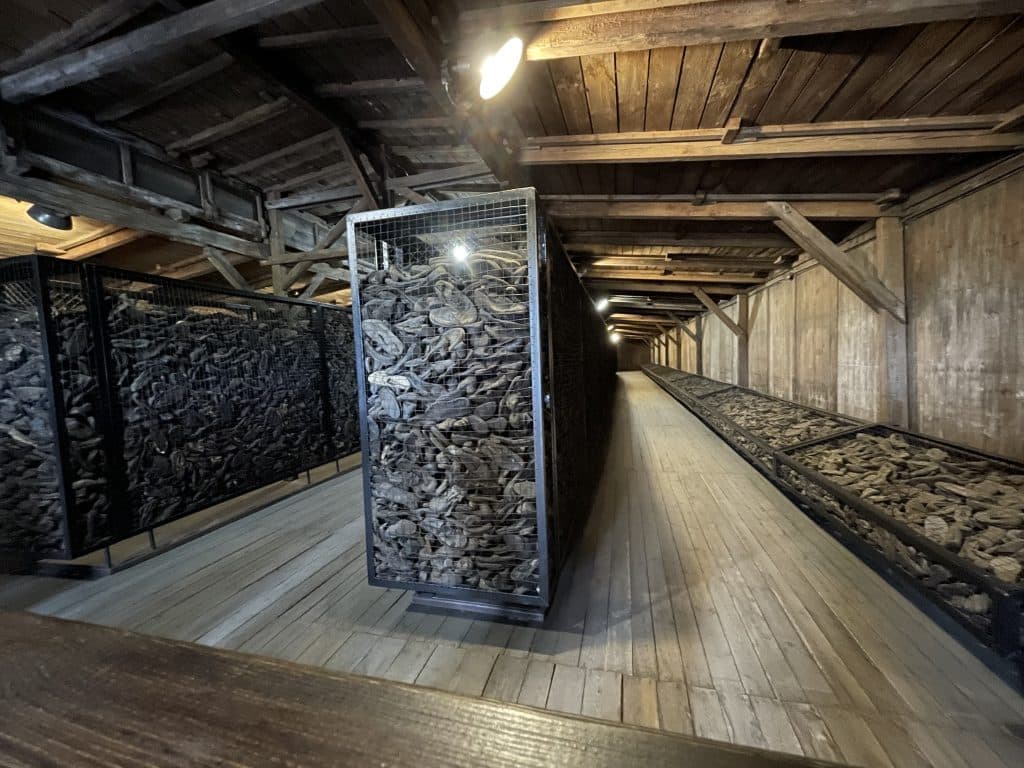
There’s a lot that A Real Pain gets right about Polish Holocaust tours, from the eerie stillness of Majdanek, explored through a series of mostly silent shots, to the information overload from the non-Jewish tour guide, when Jewish people need to acknowledge what is, in fact, missing.
But it also glosses over a lot that, had it been included, may have raised some eyebrows in the Polish Institute of National Remembrance.
A Real Pain, which headlined this year’s Jewish International Film Festival follows the journey of cousins David and Benji on a week-long tour of Poland to discover their late-grandmother’s pre-Holocaust world.
Earlier this year, I also went on a week-long tour of Poland with a mostly non-Jewish group and two fabulous Jewish tour guides to learn how modern Europeans relate to the memory of the Holocaust.
Seeing parts of my journey reflected back at me on the screen was as cathartic as the tour was traumatic, and I felt the need to both honour the rawness of the film and shed some light on the more difficult aspects of Poland which the film only hints at.
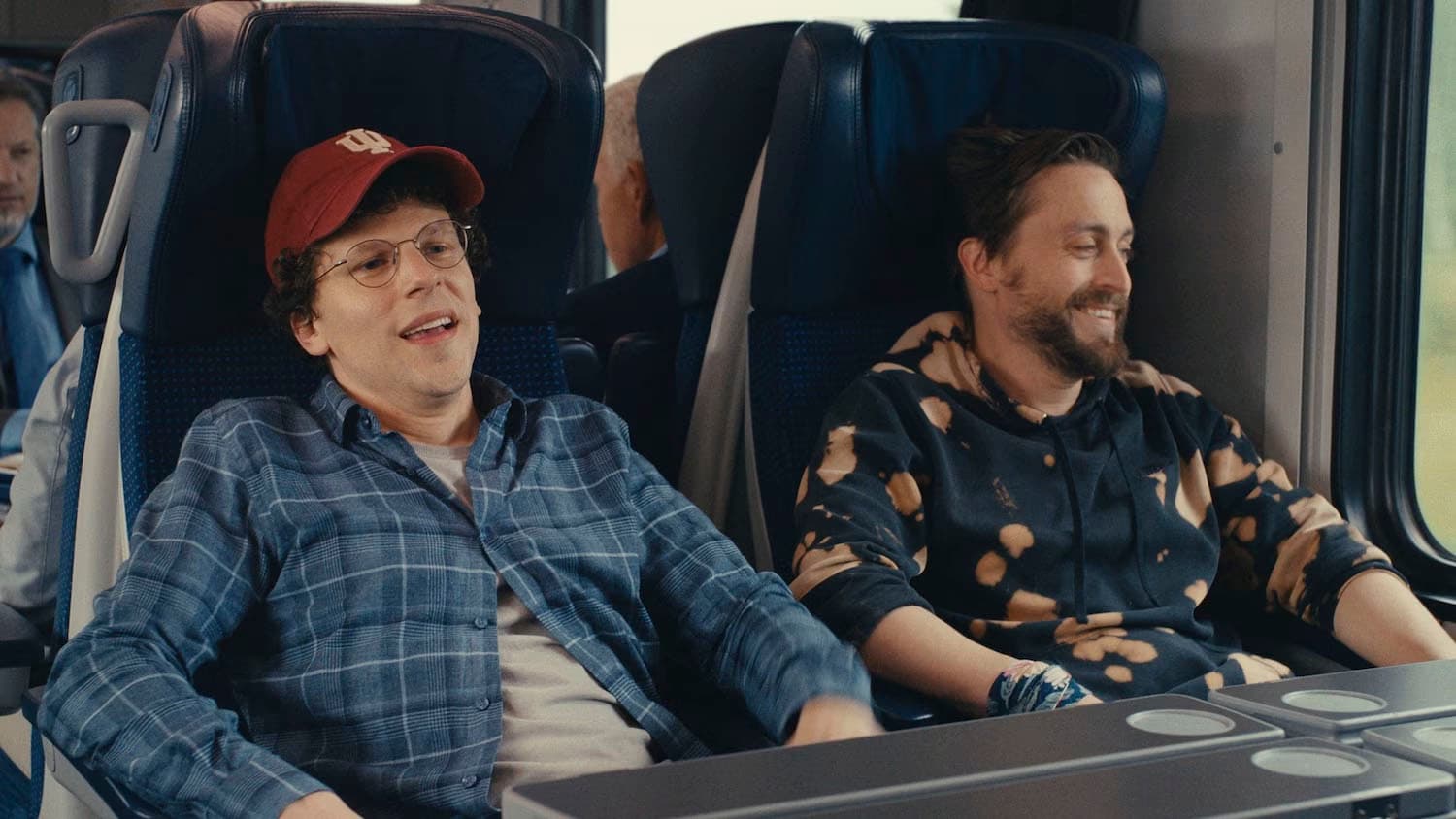
If you’ve seen A Real Pain, you’ll remember the train scene, with Benji's emotional outburst declaring that Jews shouldn’t be in first class, when a couple of generations ago, we would have been herded to the back like cattle.
I had a similar thought as I hurtled through the beautiful, green countryside, in a semi-private cabin shared with an adorable blonde, blue eyed baby named Teodor, and his doting mother, who chatted with me the entire ride. I felt conflicted knowing that had we met 78 years prior, this woman would have likely turned me over to the authorities.
One of the most interesting aspects of A Real Pain is its awareness of the relationship between modern day Poland and the Holocaust.


Comments2
Helen Forgasz30 November at 05:34 am
Perhaps it’s a generational thing, but I cannot agree with Paris Enten’s review of this film.
I thought it was a terrible film, trivialising the experience of a survivor’s descendants’ visit to Poland. The visit, in my view, was incidental to an attempt (by the late grandmother who funded the visit) to repair a dysfunctional relationship between the cousins who had both clearly drifted from their Jewish heritage and roots.
The irreverence of the characters and their knee-jerk reactions to the places in which Jews (and some Poles) experienced horrors beyond human comprehension were jarring. They then returned to the USA apparently unmoved by their experiences and seemlessly resumed their dysfunctional lifestyles.
I also cannot agree with Paris Elton’s summary of the actions in Poland to remember the Jewish history of the country. There was a scene outside the Polin museum, but nothing about it and the amazing efforts there to represent the history of Poland’s relationships with Jews over the centuries.
Is Paris aware of the work of the Forum for Dialogue? In Bialystok, where my surviving parents were brought up, the work of The Place in educating people of that city of the rich tapestry of Jewish life there over centuries is outstanding.
I also suggest fact-checking the story about the shoes and other items on display at Majdanek. While it’s hard to explain why the Polish tour guide said that the items were fakes and replaced regularly, I cannot see how this would even be achievable (economically or physically). I found the memorial (and artefacts) at Majdanek sensitively presented and very moving (as was that Treblinka). My father was a Jewish member of the Soviet army that liberated Majdanek – being there sent shivers through me as I reflected on what he told me they found there.
In summary, I think the film was not about the realities of the Holocaust, it was not about Poland’s current views of its Jewish past, but simply an American story of dysfunctional people who happened to be Jewish and how trivial their common horrific historical background was in trying to repair the relationship.
Ian Light27 November at 11:37 pm
After the Six Day War there were Poles that said :How did the Jews do it – fighter pilots ,tankists , paratroopers, courageous infantry .
Often thought if there were Jewish Colonels in the Polish Army in 1938 they would have demanded Hurricanes aircraft and Tanks and mobile warfare and blocked the Nazi Blitzreig