Published: 2 July 2021
Last updated: 4 March 2024
COLIN SHINDLER: With Raisi’s election, the prospect for a denuclearised Iran, that does not pose a threat to Israel, seems to be vanishing fast
LAST MONTH, the hardliner Ebrahim Raisi was elected president of Iran on a very low turnout of voters. He had easily been defeated in 2017 by the outgoing President Hassan Rouhani who, like Akbar Hashemi Rafsanjani and Mohammad Khatami before him, had hoped to move the Islamic Republic in a more pragmatic direction.
In contrast, Raisi epitomised the views of the die-hard conservatives around the aged Supreme Leader, Ali Khameinei. Raisi made his views clear on Israel when he went to southern Lebanon in 2016 and visited Hezbollah's military positions near the border. He commented: “The Zionist regime, because of its terrorist nature, strongly felt that ISIS should be established as a second centre of state terrorism in the region. The resistance front neutralised this plot promptly — and God willing, the first centre of terrorism will suffer the same fate.”
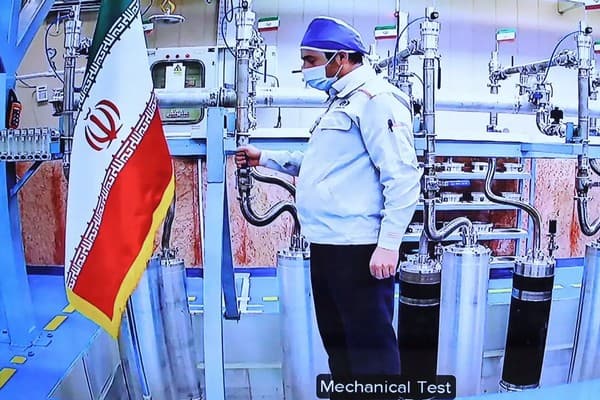
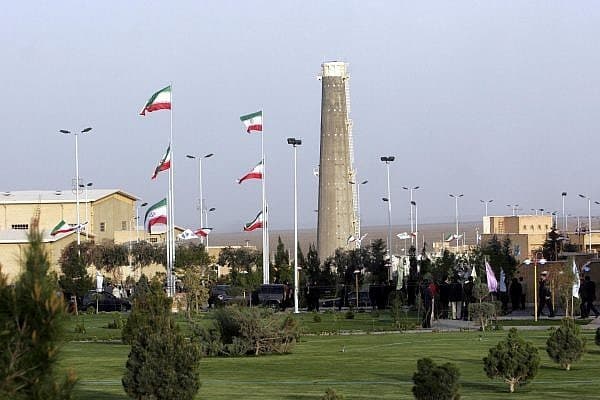
Last week, a drone attacked the Karaj Agricultural and Medical Division Centre near Tehran which is linked to the Iranian Atomic Energy Authority. Its mission was probably to destroy as many centrifuges as possible in the Centre, which could be used to enrich uranium isotopes beyond the 3.67% limit and open up the possibility of building a military nuclear device.
This attack followed the news that Russia was willing to sell Iran a Kanopus V satellite carrying a high-resolution camera which would enable the monitoring of Israeli military sites.
All this and Raisi's gerrymandered election relates to the undeclared war between Israel and Iran which has been taking place for the last 30 years — ever since the end of the long conflict between the Islamic Republic and Saddam Hussein's Iraq in 1988. It was also the end of a period of quiet cooperation between the Ayatollahs’ Iran and the state of Israel.
In 1980, Menahem Begin and Ariel Sharon believed that Saddam's military forces were the greater threat to Israel — and thereby clandestinely supplied Tehran with arms. The Iraqi army was several times bigger than Israel's and it seemed poised to take over Iranian oil reserves. Indeed, Israel's attack on the Osirak nuclear reactor near Baghdad in 1981 was said to have been carried out with the assistance of Iranian intelligence.