Aa
  • Read, Watch, Listen
  • TJI Series
  • Community Action
  • Events
  • Zedi
Follow us and continue the conversation
  • LinkedIn
  • Instagram
  • FaceBook
  • X
  • YouTube
Test yourself with the TJI Quiz!

Adjust size of text

Aa

Follow us and continue the conversation

  • LinkedIn
  • Instagram
  • FaceBook
  • X
  • YouTube

Your saved articles

You haven't saved any articles

What are you looking for?

Original reporting, insightful analysis and diverse views, delivered straight to your inbox

  • LinkedIn
  • Instagram
  • FaceBook
  • X
  • YouTube
Your support fuels our mission to inform, entertain and inspire.

The Jewish Independent is bound by the Standards of Practice of the Australian Press Council. If you believe the Standards may have been breached, you may approach The Jewish Independent or make a complaint to the Australian Press Council in writing at www.presscouncil.org.au. The Council may also be contacted on 1800 025 712.

  • Our Story
  • Contact us
  • Our Team
  • Support us
  • Guidelines
  • Pitch your idea
  • Republishing us
  • Community Action
  • Our Awards
  • LinkedIn
  • Instagram
  • FaceBook
  • X
  • YouTube
Aboriginal FlagTorres Strait Islanders Flag

The Jewish Independent acknowledges Aboriginal and Torres Strait Islander peoples as the Traditional Owners and Custodians of Country throughout Australia. We pay our respects to Elders past and present, and strive to honour their rich history of storytelling in our work and mission.

© The Jewish Independent 2026All Rights Reserved
Website design and development by Your Creative, MelbourneTerms & ConditionsPrivacy Policy
HomeRead, Watch, ListenIsrael
Israel Votes 2026ExplainerIsrael

Your Israel election cheat sheet

Deborah Stone
Print this
Israel election

(Getty Images)

Published: 22 October 2026

Last updated: 22 October 2026

Why is this election so important?

This election is being described by many opposition figures as the most consequential in the country’s 78-year history. At stake, critics argue, is the character of the state itself.

They fear that another victory for the right-wing and religious parties led by Benjamin Netanyahu would clear the way for fundamental changes to Israel’s system of government. These could weaken the judiciary and other institutional checks, alter the relationship between religion and state, entrench unequal public funding and deepen the divide between Jewish and Arab citizens.

The election will also determine whether Israel continues to organise itself around the expectation of perpetual war, what Netanyahu has called becoming a “super-Sparta”, or attempts to restore some form of political, economic and social normality.

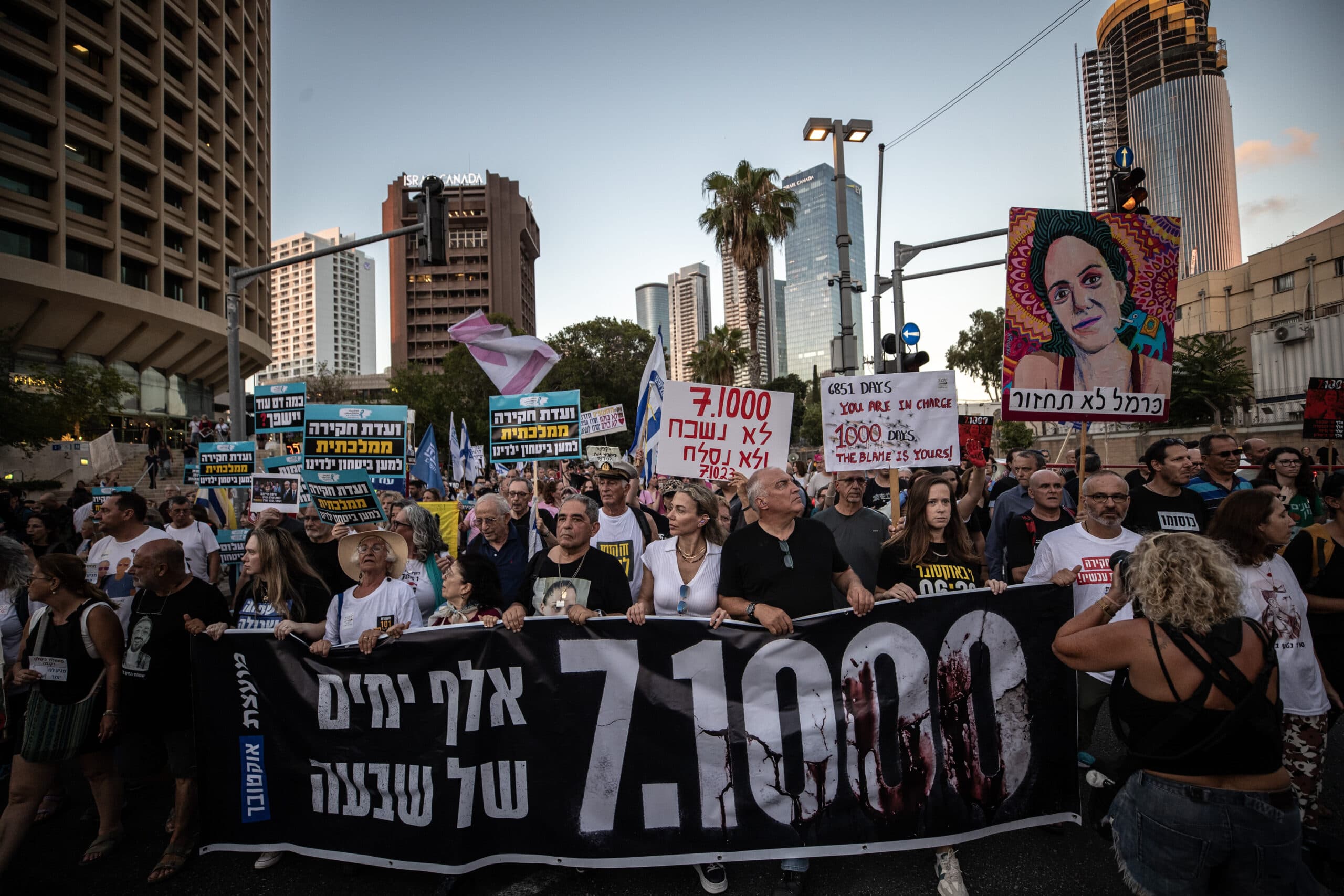
Other disputes feed into this wider choice: the future of Haredi military exemptions, accountability for the October 7 attack, the role of the IDF as a people’s army and the growing burden placed on reservists and their families.

The election, however, is unlikely to change much for Palestinians. While another government may improve handling of extremist violence, no major candidate is proposing a significant change in Israel's policy on security or a Palestinian state.

READ MORE: Israel’s pivotal election: A referendum on the nation’s future identity
What are the parties and where do they stand?

There are 38 candidate lists, but they solidify into five major political blocs:

  • Right: Likud (status quo, led by Benjamin Netanyahu; Amcha Yisrael (militaristic, Ofer Winter); Otzma Yehudit (religious Zionist, Itamar Ben-Gvir); Religious Zionism (religious Zionist, Bezalel Smotrich) 
  • Centre: Yashar (security, democratic values, Gadi Eisenkot), B’Yachad (anti-Netanyahu, Naftali Bennett), Blue and White (national unity, Benny Gantz), Yisrael Beiteinu (security, anti-religious, Avigdor Lieberman), Economic Party – Reservists (universal service, Yoaz Hendel)
  • Left: Democrats (judicial independence, Palestinian diplomacy, Yair Golan)
  • Religious: Shas (Mizrahi, Aryeh Deri), United Torah Judaism (Ashkenazi, Yitzhak Goldknopf); Noam (traditional values, Avi Maoz)
  • Arab: Joint List (Palestinian statehood, Yousef Jabareen); Ra’am (Islamist, Mansour Abbas).

READ MORE: Israel election explainer: the main parties

Who are the possible prime ministers?

The most likely candidates are Benjamin Netanyahu, current prime minister and Gadi Eisenkot, a former IDF chief of staff who leads the newly established party Yashar, meaning “straight”. Their backgrounds could not be more different.

Netanyahu’s is Israel’s longest-serving PM. He has governed, with one interruption, for almost two decades. He is from the traditional Ashkenazi elite, a professional politician adept at coalition negotiations and strategic pressure. Although he faces greater challenges than ever before, after democracy protests and the security failures of October 7, there is a saying in Israel: “Never bet against Bibi”.

Eisenkot is a political newbie but has high credibility for his service as IDF chief and has developed a strong following. From a Moroccan background, he would become Israel’s first Mizrahi prime minister. He is committed to restoring faith in Israel’s democracy but would also be strong on security and would not change policy on Palestinian issues.

A possible third option is Naftali Bennett, a potential compromise who is less theatrical than Netanyahu, less extreme than the settler right and more politically experienced than Eisenkot. There is an outside chance he could come through the middle to land the top job.
 
READ MORE:
How Netanyahu can stay in power without winning
Gadi Eisenkot: the opponent most likely to beat Netanyahu
Bennett’s balancing act: can he win over the right without losing the centre?‘Moroccan monkey’: Israel’s ethnic divide still shapes its elections

What are the likely outcomes?

It is highly unlikely October 27 will deliver a clear outcome. Every Israeli government has been a coalition, but this time the parties are extraordinarily close, and a stalemate is expected.

It is probable that no leader will be able to form a coalition simply by relying on ideological allies, in which case there are three options:

  • A coalition which includes the Arab parties
  • A national unity government, bringing together parties from opposite sides of the divide
  • Another election.

READ MORE:
There are three likely outcomes in Israel's election. None are simple
Stalemate likely in Israel’s election
Israel does not need another unity government. We need the courage to face our lack of unity

What are the wild cards?

Voting is not compulsory in Israel, and turnout rises and falls from one election to the next. It also varies sharply between communities. Jewish Israeli voters average around 68 per cent; the ultra-Orthodox (Haredi) turn out in much higher numbers, and Arab voters in much lower ones. Fear of a Netanyahu victory may drive a surge in Palestinian voter turnout; on the other hand, first-time voters are tending to the right and may play a decisive role.

READ MORE
Young Arab voters reject electoral system that’s failing them
Fear of Netanyahu victory may drive big surge in Palestinian voter turnout
Security fears and incitement drive young voters toward far-right

What happens after election day?

After the results are confirmed, the president will consult representatives of every elected faction. Each faction will recommend a Knesset member to form the government.

The president will then select the member he considers most likely to succeed in forming a coalition. This is usually the leader of the largest party or bloc, but not necessarily. What matters is the ability to assemble sufficient parliamentary support.

The leverage of small parties becomes essential at this point: a party holding only four seats may determine whether a prospective prime minister reaches the necessary 61 seats in the 120-member Knesset.

The designated candidate initially receives 28 days to negotiate, with a possible extension of up to 14 days. If the attempt fails, the president may give another member an opportunity.

If no one can form a coalition, another election becomes unavoidable.

READ MORE: Understanding Israel’s electoral system and the power of small parties

You might also like
  • ‘Moroccan monkey’: Israel’s ethnic divide still shapes its elections
    Shahar Burla
  • Israel does not need another unity government. We need the courage to face our lack of unity
    Eetta Prince-Gibson
  • Do Israelis care that Trump has endorsed Netanyahu?
    Ruth Eglash
logomark.67a07ee3
We believe in the free flow of information

Republish our articles for free, online or in print, by using our Creative Commons licence

You might also like

    shahar nevo east jerusalem
    AnalysisIsrael

    Terror plot to kill hundreds of Arab Israelis thwarted

    Ben Lynfield
    Protest held in Israel against Prime Minister Netanyahu and Israeli government
    Israel Votes 2026AnalysisIsrael

    How two divergent views of Oct 7 could shape Israel’s election

    Dan Perry
    Diaspora election
    Israel Votes 2026OpinionIsrael

    Diaspora Jews can’t vote, but Israel’s election result will affect them

    Vanina Vaisman-Levy 1

About the author

Deborah Stone

Deborah Stone

Deborah Stone is Editor-in-Chief of TJI. She has more than 30 years experience as a journalist and editor, including as a reporter and feature writer on The Age and The Sunday Age, as Editor of the Australian Jewish News and as Editor of ArtsHub.

More from the author

NewsAustralia

Alleged Helen Haines attacker wrote anti-Israel, pro-Iran posts

NewsWorld

Traditional antisemitic myths dominate online antisemitism: new study

NewsAustralia

Sydney Uni commissions independent review after ‘Globalise the Intifada’ campaign

NewsArts & Culture

Jerusalemites photos cancelled by Indian Festival