How Netanyahu can stay in power without winning
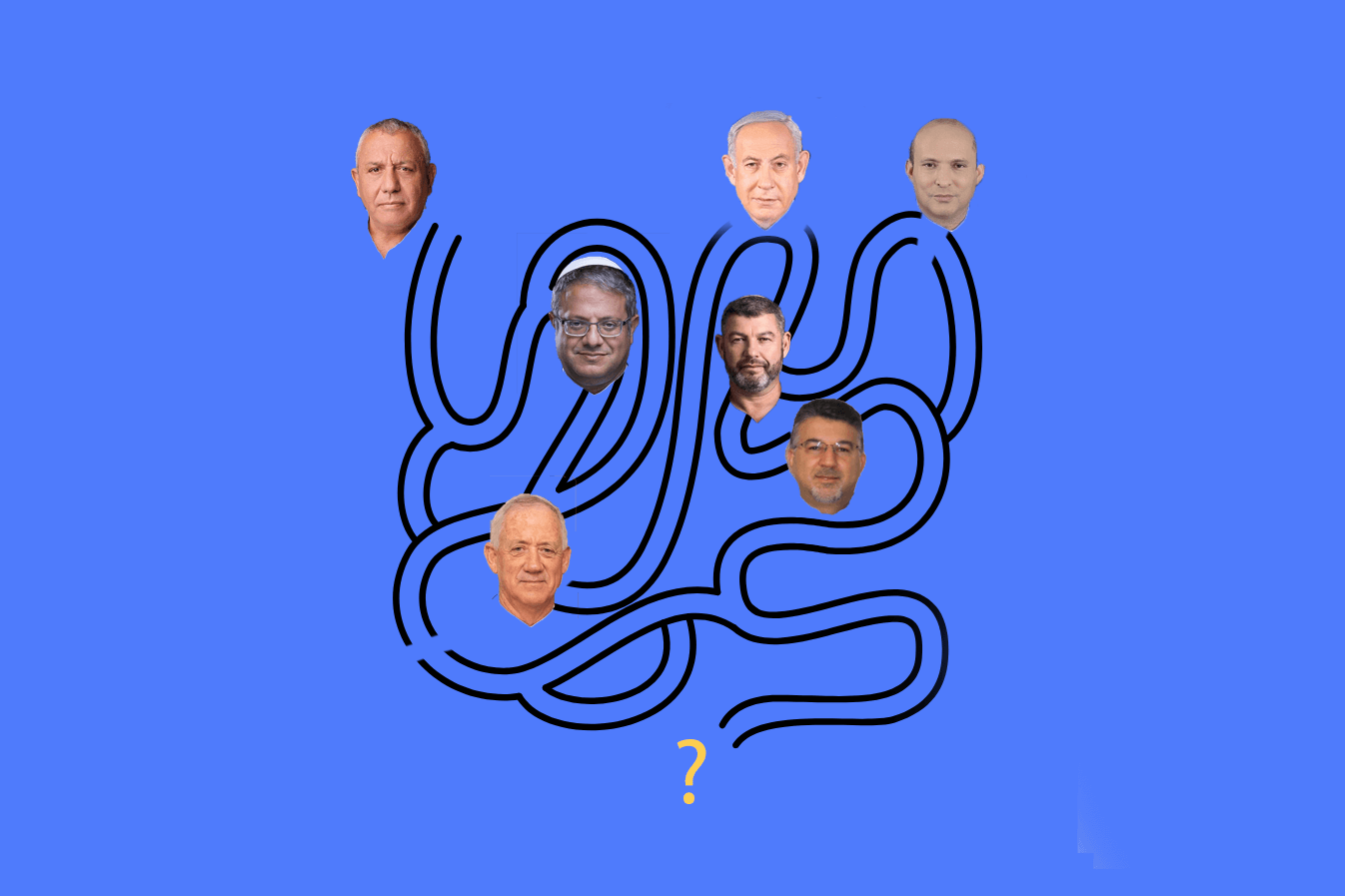
Netanyahu can retain power without winning a majority if he prevents the opposition from forming a coalition, pushing Israel back into political deadlock and potentially another cycle of elections
Shahar Burla
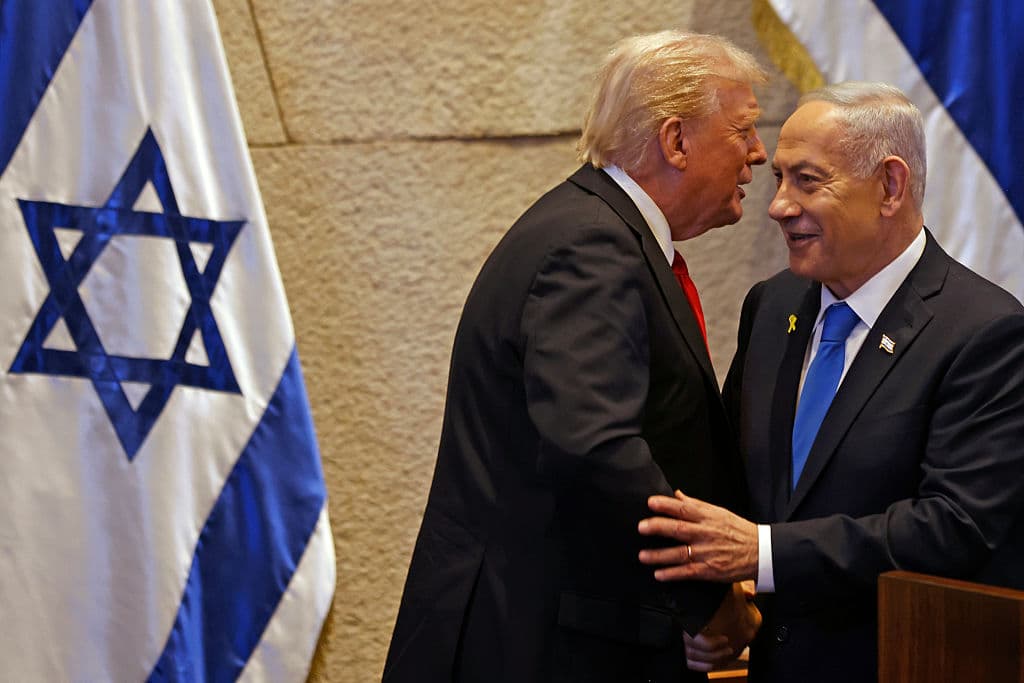
Israeli Prime Minister Benjamin Netanyahu (L) greets National Security Minister Itamar Ben-Gvir in 2023 (GIL COHEN-MAGEN/AFP via Getty Images)
Published: 29 July 2026
Last updated: 29 July 2026
Prime Minister Benjamin Netanyahu enters the campaign for Israel's first election since the Hamas attack of October 7, 2023, weakened, but far from defeated.
Israel’s longest-serving PM has governed, with one interruption, for almost two decades. He now faces voters on October 27, after three years of war, deepening international isolation and fierce domestic disputes over military conscription, the judiciary, the media and his responsibility for the October 7 failure.
Netanyahu’s right-wing–ultra-Orthodox coalition has consistently failed to secure a majority in opinion polls since the attack. Yet this does not mean the opposition can easily replace him.
The critical figure for Netanyahu is not necessarily the number of seats his bloc wins. It is whether the parties committed to replacing him can reach the 61 seats required for a Knesset majority without relying on the Arab parties.
If neither bloc can form a coalition, Israel could return to the political paralysis of 2019-22. Four elections were held between April 2019 and March 2021, followed by a fifth in November 2022. Netanyahu remained prime minister through most of that period, including as the head of caretaker and rotation governments.
For Netanyahu, another inconclusive election could therefore represent a political victory. His campaign will seek to maximise his own bloc, prevent the anti-Netanyahu parties from reaching 61 seats independently, delegitimise cooperation with Arab parties and use the power of incumbency to dominate the national agenda.
How will Netanyahu maximise every right-wing vote?
Netanyahu’s first task is to ensure that almost no votes within the right-wing–ultra-Orthodox bloc are wasted. The bloc includes Itamar Ben-Gvir’s Otzma Yehudit, Bezalel Smotrich’s Religious Zionist Party and the two ultra-Orthodox parties.
Israel’s electoral threshold means that votes cast for a party that fails to secure at least 3.25 per cent of the national vote are effectively discarded. In a close election, even one allied party falling below the threshold could determine which bloc can form government.
Netanyahu has repeatedly demonstrated his ability to broker, and sometimes force, alliances between smaller right-wing parties. Ahead of previous elections, he intervened to persuade ideological rivals to run together, preventing their votes from being lost. Before the 2022 election, Netanyahu pressured Smotrich and Ben-Gvir to contest the election on a joint list, partly out of concern that Ben-Gvir’s party might fail to cross the threshold. They ran together as a “technical bloc” before separating into two parties after the election.
The opposition has not always been as disciplined. In the 2022 election, approximately 330,000 votes were cast for the left-wing Meretz and Arab nationalist Balad parties, neither of which crossed the threshold. Had those votes translated into seats, the parliamentary balance would have been considerably closer than Netanyahu’s eventual 64-56 majority.
If neither bloc can form a coalition, Israel could return to the political paralysis of 2019-22
Netanyahu will again pressure the parties in his bloc to merge or coordinate their campaigns. He may also encourage candidates representing smaller communities to join established party lists, so that right-wing voters do not feel unrepresented.
At the same time, Likud will look for opportunities to divide the opposition. New parties presenting themselves as pragmatic right-wing alternatives could attract voters opposed to Netanyahu before becoming potential coalition partners, or simply fail to cross the threshold and waste opposition votes.
Why are the Arab parties central to his strategy?
If the results broadly reflect current polling, the anti-Netanyahu parties may need the support of at least one Arab party to form government.
Mansour Abbas’s Islamist Ra’am party entered Naftali Bennett and Yair Lapid’s coalition in 2021, becoming the first independent Arab party to join an Israeli government. Abbas has indicated that he would again consider supporting or joining a coalition.
Netanyahu’s strategy is to make any such partnership politically toxic, particularly among the opposition’s soft-right voters. His message will be that leaders such as Gadi Eisenkot and Bennett cannot establish a government without being “dependent on the Arabs”.
A recent AI-generated Likud campaign video demonstrated this approach. It showed Eisenkot running towards a young man wearing a shirt bearing the words “Israeli unity”, only to turn away and embrace Abbas. Critics said the young man resembled Eisenkot’s son Gal, who was killed fighting in Gaza. Likud denied that interpretation, but the political message was unmistakable: a vote for Eisenkot would ultimately empower Abbas.
As the election approaches, Likud is likely to intensify attempts to associate every major opposition leader with the Arab parties.
Could another war reshape the campaign?
War and national emergencies can narrow the political debate, push social and economic questions aside and make it more difficult for opposition parties to criticise the government.
Netanyahu did not receive a lasting poll boost from the campaigns against Hezbollah or Iran. Nevertheless, a renewed confrontation could allow him to dominate the news agenda and campaign as an experienced wartime leader, rather than as the prime minister responsible for the October 7 failure.
An escalation in Gaza or the West Bank would be particularly politically significant. It could also place Abbas under pressure to condemn Israeli military actions, helping Netanyahu portray an opposition coalition involving Ra’am as unreliable during a security crisis.
How will Netanyahu bypass critical media?
Netanyahu rarely grants interviews to Israel’s major Hebrew-language television news programs, where he would face sustained questioning about October 7, the war and his corruption trial.
Instead, he increasingly communicates through sympathetic television channels, social media, Telegram groups and popular podcasts. These formats provide direct access to voters while allowing him greater control over the questions, setting and message.
This parallel media environment enables Netanyahu to present his own account of events repeatedly, sometimes daily, without relying on traditional journalistic gatekeepers. It will be one of his most important campaign tools.
Is Likud preparing to challenge the result?
Likud representatives have already attacked decisions by the Central Elections Committee, chaired by Supreme Court Deputy President Noam Sohlberg. Sohlberg rejected one Likud challenge in March and again this week, as baseless.
Meanwhile, a Netanyahu-aligned media outlet (Channel 14) circulates polls showing his bloc with a stable majority, in contrast to all established polling organisations.
These efforts do not prove that Netanyahu intends to reject the election result. However, they could create grounds for challenging the process if the result is narrow, while reinforcing distrust of the judiciary and institutions overseeing the election.
What would constitute victory for Netanyahu?
Netanyahu’s ideal outcome remains a 61-seat majority for the right-wing–ultra-Orthodox bloc. Current polling suggests that will be difficult.
His more attainable objective is to prevent anyone else from reaching 61. If the anti-Netanyahu parties require Arab-party support, Likud can pressure their right-wing members to reject the arrangement. If no coalition emerges, Netanyahu could remain in office as caretaker prime minister while negotiations continue or another election is called.
Israel’s experience from 2019-22 demonstrated that repeated elections do not necessarily dislodge an incumbent. Netanyahu survived several inconclusive contests before eventually returning with a clear majority.
That is why he does not need to win the election in the conventional sense. He needs to maximise his bloc, fragment the opposition, delegitimise its potential Arab partners and ensure that no alternative government can be formed. For Netanyahu, deadlock may be enough.
About the author
Dr Shahar Burla is a Sydney-based researcher, lecturer and Contributing Editor of TJI. Shahar holds a Master’s degree in political science from Hebrew University and a PhD in political science from Bar-Ilan University. He is the author of Political Imagination in the Diaspora: The Construction of a Pro-Israeli Narrative (2013) and co-editor of Australia and Israel: A Diasporic, Cultural and Political Relationship (2015).