Aa
  • Read, Watch, Listen
  • TJI Series
  • Community Action
  • Events
  • Zedi
Follow us and continue the conversation
  • LinkedIn
  • Instagram
  • FaceBook
  • X
  • YouTube
Test yourself with the TJI Quiz!

Adjust size of text

Aa

Follow us and continue the conversation

  • LinkedIn
  • Instagram
  • FaceBook
  • X
  • YouTube

Your saved articles

You haven't saved any articles

What are you looking for?

Original reporting, insightful analysis and diverse views, delivered straight to your inbox

  • LinkedIn
  • Instagram
  • FaceBook
  • X
  • YouTube
Your support fuels our mission to inform, entertain and inspire.

The Jewish Independent is bound by the Standards of Practice of the Australian Press Council. If you believe the Standards may have been breached, you may approach The Jewish Independent or make a complaint to the Australian Press Council in writing at www.presscouncil.org.au. The Council may also be contacted on 1800 025 712.

  • Our Story
  • Contact us
  • Our Team
  • Support us
  • Guidelines
  • Pitch your idea
  • Republishing us
  • Community Action
  • Our Awards
  • LinkedIn
  • Instagram
  • FaceBook
  • X
  • YouTube
Aboriginal FlagTorres Strait Islanders Flag

The Jewish Independent acknowledges Aboriginal and Torres Strait Islander peoples as the Traditional Owners and Custodians of Country throughout Australia. We pay our respects to Elders past and present, and strive to honour their rich history of storytelling in our work and mission.

© The Jewish Independent 2026All Rights Reserved
Website design and development by Your Creative, MelbourneTerms & ConditionsPrivacy Policy
HomeRead, Watch, ListenIsrael
Israel Votes 2026AnalysisIsrael

Israel does not need another unity government. We need the courage to face our lack of unity

President Herzog is pushing Israelis towards a unity government. It sounds healing but it would fail
Eetta Prince-Gibson
Print this
Netanyahu Eisenkot dubious

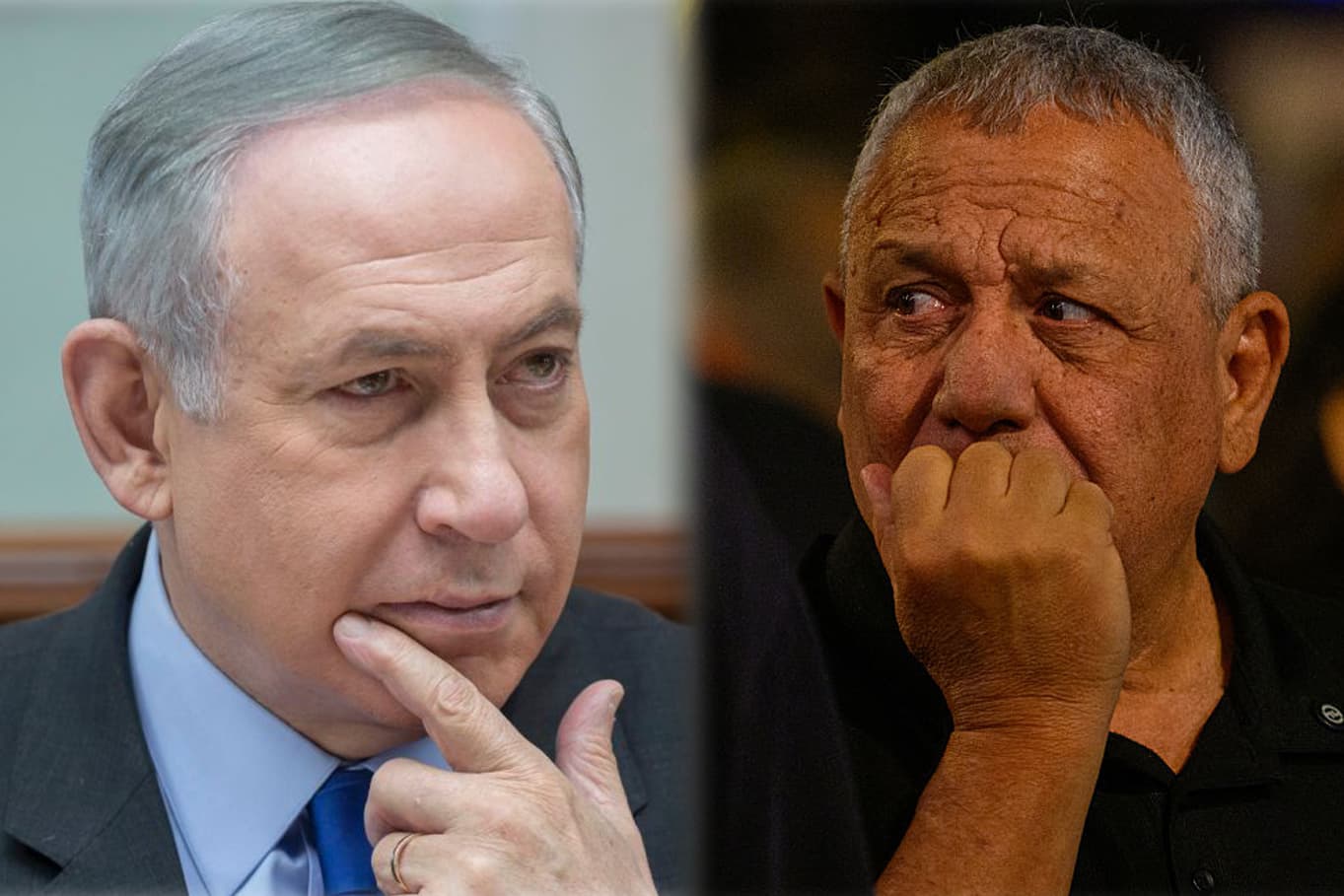
Could Benjamin Netanyahu (left) and Gadi Eisenkot work together in a unity Government? (Getty Images/ TJI compilation)

Published: 20 October 2026

Last updated: 20 October 2026

President Isaac Herzog has promised that even if the results of the October 27 elections are inconclusive, he will do everything in his power to ensure the establishment of a stable government and that Israelis will not go back to the polls.

The President’s office has denied that this would necessarily mean a unity coalition between Benjamin Netanyahu and opposition leader Gadi Eisenkot, but the president has the power to push for this outcome – and it is one of the most likely scenarios.

The President has told us the country is too fragile for another election and we must put our differences aside. Otherwise, our society will collapse.

The idea is tempting. A unity government could bring calm to our angry society and quiet to our public spaces. Maybe it could be a balm for our scorched skin, a salve for our wounds, a surgical glue to bring us together. 

A government based on phony unity would blur responsibility and accountability when they are needed most

The president’s declaration is a reminder of what we can be when we are at our best. When, after the traumatic events of October 7, the same Israelis who, just days earlier, had stood on opposite sides of bitter divides, were able to mobilise and work together without ever asking the person standing beside them whom they had voted for.

Indeed, for brief moments, we confronted catastrophe together. The unity created by the thousands of actions by individual and civil society groups was real, but it was neither durable nor sustainable. The divisions that preceded October 7 did not disappear.
Important differences

For many years, Israel has been, and remains, a deeply divided society, torn by acrid dissension over the kind of state we want to live in and virulent disagreement regarding our fundamental guiding values.

Do we want to live in a state that perpetuates its violent military rule over a stateless, rightless people?  A state where members of the government praise the Jewish terrorists who attack journalists?  Where crony capitalism, corruption and sectoral racketeering have degraded state institutions so that they no longer function? Do we want to live in a society governed by the rule of law that is applied equally to all? Do we wish to continue to be driven by rancour, bitterness and historical grievances, a modern-day Sparta, bound to live by the sacrificial sword forever? Or do we wish to be a peace-seeking nation and take our rightful place among the nations of the world?

Do we believe in human equality or should Jewish superiority guide our policies? Do we want the state to privilege religious authority over liberal, egalitarian principles? Should we be a social democracy that evaluates itself by how it treats its most vulnerable citizens or a majoritarian democracy that ignores the rights of minorities and the weak?

Different segments of our society would give different answers to these questions. These divisions are not about political rivalries, and they will not be resolved by a photo-op of powerful men shaking hands. Throwing a fire blanket over the flames of dissension will not quench the fire; it will only make our situation worse. Israeli leaders already deny their responsibilities and avoid accountability, and a government based on phony unity would blur responsibility and accountability when they are needed most. After all, if everyone is equally responsible, then no one is truly responsible. If everyone shares power, no one can be blamed for failure.

Learning from the past

Israel has had several attempts at unity government: most have failed miserably.

Most recently, the government formed by Naftali Bennett and Yair Lapid (2020-2021) – although not technically a unity government – attempted to straddle left, right, and centrist, as well as Jewish and Arab parties.

Because it was patching over serious political and ideological differences, it was reduced to the only – and lowest common denominator among the coalition members and was never able to produce a serious agenda. The coalition was able to attend to some domestic issues, but unable to ever discuss any of the real issues, domestic or diplomatic, ideological or pragmatic, that divided the country.

A government of this kind is inherently unstable, since each party, and any individual member of any constituent party, is a potential kingmaker or destroyer. And indeed, that government was brought down by relatively insignificant coalition members, who chose to bolt to parties where they believed they could wield more power, ostensibly over issues that were relatively unimportant to the public.

Israelis don’t want a unity government

A unity government fails the voters who chose to vote for one side or the other, hoping to change the direction the country is taking.

Indeed, in a survey commissioned by the newspaper Israel Hayom, conducted by the Kantar polling agency, a plurality of Israelis – 49 per cent – said that if the elections lead to a coalition-building stalemate, they would prefer a new vote to a unity government (less than one-third chose the latter, and the remainder did not know). An absolute majority of today's coalition supporters preferred new elections (54 per cent), and still just 34 per cent chose a unity government.

A plurality of Israelis knows what the president prefers to ignore: we cannot erase our conflicts and differences.

At this time, the best we can do is agree on very basic, even minimal principles: we must respect election results, minorities have rights, due process must be upheld, the rule of law must be applied equally, and elected officials must be held accountable for their decisions. Israeli society is so fragmented that even agreement on these ostensibly self-evident principles would be a democratic achievement. Most importantly, this agreement would enable us to keep our country governable as we pursue the arduous process of building institutions strong enough to contain our conflicts so that we can find a way to live together despite them.

No democracy can or should deny its differences, and most certainly not Israel as we face the trauma of October 7, the devastation in Gaza, the threats in our region and world isolation. But the pretence of a consensus will not help us to heal our wounds.

You might also like
  • Do Israelis care that Trump has endorsed Netanyahu?
    Ruth Eglash
  • Security fears and incitement drive young voters toward far-right
    Ben Lynfield
  • Israel now faces 138 sanctions across 63 countries
    Shahar Burla
logomark.67a07ee3
We believe in the free flow of information

Republish our articles for free, online or in print, by using our Creative Commons licence

You might also like

    Gaza after street map
    Israel Hamas WarFeatureIsrael

    One year after the ceasefire, Gaza remains in ruins with no solution in sight

    Shahar Burla 2
    Israel election posters
    Israel Votes 2026ExplainerIsrael

    Stalemate likely in Israel’s election: latest polls

    Shahar Burla 1
    IOct 7 anniversary
    Israel Hamas WarEditorialIsrael

    Three years after Oct 7: an anniversary of reckoning

    The Jewish Independent 1

About the author

Eetta Prince-Gibson

Eetta Prince-Gibson, who lives in Jerusalem, was previously Editor-in-Chief of The Jerusalem Report, is the Israel Editor for Moment Magazine and a regular contributor to Haaretz, The Forward, PRI, and other Israeli and international publications.

More from the author

AnalysisIsrael

Segalovitz decision to join Arab party is a paradigm change for Israel

AnalysisIsrael

Netanyahu pre-election juggling act

AnalysisIsrael

Women disadvantaged by new powers for Israel’s religious courts

AnalysisArts & Culture

The Sea: deserving award-winning film or one-sided disgrace?