Published: 27 August 2026
Last updated: 27 August 2026
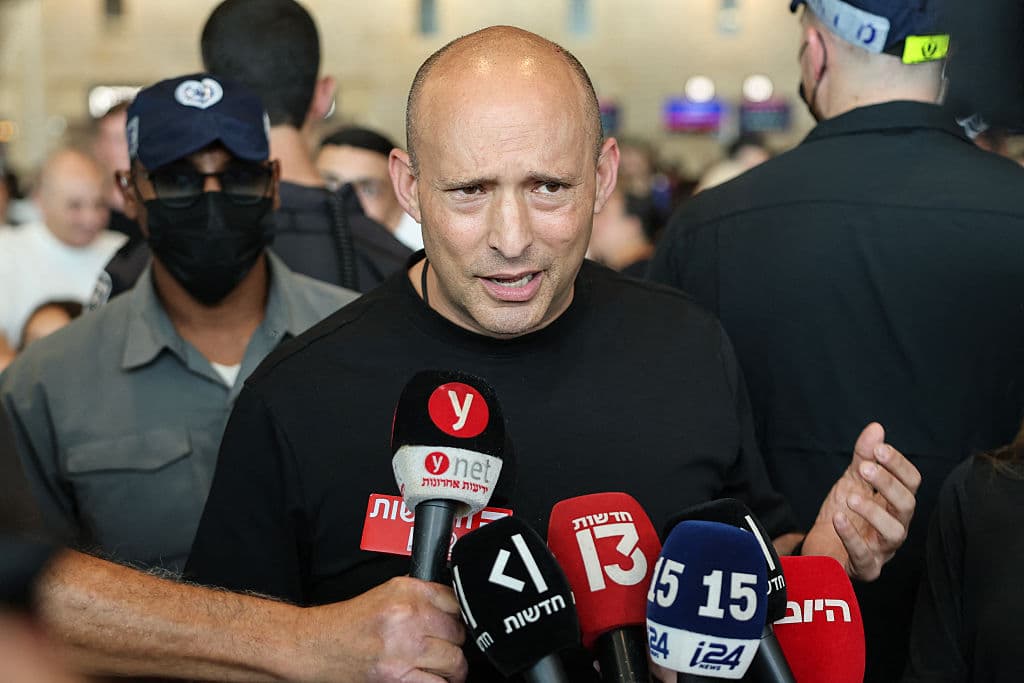
In recent weeks, former Israeli prime minister Naftali Bennett has adopted the jeans-and-black-T-shirt uniform of his high-tech past. The casual appearance is more than a response to the August heat. It is part of a campaign designed to portray Bennett as younger, more accessible and less establishment-minded than Prime Minister Benjamin Netanyahu.
But Bennett’s campaign is built around a much more complicated political balancing act. He is trying to approach disillusioned Netanyahu voters, listen to their criticism and persuade them that they can remain on the right without continuing to support Likud. At the same time, he must retain the centrist voters attracted to his partnership with Yair Lapid and his record leading the diverse “change government” between 2021 and 2022.
That strategy may make Bennett one of the most politically intriguing candidates in the election, but it also leaves him open to criticism from both directions. Some voters on the right still regard him as a traitor who used their votes to remove Netanyahu. Some on the centre-left, meanwhile, question whether his moderate tone conceals the same hard-right opposition to Palestinian statehood that has defined his political career.
Taking the campaign into Likud territory
Since Bennett’s new faction joined with Lapid’s Yesh Atid to form Together in April, the party has struggled to establish itself as the leading force in the anti-Netanyahu bloc. Recent polls have shown some improvement, but Together continues to trail Gadi Eisenkot’s Yashar party.