Aa
  • Read, Watch, Listen
  • TJI Series
  • Community Action
  • Events
  • Zedi
Follow us and continue the conversation
  • LinkedIn
  • Instagram
  • FaceBook
  • X
  • YouTube
Test yourself with the TJI Quiz!

Adjust size of text

Aa

Follow us and continue the conversation

  • LinkedIn
  • Instagram
  • FaceBook
  • X
  • YouTube

Your saved articles

You haven't saved any articles

What are you looking for?

Original reporting, insightful analysis and diverse views, delivered straight to your inbox

  • LinkedIn
  • Instagram
  • FaceBook
  • X
  • YouTube
Your support fuels our mission to inform, entertain and inspire.

The Jewish Independent is bound by the Standards of Practice of the Australian Press Council. If you believe the Standards may have been breached, you may approach The Jewish Independent or make a complaint to the Australian Press Council in writing at www.presscouncil.org.au. The Council may also be contacted on 1800 025 712.

  • Our Story
  • Contact us
  • Our Team
  • Support us
  • Guidelines
  • Pitch your idea
  • Republishing us
  • Community Action
  • Our Awards
  • LinkedIn
  • Instagram
  • FaceBook
  • X
  • YouTube
Aboriginal FlagTorres Strait Islanders Flag

The Jewish Independent acknowledges Aboriginal and Torres Strait Islander peoples as the Traditional Owners and Custodians of Country throughout Australia. We pay our respects to Elders past and present, and strive to honour their rich history of storytelling in our work and mission.

© The Jewish Independent 2026All Rights Reserved
Website design and development by Your Creative, MelbourneTerms & ConditionsPrivacy Policy
HomeRead, Watch, ListenLifestyle
FeatureLifestyle

Discovering my secret scandalous Jewish family history

A DNA test sparked a hunt for history that culminated with a headstone for my great-grandmother's unmarked grave.
Dashiel Lawrence
Print this
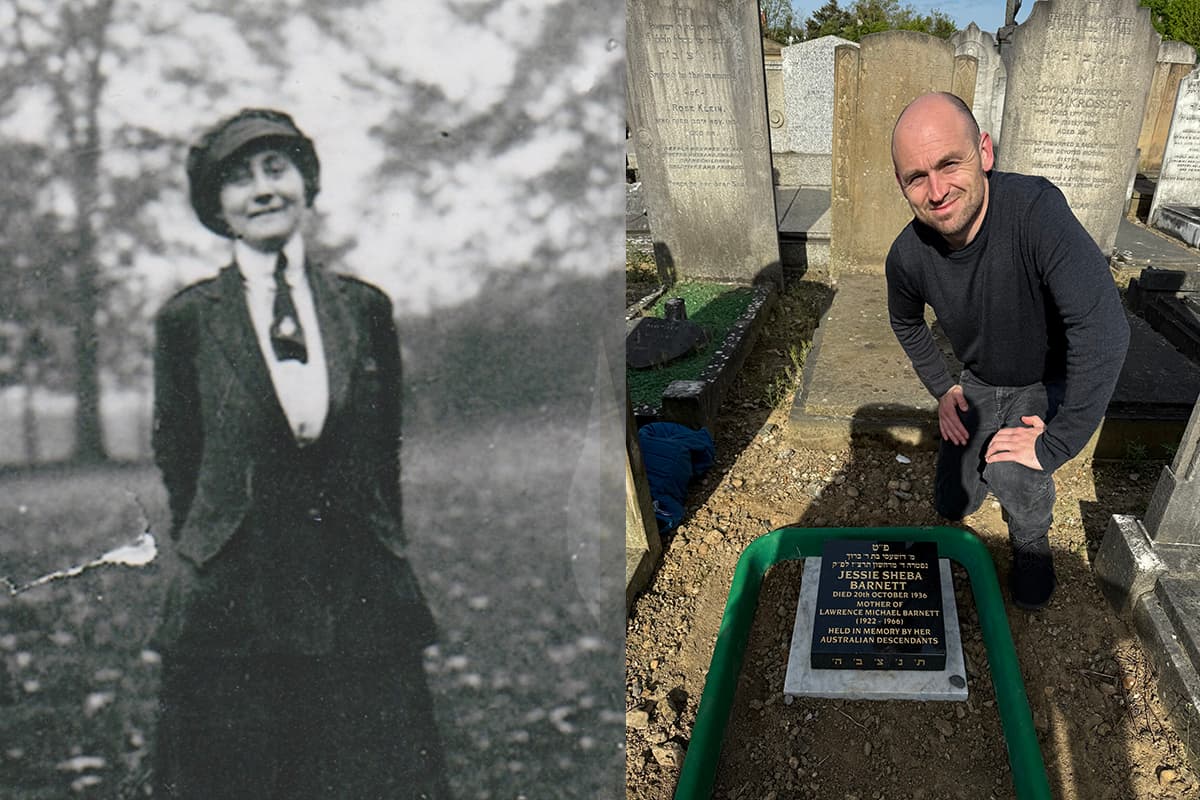
Dashiel Lawrence (right) with the headstone he had made for his great-grandmother Jessse Sheba Barnett (left)

Dashiel Lawrence (right) with the headstone he had made for his great-grandmother Jessie Sheba Barnett (left)

Published: 10 November 2025

Last updated: 11 November 2025

My maternal grandfather Laurence Michael Barnett spent the 1950s as a committed Communist Party member, who also happened to be secretly filing reports to ASIO about his comrades. 

I’ve recently discovered that wasn’t his only secret.  

The first clue to a different secret history came when my Uncle Stephen spat into a plastic tube. The DNA results made no sense: 29% Jewish ancestry in a family tree we traced back to Anglo-Saxons. My uncle stared at his laptop screen for a long time, then emailed me. 

"Either this thing is broken," he wrote, "or we've got the wrong family." 

We had the wrong family. Or rather, we'd been missing half of it. The missing link was the real identity of my grandfather’s mother Jessie Sheba Barnett. Uncovering who she was would unlock the mystery behind Laurence’s compartmentalised life – and reveal the secret he'd buried deepest of all. 

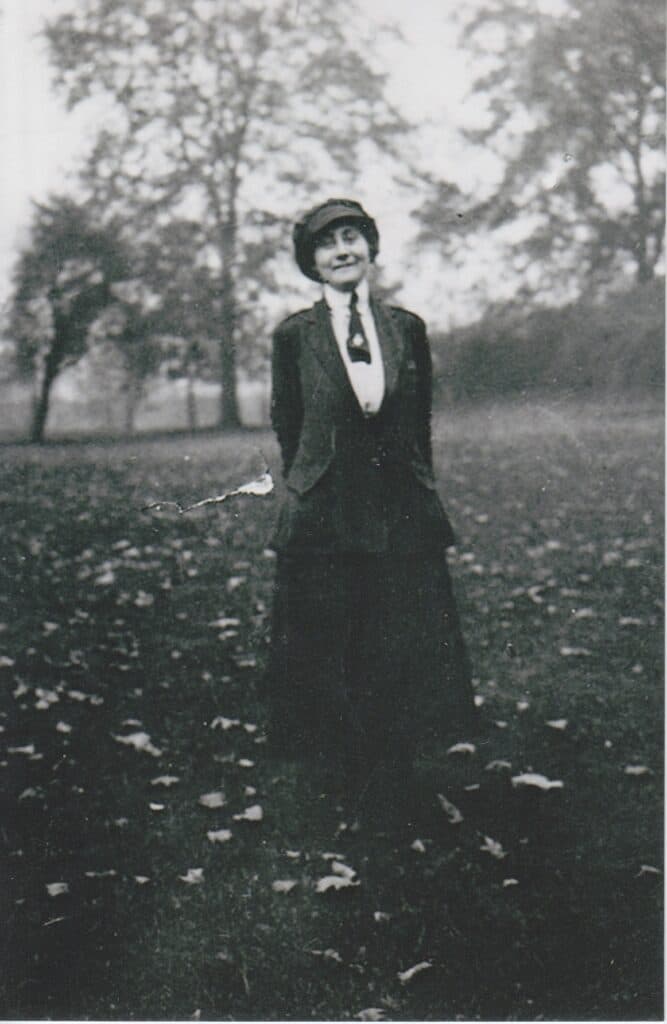
We had always wondered about Jessie Sheba Barnett, particularly her unusual middle name wedged between two common ones. We had photos of a dark-haired, dark-eyed young woman, but nothing else. 

After Stephen’s DNA discovery, we began tracing through records and databases, trading census and shipping registers from the early 20th century. What we found challenged everything we thought we knew about our family – uncovering our unknown Jewish connection and a century-old scandal. 

This Jewish woman, a Polish émigré via East London, worked as a 'hostess' alongside her Australian lover and his legitimate family   
We learned that sometime in the late 1890s, a poor Jewish family made their way from a shtetl in what is now Poland to London's East End. Their original surname name was Solker but in an effort to Anglicise themselves, it had been changed on multiple occasions: Solomons, Simons and finally, Barnett. 

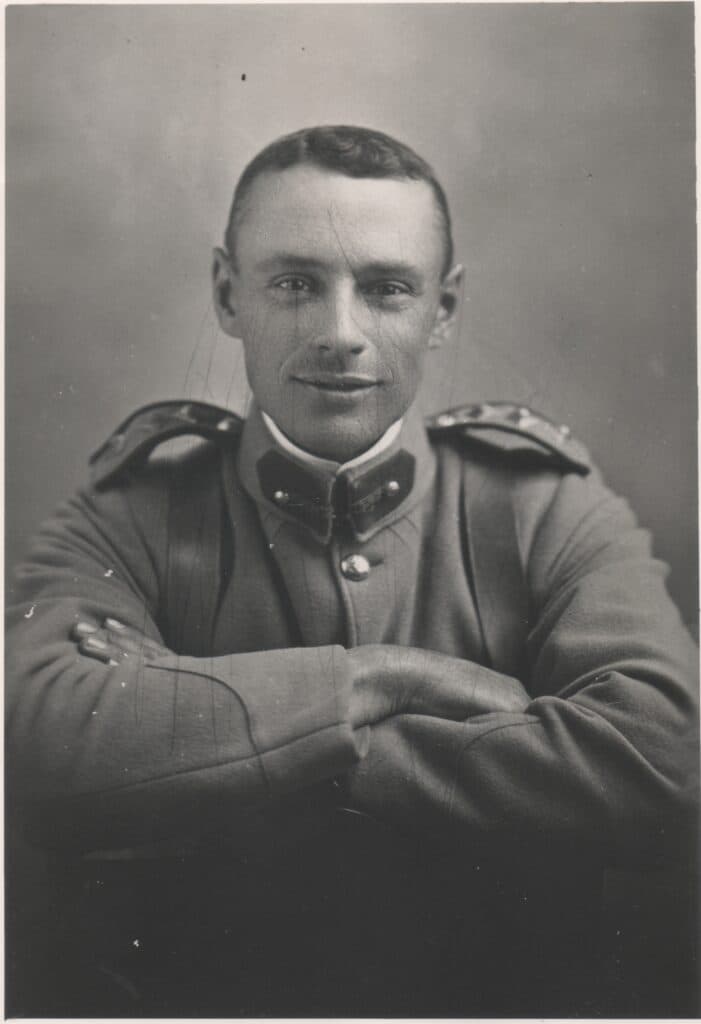
They had four children, the eldest my great-grandmother Jessie. She attended a Jewish day school in London before eventually joining the Red Cross during World War I. It was this work that would put her on a collision course with a charismatic but restless Australian Army officer named Major Mervyn Herbert. Though Herbert was married with two children back in South Australia, an affair ensued.

‘Strangers to the River’ 

In 1920, Herbert returned to Australia. Jessie followed later that year and fell pregnant shortly after arrival. My grandfather, Laurence Michael Barnett, was born. No father was listed on the birth certificate.  

Meanwhile Mervyn Herbert, like many Australian WWI veterans, established a subsidised farm through a soldier settlement scheme: Illalangi, a vineyard and distillery on the banks of the River Murray, near the village of Moorook in South Australia’s Riverland region.  

What happened next was extraordinary. This Jewish woman, a Polish émigré via East London, worked as a 'hostess' at Illalangi alongside her Australian lover and his legitimate family. An article from the Murray Pioneer of June 1933 records: "The hostess is Miss Jessie Barnett, who during the war was loaned by the British Government to the American Red Cross as a buyer on America's entry into the war, later being recognised for her services. Strangers to the River can always be assured of a hearty welcome at this progressive home." 

Remarkably this arrangement, likely scandalous and therefore hidden from public view, continued until 1936. Then, for reasons unknown, Jessie left Illalangi with Laurence and boarded a ship in Adelaide. It was a permanent return to London. 

Jessie Sheba Barnett working for the Red Cross during WWI
 Mervyn James Herbert was a decorated WWI Major, but a complex and difficult man
 Mervyn James Herbert was a decorated WWI Major, but a complex and difficult man
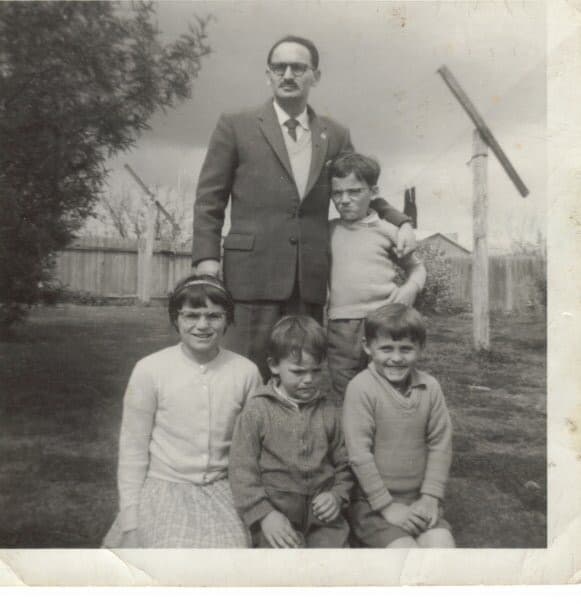
Laurence Barnett with four of his five children in the early 1960s

Upon arrival in Southampton, Jessie listed their address as 6 Grayling Road, Stoke Newington, a tenement flat in the heart of Orthodox North London where her sister Phyllis, a spinster, lived. The neighbourhood was lined with crowded tenements, filled with working-class families – predominantly Jews who, like Jessie, had made their way from Eastern Europe. It was a world away from the scorching heat and dust of rural South Australia.   

Tragically, Jessie died soon after returning to England, aged 49, leaving Laurence alone. He was sent to an orphanage where he stayed for 18 months until he was repatriated to Australia, returning to Illalangi to be raised by his father and stepmother alongside his half-brothers.  

Jessie lay in an unmarked grave in Edmonton Jewish Cemetery.  

Reclaiming our past 

Ever since our discovery of Jessie Sheba – her Jewish identity and resting place – I have longed to visit her unmarked grave. I contacted the Orthodox burial society that maintains Edmonton Jewish Cemetery to arrange for a modest headstone and, a few months ago, was able to visit her newly marked grave.   

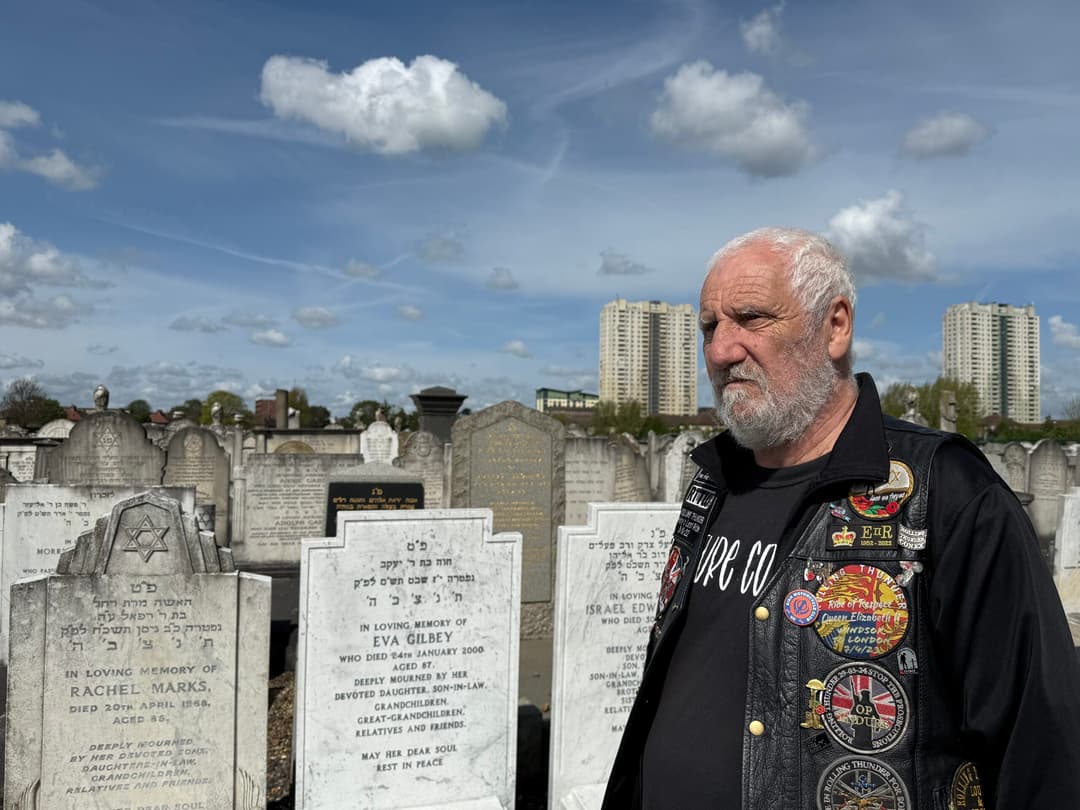
My visit to the cemetery, on London’s northern fringe, was an experience in itself. My guide was Stanley Kaye, a retired naval officer who spends hours each week criss-crossing London's boroughs, tracking and cleaning burial sites, doing ‘mitzvahs’ as a ‘graver hunter’. Stan led me to Jessie’s grave, where we silently stood above her granite memorial. Stan explained the traditions of Jewish cemetery customs before leading me to a hall in the heart of the cemetery.   

Stan Kaye surveys Edmonton Jewish Cemetery in April, 2025.

The hall was virtually unchanged since 1936, its facade weathered but intact. Stan pointed to a corner where an old burial trolley still sat. "They would have wheeled her in on that one," he said quietly, almost whispering. 

Standing there, I imagined my grandfather as a lost boy in a foreign city, watching his mother's body being wheeled into this same parlour. Whatever hopes they'd had for a new life in London died with her in that cramped Stoke Newington flat. 

As we headed back to the car, Stan consoled me “You done the right thing by Jessie. She’ll always have that headstone.” 

Returning to Grayling Road 

I returned to central London later that day and boarded a double decker bus bound for Stoke Newington. Although Stoke Newington has gentrified and long shed its Orthodox past, Grayling Road borders the famously Haredi area of Stamford Hill.  

As I approached Grayling Road I spotted a vast row of tenement houses, just as I expected. I could see yarmulkas and sidelocks ahead, the street was alive with frum boys playing. It was as if nothing had changed since the early 20th century.   

Disappointingly, but perhaps fittingly, 6 Grayling Road, my grandfather’s brief home in London, is no longer there. It was knocked down decades ago, replaced by a school.    

I stood in the middle of Grayling Road, deflated. Of course, there was never going to be anyone or anything to discover. Everyone was dead.  

As someone who has spent nearly two decades researching and writing about Australia's Jewish community – and now as someone with a Jewish partner, raising two Jewish children – I'm often asked, "Are you Jewish?" 

Perhaps it's pure coincidence, or fate, or something else entirely that I found myself standing in a north London street searching my grandfather’s Jewish past. His secret was held deep.  The pain of his mother’s loss. The shame of being born out of wedlock. The internalised antisemitism of early 20th century Australia. When Jessie was buried with Orthodox rites in 1936, it’s no surprise that Laurence buried his Jewish identity.   

Laurence (or Laurie or Mick, as he was variously known as) spent a lifetime eluding everyone – including his family: a bookish child in a small country town, an informant at the height of the Cold War, a cricket playing Anglo Australian hiding his Jewishness. Some parts of our identity and past, no matter how deeply buried, demand to be excavated.    

The headstone I commissioned for Jessie bears a simple inscription, that includes the line: "Held in memory by her Australian descendants." This Yom Kippur Yizkor service, 89 years since her untimely death, Jessie was remembered again. 

You might also like
  • Why you should take part in the Gen26 community survey 
    Adina Bankier Karp & David Graham
  • Was the barmi a shemozzle? How Australians use Jewish words 
    Caroline Hendy & Emma Breslow
  • Flying to vote is an act of love, not impudence
    Shahar Burla
logomark.67a07ee3
We believe in the free flow of information

Republish our articles for free, online or in print, by using our Creative Commons licence

You might also like

    socceroos jewish
    ReflectionAustralia

    World Cup brings out patriotism of Jewish Australia

    Alex Kats
    original-6ACA4B6A-4208-4277-A4EE-E687C3C87523
    FeatureLifestyle

    The right to an ordinary Jewish life

    Jarod Rhine-Davis
    LGBTQ+ Jews
    FeatureLifestyle

    Stars and Triangles: The Jewish architecture of queer liberation and its dismantling

    Jarod Rhine-Davis 5

About the author

Dashiel Lawrence

Dashiel Lawrence

Dr Dashiel Lawrence is the Executive Director of The Jewish Independent. A graduate of the Jewish Studies program at the University of Melbourne, he has been writing about Australia's Jewish diaspora for nearly two decades. His books include Australia and Israel: A Diasporic, Political and Cultural Relationship (2015) and People of the Boot: The Triumphs and Tragedy of Australian Jews in Sport (2018).

More from the author

FeatureArts & Culture

Team Jewish Roller Derby laces up their skates

FeatureAustralia

Understanding the back story of Australian Jews’ attitudes to Israel

Australia

Building a roof without the walls for women entrepreneurs

Comments4

  • Avatar of Rob Kaldor

    Rob Kaldor24 November at 09:40 am

    What a journey and so interesting to find the answers

  • Avatar of Judy Stanton

    Judy Stanton12 November at 11:46 am

    Wow Dash! What a journey and beautiful remembrance. Thanks for sharing your discoveries

  • Avatar of Wesley Parish

    Wesley Parish12 November at 07:19 am

    Interesting. I suspect most families contains some such secret in their back closets. My father’s family contains one such, though it’s not exactly the same – in 1860 or thenabouts, a man and a teenager made their way from the UK to New Zealand. Their surname was Levy, and the older man claimed to be from Krakow; he also claimed the teenager was his adopted (non-Jewish) son. My father had in his possession a Hebrew prayer book, with both ends showing the sort of wear and tear endemic to books loved by children. I figure that that prayer book, owned by someone nominally a communicating Anglican, holds the secret, that my father’s grandmother, daughter to the teenager, was holding to that remnant of Jewish faith in part at least to honour her father. Which means that Auckland in the 1930s held at least one crypto-Jewish family. This informs my Palestinian advocacy – why should Palestinians go through the same sort of thing my distant Krakow relatives went through? Once was more than enough.

  • Avatar of Debbie

    Debbie11 November at 06:27 am

    Lovely article, a thoroughly enjoyable read. Thank you for sharing.