Published: 18 May 2026
Last updated: 19 May 2026
On 28 February 2026, hours before Sydney’s Mardi Gras parade, organisers barred the anti-Zionist group Pride in Protest from marching, citing its social-media attacks on Dayenu, Sydney’s Jewish LGBTQ+ group, as a breach of parade terms.
In 2000, on Dayenu’s first Mardi Gras float beneath a glowing Star of David, founder Dawn Cohen told the crowd: ”We bet our lives on you and we won that bet.” Twenty-five years on, the bet looks less certain.
Dayenu, founded in 1999, has marched every year since 2000. In 2024, after Pride in Protest declared Jewish Mardi Gras participants ”proud of genocide and the mass murder of children,” Dayenu marched anyway; a volunteer was hospitalised with an asthma attack when pro-Palestine protesters set off flares on the route.
This year, after the 14 December 2025 Bondi terror attack and a violent pro-Palestine protest at President Herzog’s Sydney visit, Dayenu briefly withdrew from the parade – then marched after talks with police.
The Sydney decision is part of a global pattern intensified since 7 October 2023 – most striking against the history of who built this movement.
A principle, and a history
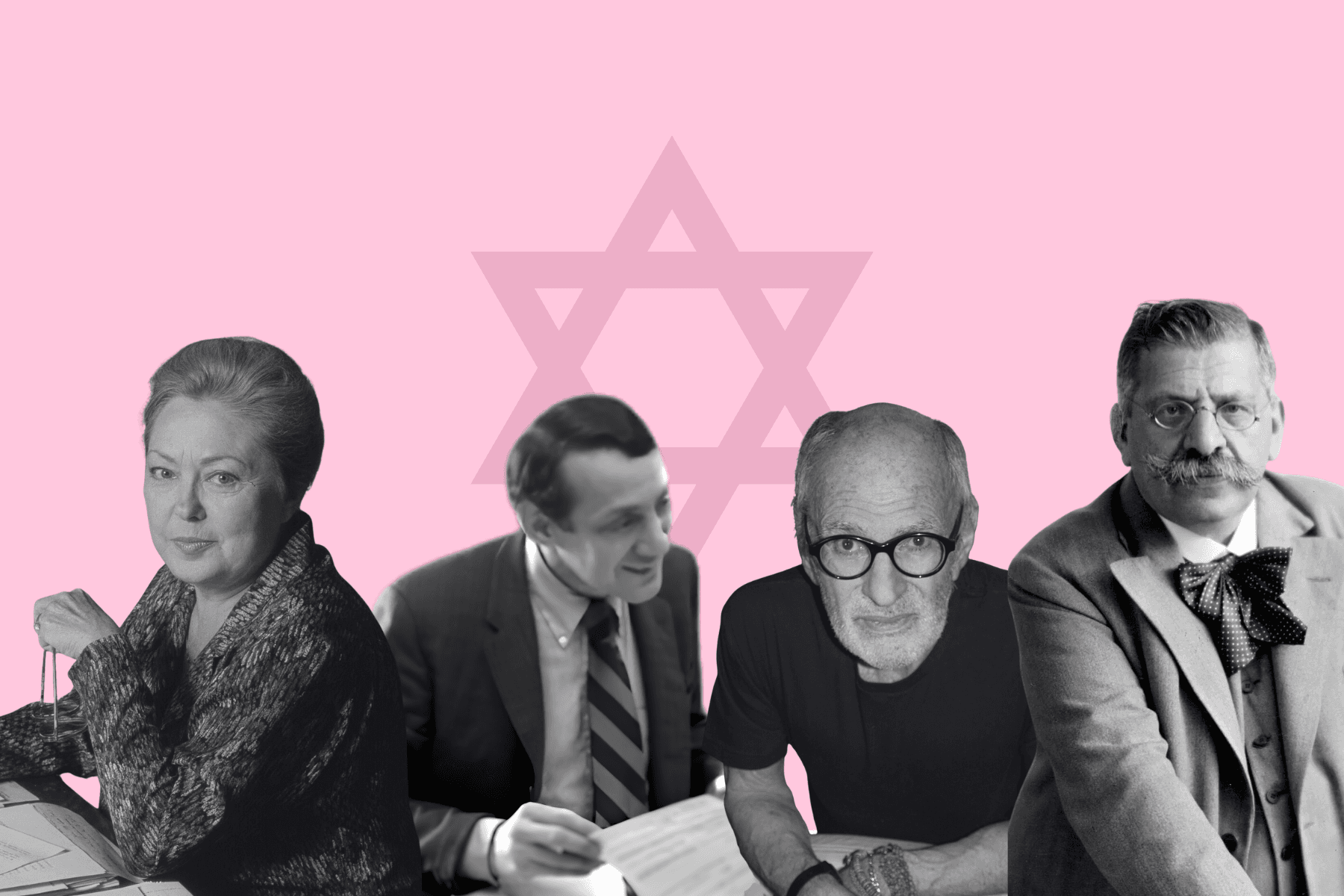
There is a principle at the centre of queer liberation: identity should never be the price of belonging. The people who built the movement that lives by it were, at every foundational moment, disproportionately Jewish.
On 6 May 1933, three months after Hitler took power, Nazi student activists stormed a villa in Berlin and seized its library. Four days later, SA men joined them to burn the collection on the Opernplatz. The images became some of the most reproduced photographs of the Reich’s early cultural destruction. Most people who have seen them do not know what was burning.



Comments5
Jarod Rhine-Davis6 July at 06:41 am
2 of 2
Polari Slang: Infused theatrical Yiddish into Polari, the secret coded language used by underground queer people to safely communicate in public spaces.
Brenda Howard: Known as the “Mother of Pride”, she coordinated the first anniversary march after the Stonewall Riots and organised the week-long festival that created the modern blueprint for “Pride Month”.
Adrienne Rich: Coined “Compulsory Heterosexuality”, defining heterosexuality as a socially enforced political institution rather than a passive biological default.
Eve Kosofsky Sedgwick: Mapped the “Epistemology of the Closet”, proving the closet is a structural system of societal power used to regulate and marginalise queer people.
Judith Butler: Coined “Gender Performativity”, proving gender is an active social script performed through daily actions, not a fixed biological truth.
Leslie Feinberg: Authored Transgender Warriors, popularizing the word “Transgender” as an inclusive, umbrella political term rather than a purely clinical or medical diagnosis.
(Fun Fact: If you look up ‘Queer theory’ on Wikipedia, there are photos of two Jews at the top).
Jarod Rhine-Davis6 July at 06:29 am
1 of 2
Thank you for reading and engaging with my essay. As an addendum to the above, several foundational concepts in modern queer theory and vocabulary were shaped by Jewish thinkers and artists:
Dr Albert Moll: Developed “Differentiation of the Sexual Impulse”, proving attraction and procreation are separate urges, medically validating non-reproductive queer love.
Dr Magnus Hirschfeld: Coined “Transvestite” and “Sexual Intermediaries”, establishing the first scientific models showing gender and sexuality exist on a fluid spectrum.
Susan Sontag: Defined “Camp”, intellectualising the underground theatrical aesthetic of artifice and exaggeration that defines modern drag and pop culture.
Dr George Weinberg: Coined “Homophobia”, flipping the script by declaring that anti-gay bias—not homosexuality itself—was the actual psychological disorder.