Aa
  • Read, Watch, Listen
  • TJI Series
  • Community Action
  • Events
  • Zedi
Follow us and continue the conversation
  • LinkedIn
  • Instagram
  • FaceBook
  • X
  • YouTube
Test yourself with the TJI Quiz!

Adjust size of text

Aa

Follow us and continue the conversation

  • LinkedIn
  • Instagram
  • FaceBook
  • X
  • YouTube

Your saved articles

You haven't saved any articles

What are you looking for?

Original reporting, insightful analysis and diverse views, delivered straight to your inbox

  • LinkedIn
  • Instagram
  • FaceBook
  • X
  • YouTube
Your support fuels our mission to inform, entertain and inspire.

The Jewish Independent is bound by the Standards of Practice of the Australian Press Council. If you believe the Standards may have been breached, you may approach The Jewish Independent or make a complaint to the Australian Press Council in writing at www.presscouncil.org.au. The Council may also be contacted on 1800 025 712.

  • Our Story
  • Contact us
  • Our Team
  • Support us
  • Guidelines
  • Pitch your idea
  • Republishing us
  • Community Action
  • Our Awards
  • LinkedIn
  • Instagram
  • FaceBook
  • X
  • YouTube
Aboriginal FlagTorres Strait Islanders Flag

The Jewish Independent acknowledges Aboriginal and Torres Strait Islander peoples as the Traditional Owners and Custodians of Country throughout Australia. We pay our respects to Elders past and present, and strive to honour their rich history of storytelling in our work and mission.

© The Jewish Independent 2026All Rights Reserved
Website design and development by Your Creative, MelbourneTerms & ConditionsPrivacy Policy
HomeRead, Watch, ListenWorld
ReflectionWorldZedi

A new generation reckons with 9/11

The 25th anniversary of 9/11 exposed antisemitic conspiracies, anti-Palestinian sentiment, dark mockery, and a new generation coming to terms with inherited trauma
Gideon Cohen
Print this
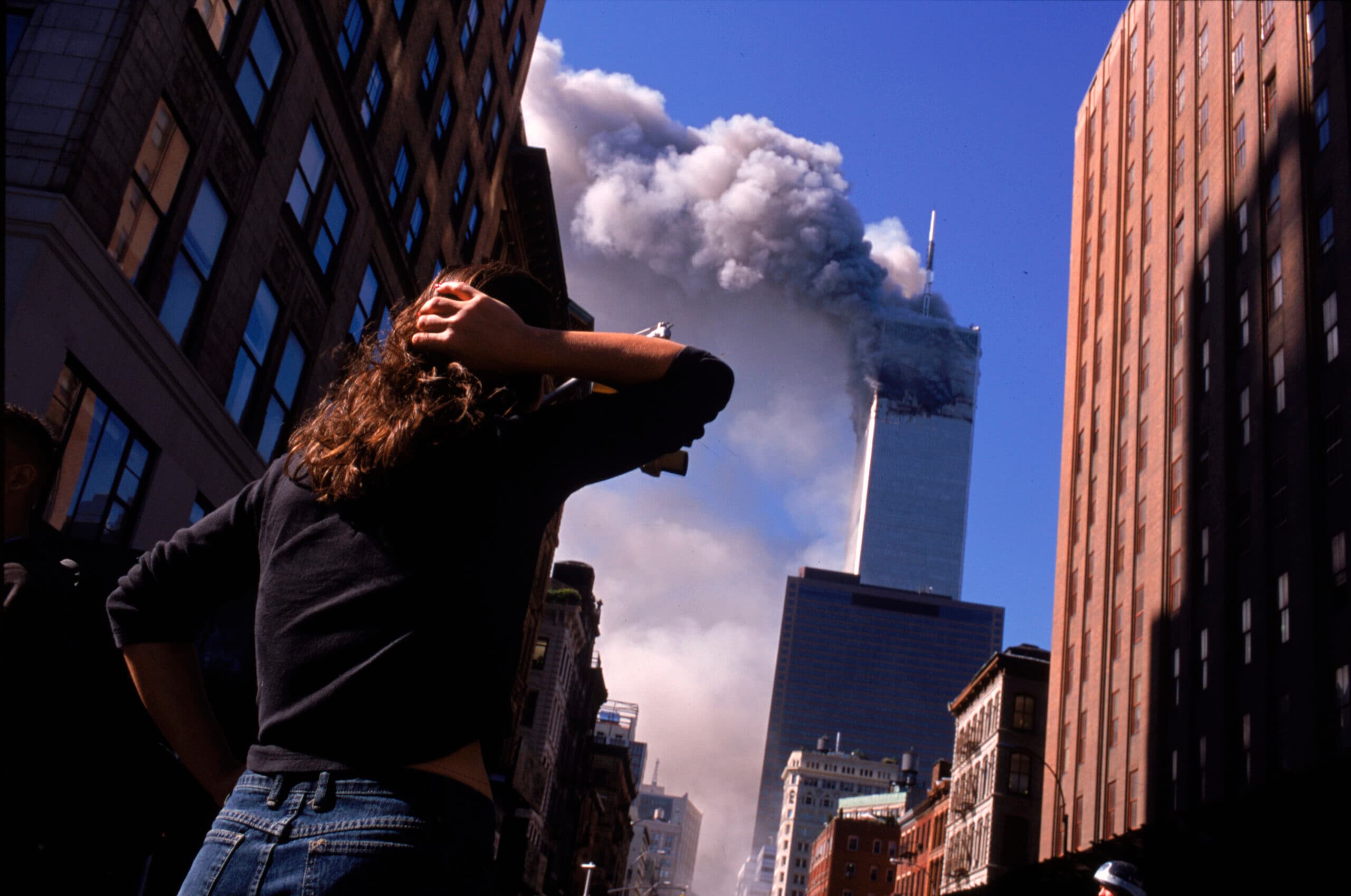
Shocked New Yorker Watches the World Trade Center on September 11, 2001

Shocked crowds observe the burning World Trade Center towers in New York City early September 11, 2001 (Photo by Andrew Lichtenstein/Corbis via Getty Images)

Published: 17 September 2026

Last updated: 17 September 2026

I don’t remember the 9/11 terrorist attacks, but I do vaguely remember the world before. My earliest memory on an aeroplane is from 2000, when I was four. At some point during the flight, my sister and I were taken to see the cockpit and meet the pilots. It was a common experience for kids back then, one that seems unimaginable now.

The next travel memory I have is from a year later, standing in a seemingly endless line at airport security. Everyone’s bags were being searched thoroughly; every sharp item was confiscated. The world as we knew it had fundamentally changed.

I was born in 1996, the year generally considered the final birth year for Millennials, with Gen Z beginning in 1997. The event that most clearly separates the two generations is 9/11.

People born around that cutoff make up a small in-between generation often referred to as “Zillennials.” We occupy an unusual space in the 9/11 timeline: we can remember the world before it, but not necessarily the moment that changed it. For those who came after us, however, the event feels more like distant history.

As the 25th anniversary brought 9/11 back into the cultural conversation, that generational difference became especially visible online.

Across social media, I saw four distinct reactions: antisemitic conspiracy theories about Jews and Israel; anger towards Palestinians and pro-Palestine protesters; dark mockery of 9/11, tied to the first anniversary of Charlie Kirk’s death; and, beneath all that noise, a genuine effort among Gen Z to understand the tragedy.

‘The Jews did it’ 

One of the most disturbing reactions was the return of antisemitic conspiracies. 
Online, posts, memes and comments about 9/11 spread old falsehoods: that Israel or Mossad had advance knowledge of the attacks, that Jewish people had been warned to stay away from the World Trade Center, or that no Jews were killed on September 11. None of these claims are new, but their persistence online speaks to the way antisemitism mutates from one generation to the next.

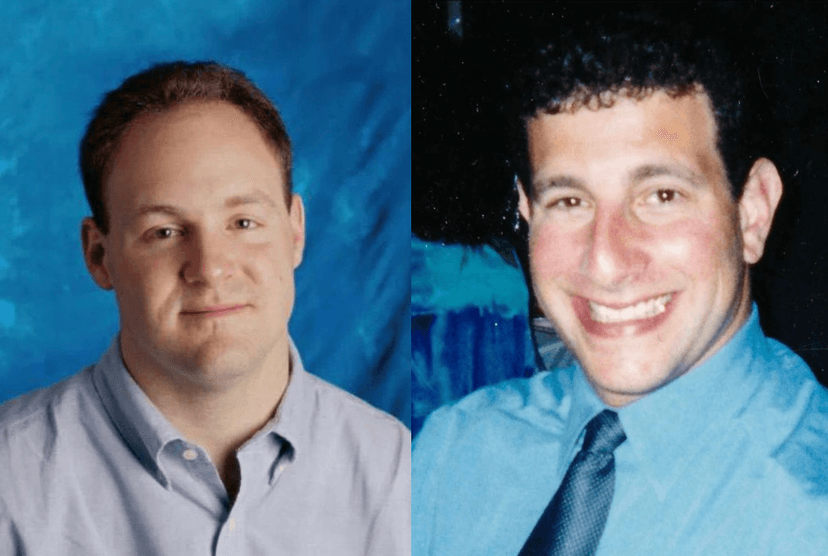
Hundreds of Jewish people are estimated to have died on 9/11. In fact, the first person killed that day was Jewish: Daniel Lewin, a 31-year-old Israeli-American entrepreneur and former IDF soldier, was stabbed aboard American Airlines Flight 11 as he attempted to stop the hijackers.

On Flight 93, Jewish passenger Jeremy Glick was among those who attempted to storm the cockpit and retake the plane. The passengers’ efforts prevented the hijackers from reaching their intended target in Washington, before the plane crashed into a field in Pennsylvania. 

What disturbs me about these conspiracies is the way they flatten a tragedy that was made up of individual lives: the people who were killed, those who tried to save others, and the grief their families have carried for 25 years. For hundreds of Jewish families, 9/11 is not a conspiracy theory or a political argument. It’s the day their loved one died.

Daniel Lewin (left) and Jeremy Glick (right) (image credits: screenshots/X)

‘Go back to Palestine’

For some, the 25th anniversary became a breaking point over pro-Palestine protests, particularly those disrupting 9/11 commemorations.

One particular incident, near the memorial at Ground Zero, gained significant traction online. Several videos showed a man in an Elmo costume, draped in a Palestinian flag, performing Heil Hitler salutes alongside neo-Nazis wearing swastika armbands. The group chanted “Free Palestine” and held a banner reading “Jake Lang is a Jew”.

A uniformed firefighter confronted the group, calling the man dressed as Elmo an “anti-American motherfucker”, telling him to “go back to fucking Palestine” and take Mayor Zohran Mamdani with him. The New York City Fire Department (FDNY) later said the man was not one of its firefighters and was likely from elsewhere in New York State.

Anger with pro-Palestine demonstrators continued at Yankee Stadium that evening, where the Yankees and Mets were playing a 9/11 memorial game. Videos across social media show a man running onto the field carrying a Palestinian flag, prompting boos from the crowd before it erupted into chants of “USA!”

Online, I saw these incidents become part of a wider wave of anger. Footage from 2001 showing Palestinians celebrating the news of 9/11 began circulating widely again – including crowds cheering and handing out sweets. The videos were met with renewed outrage, with some using them to condemn Palestinians and pro-Palestine demonstrators more broadly.

Progressives make 9/11 a punchline

Another corner of the internet responded to 9/11 with something darker: young progressives deriding or celebrating the terrorist attacks, often tied to the first anniversary of Charlie Kirk’s murder on September 10.

In the days leading up to the anniversaries, I began seeing “Kirkaversary” content from young, mostly university-aged people on social media. TikToks mocked Kirk’s death, while some students hosted parties to mark the occasion. 

What began as dark humour around Kirk’s death increasingly spilled into the conversation around 9/11. Some people joked about treating September 10 as their first “Kirkaversary”, followed by the anniversary of the attacks the next day – framing the two dates as a double celebration. Memes also began circulating with Kirk’s face superimposed onto images of the Twin Towers.

For those sharing the memes, 9/11 was not a historical tragedy but an opportunity to insult America. The sentiment reflects a strain of anti-Americanism on the far left, where some argue that the United States brought the attacks upon itself. That view has also been expressed by extreme, hard-left figures, including streamer Hasan Piker, who faced renewed criticism this year over a 2019 livestream in which he said that “America deserved 9/11”.

A new generation confronts terror

But beyond the memes and mockery, I also saw a very different response from Gen Z. This year, the extensive coverage on social media confronted them with the devastating reality of terrorism.

On X, the account 2001 Live reposted footage from the attacks throughout the day as though the events were unfolding in real time. The increasingly distressing images gave a new generation a sense of what it felt like to watch 9/11 happen live.

People who were too young to remember that day were now exposed to its most horrific details. They were particularly shaken by footage of people jumping from the towers, 911 calls from inside the World Trade Center, and final voicemails left by passengers aboard the planes, many of whom used their last moments to express their love for their families.

Gen Z was not only encountering the terrifying reality of those deaths, but also realising how young the victims were. Some found themselves looking at victims who were their own age when they died; others realised they were now older than people whose final moments they were watching.

Amid the ugly rhetoric surrounding the anniversary, many seemed to arrive at a more straightforward conclusion: 9/11 was not a meme, a punchline or an abstract political argument. It was a mass-casualty terrorist attack that killed thousands of people and exposed the very real threat posed by Islamist extremism.

For some, there was another, more difficult realisation: they were grieving a world they had never known – one before 9/11, before the wars, political divisions and pervasive sense of threat that shaped their childhood. They had inherited the consequences of an event they were too young to remember.

For a generation that had grown up with 9/11 as history rather than memory, this year’s anniversary felt painfully immediate.

You might also like
  • Hezbollah ally beams antisemitic and anti-Israel content into Australia
    Michael Visontay
  • New national centre to tackle online extremism and terrorism
    The Jewish Independent
  • We are past the point of politics
    Jael Cohen-Rothschild
logomark.67a07ee3
We believe in the free flow of information

Republish our articles for free, online or in print, by using our Creative Commons licence

You might also like

    bialik Jewish schools shabbat
    OpinionAustralia

    Jewish schools are the marinade that infuses continuity

    Jeremy Stowe-Lindner
    JDC Joint Nepal
    FeatureWorld

    ‘Your help is extremely needed’: Jewish aid group on the ground after Nepal flood

    Peter Kohn 1
    Protest against settler violence in Jerusalem
    DebateAustralia

    Sanctioning settlements is a defence of Israel, not an attack

    Elisheva Madar 2

About the author

Gideon Cohen

Gideon Cohen

Gideon Cohen is a Melbourne-based journalist and a content creator and editorial assistant at TJI. He holds a master's degree in journalism from the University of Melbourne and his work has appeared in various publications including Broadsheet and The Jewish Chronicle.

More from the author

InterviewAustralia

Ash Densham: Building community through Humanistic Judaism

InterviewArts & Culture

‘L’chaim for the next 1,500’: Israeli drummer celebrates Cirque Du Soleil milestone

InterviewArts & Culture

Rachel Moshel: Creating a space for Jewish art and joy

Comments

No comments on this article yet. Be the first to add your thoughts.