Aa
  • Read, Watch, Listen
  • TJI Series
  • Community Action
  • Events
  • Zedi
Follow us and continue the conversation
  • LinkedIn
  • Instagram
  • FaceBook
  • X
  • YouTube
Test yourself with the TJI Quiz!

Adjust size of text

Aa

Follow us and continue the conversation

  • LinkedIn
  • Instagram
  • FaceBook
  • X
  • YouTube

Your saved articles

You haven't saved any articles

What are you looking for?

Original reporting, insightful analysis and diverse views, delivered straight to your inbox

  • LinkedIn
  • Instagram
  • FaceBook
  • X
  • YouTube
Your support fuels our mission to inform, entertain and inspire.

The Jewish Independent is bound by the Standards of Practice of the Australian Press Council. If you believe the Standards may have been breached, you may approach The Jewish Independent or make a complaint to the Australian Press Council in writing at www.presscouncil.org.au. The Council may also be contacted on 1800 025 712.

  • Our Story
  • Contact us
  • Our Team
  • Support us
  • Guidelines
  • Pitch your idea
  • Republishing us
  • Community Action
  • Our Awards
  • LinkedIn
  • Instagram
  • FaceBook
  • X
  • YouTube
Aboriginal FlagTorres Strait Islanders Flag

The Jewish Independent acknowledges Aboriginal and Torres Strait Islander peoples as the Traditional Owners and Custodians of Country throughout Australia. We pay our respects to Elders past and present, and strive to honour their rich history of storytelling in our work and mission.

© The Jewish Independent 2026All Rights Reserved
Website design and development by Your Creative, MelbourneTerms & ConditionsPrivacy Policy
HomeRead, Watch, ListenAustralia
NewsAustralia

Melbourne Chevra Kadisha implicitly recognises LGBTQ+ families

New guidelines will ensure families of all genders and sexualities are treated with dignity.
Jarod Rhine-Davis
Print this
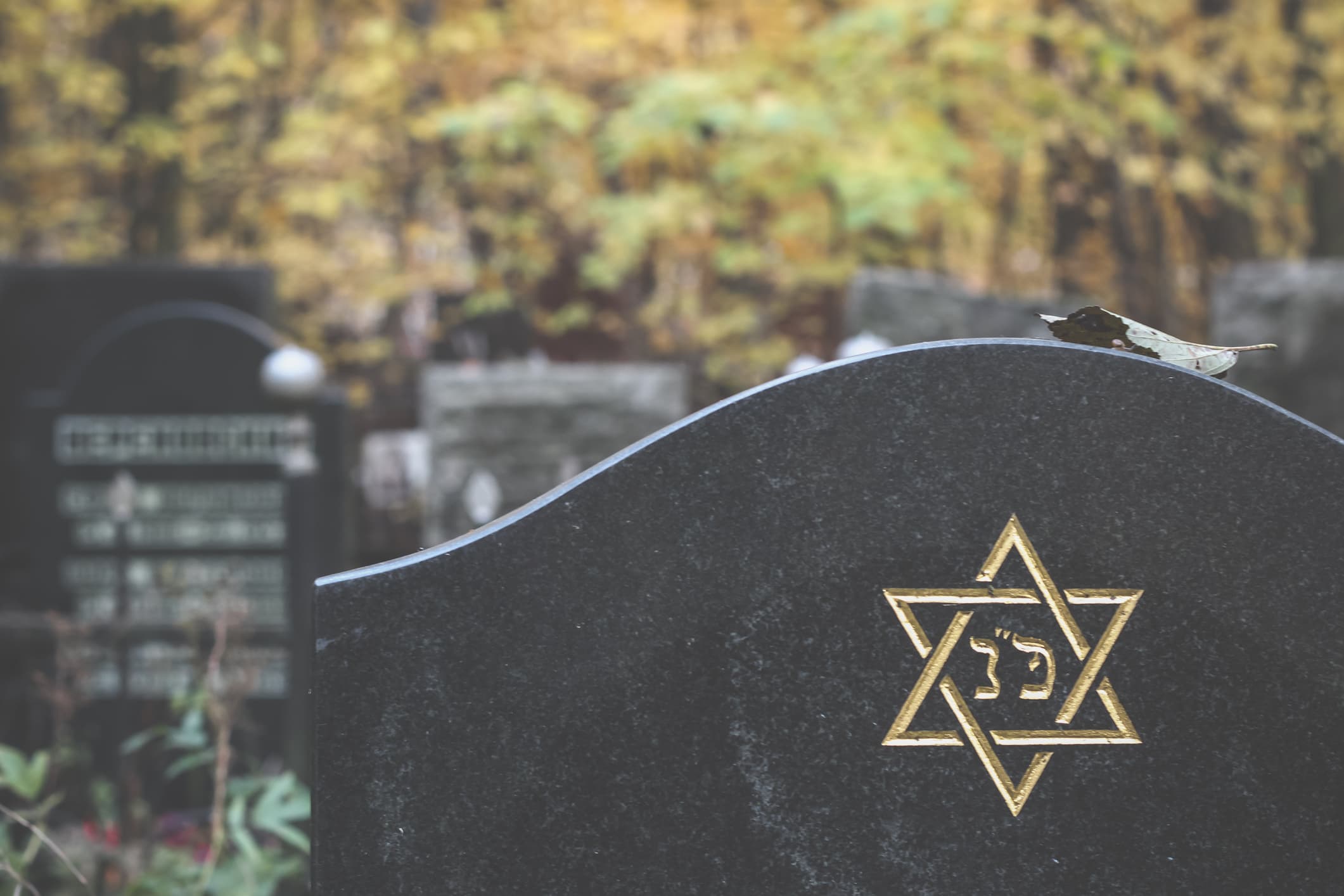
Jewish cemetery

A Jewish grave (Getty)

Published: 29 September 2026

Last updated: 29 September 2026

When a gay man has an Orthodox Jewish funeral, how is his same sex partner recognised as a mourner? Should a male or female team do the ritual washing when the deceased is transgender? What happens when the parents of the deceased use one name or gender and their partner uses another?   

New guidelines to be published this week by the Melbourne Chevra Kadisha (MCK) will help answer these questions, ensuring all family types are treated with dignity.

The burial society will publish a commitment which reads, “Melbourne Chevra Kadisha cares for every Jewish person who comes into our care with the same dignity, modesty, and respect, without exception, regardless of background, religious beliefs, history, gender, sexuality, or family structure. Partners are recognised in funeral arrangements in exactly the same way.”

The new guidelines seek to avoid dispute over the deceased person’s name, gender, or pronouns, which can occur when a name or gender habitually used by the deceased does not match their legally registered details or when the family of origin does not recognise changes made by the deceased during their lifetime.

Public funeral material will use the name supplied by next of kin while registration with Births, Deaths and Marriages will use the person’s registered legal name.

“These serve two different purposes, one reflects how a person is honoured by their community and the other is a legal requirement, and the Melbourne Chevra Kadisha manages both with care and discretion,” the guidelines note.

In cases of dispute, MCK will follow the legal hierarchy of next of kin, which places the spouse and children ahead of parents and siblings, “while working actively with families through guidance and negotiations to help find common ground”. Individuals are welcome to register their wishes with the Burial Society in advance.

An Australian first

The MCK guidelines are the first to be published by an Australian Jewish burial society to address these contemporary issues and follow inquiries by The Jewish Independent about practices in these cases.

Perth Chevra Kadisha and the progressive Jewish funeral organization Bet Olam are also planning to create guidelines.

Perth Chevra Kadish President Jonathon Silbert said TJI’s inquiry about how it handles same sex and transgender families raised “a question that we had not thought of” and opened an internal action to prepare guidance.

Bet Olam senior funeral director Jordi Rosenfield said the organisation always strove to be inclusive but TJI’s questions prompted “numerous discussions internally” and Bet-Olam is now looking to create a written policy.

Rabbi Jacqueline Ninio of Sydney’s Emanuel Synagogue said the congregation uses the pronouns and gendered language a deceased person used in life. For non-binary congregants, Emanuel has several options; Ninio said mibeit - “from the house of” - is the one most choose. Same-sex partners and chosen family receive the same mourning recognition as heterosexual counterparts, while Emanuel’s yahrzeit and Yizkor records preserve the identity the person chose in life and what had been determined for the funeral.

Ninio encourages people with strong funeral wishes to write them down and share them with relatives likely to arrange the service, saying doing so “avoids guessing” and family disagreement.

“When there is no family or community we gather one,” Ninio said. Emanuel would research what it could about the person and their wishes, gather at least ten people for the funeral and mourning, ensure Kaddish was recited, and remember them at Yizkor and their first yahrzeit.

"We would hope we could have been there during the person’s life,” Ninio said. “But if we only encounter them in death, we are there to remember and honour them then also.”

Sydney Chevra Kadisha has no plans to create guidelines but General Manager Shimon Davidowitz said usual practice was to follow the instructions of the senior next of kin, with no difference in the treatment of same sex family members. He said questions of gender, identity and halachic status are referred to the Beth Din where necessary.

You might also like
  • Surrogate families battle fine print under both Australian and Jewish law
    Jarod Rhine-Davis
  • Antisemitism, homophobia and a radical response to both
    Dennis Altman
  • LGBT asylum seekers caught between Palestinian violence and Israeli bureaucracy
    Jarod Rhine-Davis
logomark.67a07ee3
We believe in the free flow of information

Republish our articles for free, online or in print, by using our Creative Commons licence

You might also like

    jiff26-cancelled.jpg
    ReflectionArts & Culture

    On despair: A reflection after watching ‘Cancelled’

    Deborah Stone 2
    Nadia
    ReflectionAustralia

    Between communities: finding Jewish belonging after migration

    Florencia Tuchin
    Generation change Template
    Generation ChangeInterviewAustralia

    Ash Densham: Building community through Humanistic Judaism

    Gideon Cohen

Comments

No comments on this article yet. Be the first to add your thoughts.

About the author

Jarod Rhine-Davis

Jarod Rhine-Davis

Jarod Rhine-Davis is a Melbourne-based Jewish LGBTQ+ community leader and founder of Jewmos, a grassroots initiative creating spaces for queer Jews to connect, celebrate, and explore identity. Through his work, he advocates for inclusion and belonging at the intersection of Jewish and LGBTQ+ life. He works at The Jewish Independent, helping produce community events.

More from the author

FeatureLifestyle

Surrogate families battle fine print under both Australian and Jewish law

NewsIsrael

LGBT asylum seekers caught between Palestinian violence and Israeli bureaucracy

FeatureLifestyle

The right to an ordinary Jewish life