Aa
  • Read, Watch, Listen
  • TJI Series
  • Community Action
  • Events
  • Zedi
Follow us and continue the conversation
  • LinkedIn
  • Instagram
  • FaceBook
  • X
  • YouTube
Test yourself with the TJI Quiz!

Adjust size of text

Aa

Follow us and continue the conversation

  • LinkedIn
  • Instagram
  • FaceBook
  • X
  • YouTube

Your saved articles

You haven't saved any articles

What are you looking for?

Original reporting, insightful analysis and diverse views, delivered straight to your inbox

  • LinkedIn
  • Instagram
  • FaceBook
  • X
  • YouTube
Your support fuels our mission to inform, entertain and inspire.

The Jewish Independent is bound by the Standards of Practice of the Australian Press Council. If you believe the Standards may have been breached, you may approach The Jewish Independent or make a complaint to the Australian Press Council in writing at www.presscouncil.org.au. The Council may also be contacted on 1800 025 712.

  • Our Story
  • Contact us
  • Our Team
  • Support us
  • Guidelines
  • Pitch your idea
  • Republishing us
  • Community Action
  • Our Awards
  • LinkedIn
  • Instagram
  • FaceBook
  • X
  • YouTube
Aboriginal FlagTorres Strait Islanders Flag

The Jewish Independent acknowledges Aboriginal and Torres Strait Islander peoples as the Traditional Owners and Custodians of Country throughout Australia. We pay our respects to Elders past and present, and strive to honour their rich history of storytelling in our work and mission.

© The Jewish Independent 2026All Rights Reserved
Website design and development by Your Creative, MelbourneTerms & ConditionsPrivacy Policy
HomeRead, Watch, Listen

LISTEN: Recordings of testimony unearthed from the war crimes archives

Michael Visontay
Print this

Published: 10 May 2022

Last updated: 4 March 2024

In 1970 Henry Bernard gave evidence against Nazis who murdered Jews in his hometown in Poland. His son Tony has written a book about him - and unearthed the recordings

In 2020, just as Tony Bernard was leaving Germany after some final research into the book he was writing about his father's wartime experiences, the archivist who had been assisting handed him a USB stick.

It was an audio recording - crystal clear as if the words were being spoken today - of his father's testimony 50 years earlier.

In 1970 Henry Bernard, a Polish Holocaust survivor and by then a doctor living on Sydney’s northern beaches, was invited to give testimony at a war crimes trial in West Germany for several Nazis who murdered Jews in his hometown of Tomaszow during the war.

Bernard was an eyewitness to these murders and his testimony helped convict some of them.

Fifty years later, in 2020, Bernard’s son, Tony, also a doctor, was in the throes of writing a biography about his father’s experiences. When the Sydney Jewish Museum agreed to publish the book, its renowned Holocaust historian Professor Konrad Kwiet started to verify historical details.

Kwiet had planned a research visit to the WW2 archives in Darmstadt, Germany and invited Tony to come with him. Not only did they meticulous transcripts of the trials, the archivist informed Tony they had audio recordings of the trial, including Henry’s testimony – which was in English.

Before they left to fly home, she handed Tony a USB stick with an audio recording of Henry Bernard’s testimony, crystal clear as if it were yesterday.

For a son who had devoted the past 15 years to capturing and telling his father’s extraordinary and tragic experiences, it was a gift beyond all imagination. There are hundreds of hours of tapes stored away in Germany but very few, if any, families have been able to hear their parent giving evidence.
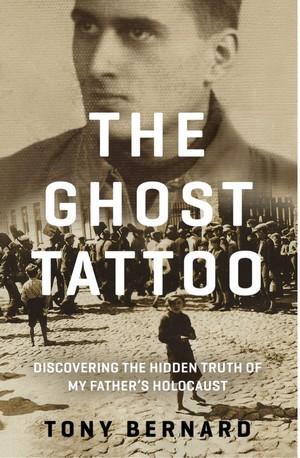
There, in his hand, was a “living” link to a crucial chapter of Holocaust history and reckoning.

The Jewish Independent

Last Thursday night, Tony’s book The Ghost Tattoo, was launched at the museum – and those who turned up were spellbound as they heard clips from Henry’s testimony – including an account of the execution of members of the town’s Jewish Council (Judenrat), and how Henry had to go and tell their families what had happened. The end of one clip ends with silence for 30 seconds as Henry, still in the courtroom, is too upset to keep talking as he remembers the moment.

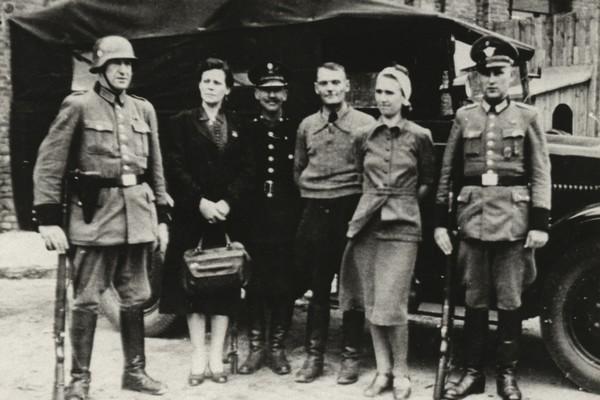
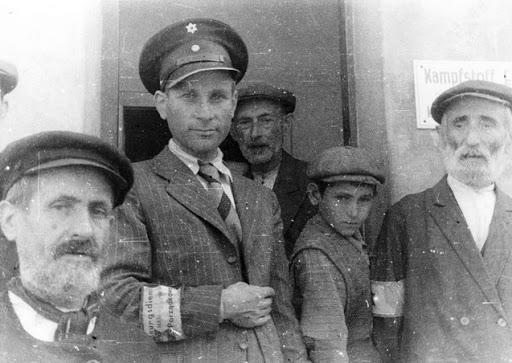
Members of the Jewish Ghetto police (Ordnungsdienst)

One of the reasons Henry witnessed these murders is that he was a member of the Jewish ghetto police (the Ordnungsdienst) in Tomaszow, about an hour’s drive from Lodz. For many Holocaust survivors, there is something called “survivor guilt” which makes them reluctant to talk about their experiences.

But for Henry Bernard, being a member of the ghetto police was even harder to talk about. He did not volunteer for the role; rather, his father urged him to do it, saying the Judenrat needed people of good character and principle among them, to avoid corruption and ensure the Jews in the ghetto were properly fed, and had access to health and medicine, and the like.

This experience was something Henry was conflicted by for the rest of his life, not just because of the discomfort of the role (the Ordnungsdienst were even ‘forced’ to drink and socialise with their Nazi counterparts) but because of the personal toll it took.

In addition to witnessing the executions of many family friends and other Jews in the town, he believed that his role in the ghetto police also played a part in the death of his mother – through a communication mix-up at one of the deportation staging areas, he was misled by a colleague about where his mother was, and given a false reassurance that she would not be deported.

German Schupo police in Tomaszow

Henry Bernard did not talk about his wartime experiences until his three children were grown up, hinting only occasionally at what had happened; never explaining his tattoo and scar (from an attempted suicide). His three children did not attend Jewish scripture, did not have barmitzvahs and did not identify as being Jewish as children.

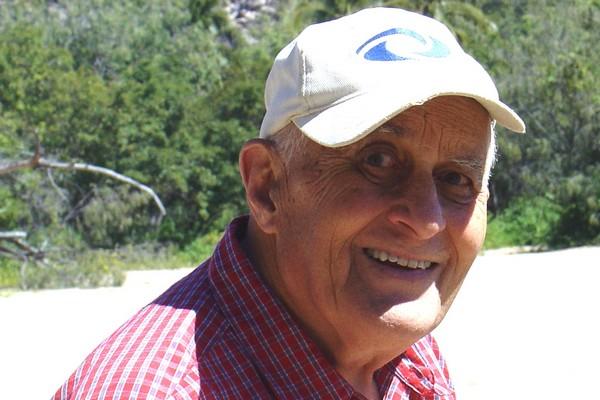
Henry Bernard in his later years

Henry only started opening up after watching Schindler’s List, and this secret past is a prominent theme in the book. The Ghost Tattoo also tells the story of Tony’s upbringing, and how and when he slowly started to realise there was much more to their father’s past.

Editor’s Note: Michael Visontay worked as an editor on the manuscript of Tony Bernard’s book and advised him about how to get the story published.

Main photo: Henry Bernard's US Military identity card, which was issued at Landsberg in 1945

All photos courtesy of Tony Bernard

You might also like
  • ‘For 80 years we lived in a kind of fairyland. It’s over’
    Vic Alhadeff
  • From antisemite to ally: the power of friendship
    Elana Benjamin
  • Rediscovered in Melbourne: the 75-year odyssey of Nazi-looted Jewish books
    Jason Schulman
logomark.67a07ee3
We believe in the free flow of information

Republish our articles for free, online or in print, by using our Creative Commons licence

You might also like

    brighton-cobbler-hands

    ‘This $50 is for your grave, you f***ing Jew’

    The Jewish Independent
    Israel Hamas War

    IDF: Hamas will steal fuel for tunnel ventilation systems and rockets

    TJI Wrap
    tame kostakidis west
    AnalysisAustralia

    How not to apologise

    Zac Klugman

About the author

Michael Visontay

More from the author

NewsAustralia

Matt Chun’s hate speech prompts change in arts funding policy

AnalysisAustralia

Mishandled antisemitism education is not just ineffective, it’s dangerous

FeatureLifestyle

Where Shtisel meets The Jetsons

ReviewIsrael

Beinart’s utopian vision ignores awkward truths