Aa
  • Read, Watch, Listen
  • TJI Series
  • Community Action
  • Events
  • Zedi
Follow us and continue the conversation
  • LinkedIn
  • Instagram
  • FaceBook
  • X
  • YouTube
Test yourself with the TJI Quiz!

Adjust size of text

Aa

Follow us and continue the conversation

  • LinkedIn
  • Instagram
  • FaceBook
  • X
  • YouTube

Your saved articles

You haven't saved any articles

What are you looking for?

Original reporting, insightful analysis and diverse views, delivered straight to your inbox

  • LinkedIn
  • Instagram
  • FaceBook
  • X
  • YouTube
Your support fuels our mission to inform, entertain and inspire.

The Jewish Independent is bound by the Standards of Practice of the Australian Press Council. If you believe the Standards may have been breached, you may approach The Jewish Independent or make a complaint to the Australian Press Council in writing at www.presscouncil.org.au. The Council may also be contacted on 1800 025 712.

  • Our Story
  • Contact us
  • Our Team
  • Support us
  • Guidelines
  • Pitch your idea
  • Republishing us
  • Community Action
  • Our Awards
  • LinkedIn
  • Instagram
  • FaceBook
  • X
  • YouTube
Aboriginal FlagTorres Strait Islanders Flag

The Jewish Independent acknowledges Aboriginal and Torres Strait Islander peoples as the Traditional Owners and Custodians of Country throughout Australia. We pay our respects to Elders past and present, and strive to honour their rich history of storytelling in our work and mission.

© The Jewish Independent 2026All Rights Reserved
Website design and development by Your Creative, MelbourneTerms & ConditionsPrivacy Policy
HomeRead, Watch, ListenAustralia
FeatureAustralia

NDIS changes threaten disabled participation in community life

Participation in youth groups, camps, synagogue life and Jewish culture will be affected as the NDIS reduces allocations for community participation by 50 per cent
Jarod Rhine-Davis
Print this
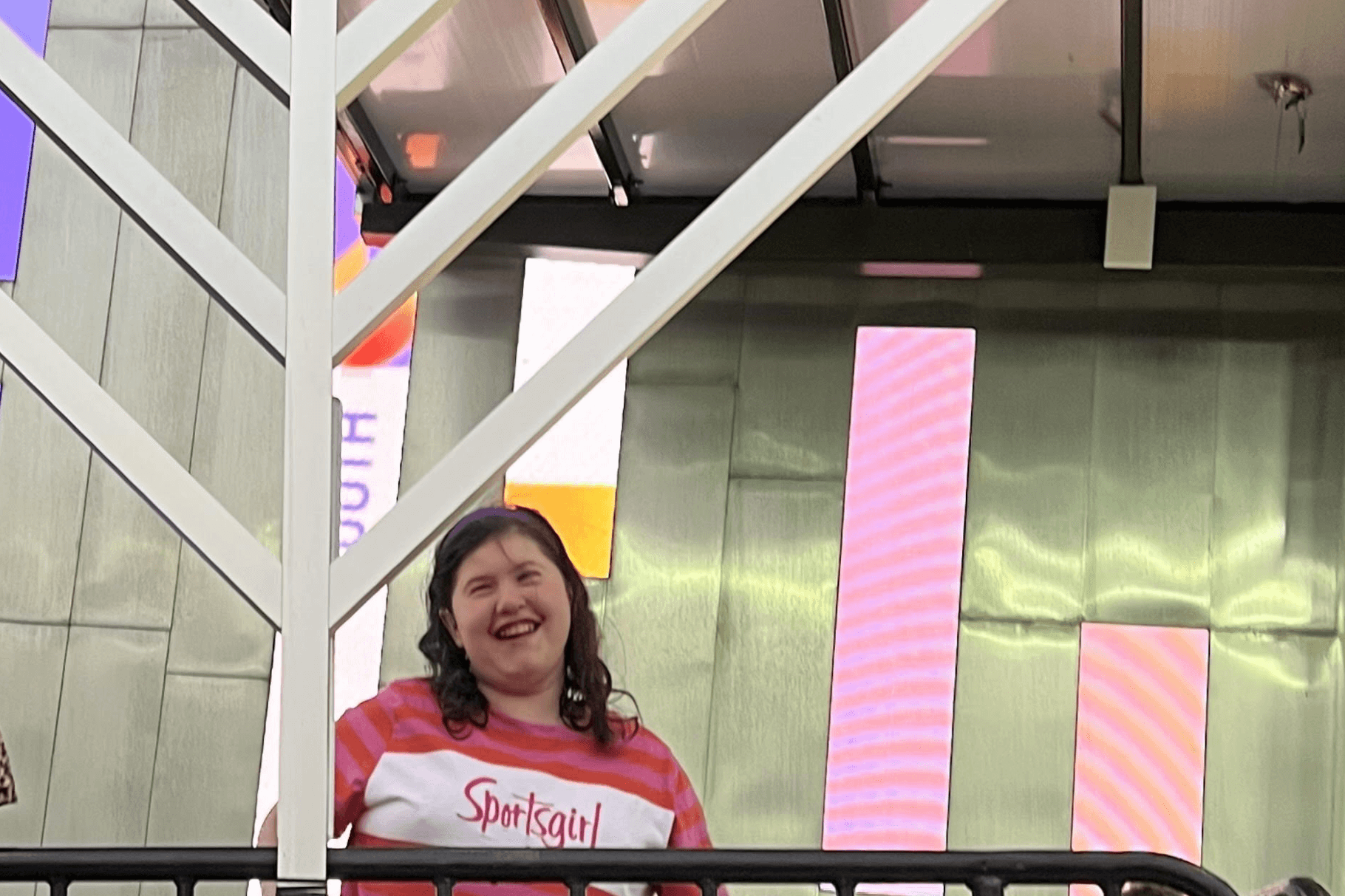
Zoe Better pillars of light crop

Zoe Better at the Pillars of Light Chanukah celebration (supplied)

Published: 6 October 2026

Last updated: 6 October 2026

Mendy Cooper’s disability means he can’t simply be dropped off at communal activities like other 13-year-olds. An NDIS carer enables Mendy to join youth activities at Chabad Malvern and attend bar mitzvah celebrations.
 
“If he didn’t have someone there with him to keep him safe, he wouldn’t be able to come,” his mother Menucha Cooper said.
 
But the access NDIS participants get to Jewish life will be reduced under changes to the scheme which began this month. Allocations for social, economic, and community participation supports are being reduced by 50 per cent.
 
For Jewish NDIS recipients, communal participation can include attending synagogue, festival activities, youth groups, camps, cultural activities, and celebrations.  

Current participants are not immediately affected, but their entitlement will change as plans are renewed from February 2027. New plans will be based on the changed entitlements.  

Entitlements have always been difficult to obtain. Cooper said a previous request for carer hours to take Mendy to synagogue and community events was refused. She has been able to use some of his other available carer hours to continue his Jewish participation, but the rigidity of NDIS funding categories means that is not always possible.  
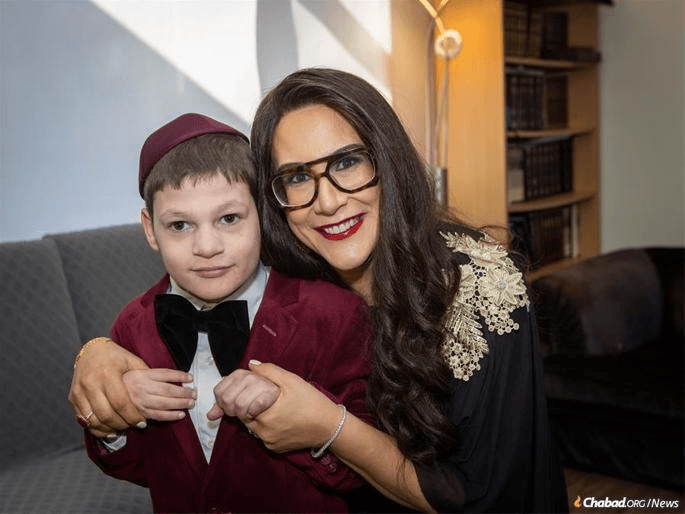
Mendy Cooper with his mother Menucha (supplied)

The process can also be emotionally draining. Cooper said parents repeatedly have to focus on what their child cannot do to demonstrate need. “You really have to talk about all the tough things about your kid and all the negative things,” she said, despite “so many amazing qualities”. With finite “emotional and physical energy”, she added: “If I spend my time doing that, fighting the NDIS, how am I going to look after my son?” 

NDIS-supported programs have helped 23-year-old Zoe Better to build friendships and connections within Jewish life.
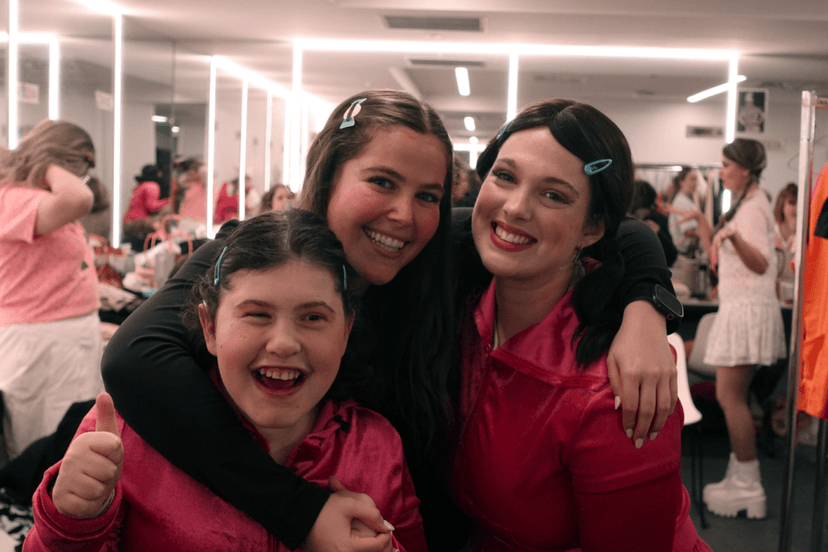
Zoe began school at Bialik College before moving to specialist education around Year 5. Her mother Rebecca Better said the move narrowed Zoe’s Jewish connections, so the family sought other pathways, including Flying Fox, Friendship Circle and inclusive theatre group Stars and the Moon. Flying Fox founder and co-CEO Dean Cohen said almost all participants rely on NDIS funding or support to attend activities. 

The cultural participation has also led to friendships, giving Zoe connections for outings such as trips to shows or trivia nights.  “For us it’s about being seen and known in the community,” Better said.

Zoe Better (far left) with friends Tyla Chapman and Eden Hayes  (supplied)
Zoe Better (far left) with friends Tyla Chapman and Eden Hayes (supplied)

If Zoe's participation funding is reduced, the family may have to remove activities from her cultural and social life. Even so, Rebecca Better is grateful for the opportunities the NDIS provides for her daughter. “Even with the cuts, it will still be magnificent,” she said. “It’s just less magnificent than it currently is.” 

Better, who works in disability support coordination, said NDIS-funded assistance can follow people through adulthood, including moving out of home, work and relationships. Some people with intellectual disability, she said, may need more time and support to learn about consent and relationships than their non-disabled peers. 

No philanthropic organisation, or even the Jewish philanthropic community collectively, can realistically replace the NDIS

Project Kulanu manager Tal Spinrad

The Federal Government says the changes are necessary to keep the NDIS sustainable. The Department of Health, Disability and Ageing told The Jewish Independent that critical supports such as in-home supports, transport and assistive technology would not be affected, and eligible supports could still be used for cultural, community and religious activities. It has also committed $200 million over three years to an Inclusive Communities Fund, with the first funding round expected by June 2027. 

UNSW Canberra Professor of Public Service Research Helen Dickinson said that the NDIS is better at measuring spending than measuring changes in somebody’s life. “We will only know whether these reforms save money and not the impact that it will have on people’s lives,” she said. 

If disabled participants are not to miss out, families and communal organisations will need to step in and manage the shortfall.  
 
Melbourne Jewish Charity Fund chief executive Rob Alden said the charity already assists with disability-related needs outside government funding and is preparing for more requests. Project Kulanu manager Tal Spinrad, father to children on the NDIS, said the United Jewish Education Board helps by covering the costs of one-to-one carers at camps, but somebody still has to pay the worker. 

“No philanthropic organisation, or even the Jewish philanthropic community collectively, can realistically replace the NDIS,” he said. 

Cooper said she knew people sometimes turned to crowdfunding platforms such as GoFundMe, but she would be uncomfortable fundraising for her own child. 

For Better, the value of participation is not just Zoe’s current wellbeing. It connects to the question she and her husband have asked themselves for years: who will look after Zoe when they are gone? 

Her siblings will be part of that future, but Better also wants Zoe surrounded by a community that knows her. She imagines Zoe one day being in difficulty on a tram and someone from the community recognising and helping her. 

“The only way for them to know who you are is for you to be out and about in the world.” 

You might also like
  • Antisemitism, homophobia and a radical response to both
    Dennis Altman
  • Facing a new year with the knowledge life can be better
    The Jewish Independent
  • Was the barmi a shemozzle? How Australians use Jewish words 
    Caroline Hendy & Emma Breslow
logomark.67a07ee3
We believe in the free flow of information

Republish our articles for free, online or in print, by using our Creative Commons licence

You might also like

    Generation change Template
    Generation ChangeInterviewAustralia

    Ash Densham: Building community through Humanistic Judaism

    Gideon Cohen 1
    JA06
    FeatureArts & Culture

    From Bondi to the Tree of Life

    Gideon Cohen
    antisemitism online
    NewsAustralia

    Proposed digital care law to offer protection against online antisemitism

    Deborah Stone

About the author

Jarod Rhine-Davis

Jarod Rhine-Davis

Jarod Rhine-Davis is a Melbourne-based Jewish LGBTQ+ community leader and founder of Jewmos, a grassroots initiative creating spaces for queer Jews to connect, celebrate, and explore identity. Through his work, he advocates for inclusion and belonging at the intersection of Jewish and LGBTQ+ life. He works at The Jewish Independent, helping produce community events.

More from the author

FeatureArts & Culture

Eight Jewish and Israeli video games you should check out 

NewsAustralia

Melbourne Chevra Kadisha implicitly recognises LGBTQ+ families

FeatureLifestyle

Surrogate families battle fine print under both Australian and Jewish law

NewsIsrael

LGBT asylum seekers caught between Palestinian violence and Israeli bureaucracy